A head gasket failure can turn a straightforward Classic Mini service into a full engine job quickly. Choosing the best Mini engine gasket sets is less about buying the biggest kit on the shelf and more about getting the right seals for your exact A-series engine, bore size and planned work.
A good gasket set saves time at the bench, prevents repeat stripping-down and gives you confidence that the engine will stay oil- and coolant-tight once it is back in the car. A poor match can leave you hunting for one missing seal halfway through a rebuild, or worse, fitting a gasket that simply does not suit the engine.
What makes the best Mini engine gasket sets?
For a Classic Mini, the best set is the one that matches the engine specification and the scope of the repair. That sounds obvious, but Minis have had a long production run, countless engine swaps and a great many performance upgrades. A 998cc A-series, 1275cc A-series, A+ unit and a modified big-bore engine may all need different components.
Quality matters as much as compatibility. Gaskets have to cope with heat cycles, oil, coolant, vibration and the clamping load of old castings that may have been skimmed or rebuilt several times. Reputable gasket materials and accurately cut apertures make a real difference around the head, timing cover, sump and manifold faces.
It is also worth thinking about what is already apart. If the cylinder head is off, replacing the rocker cover gasket, thermostat housing gasket and manifold gaskets at the same time is usually sensible. If the timing cover is removed, inspect the crankshaft oil seal and fit a fresh one rather than relying on an old hardened seal.
Top-end kit or full engine gasket set?
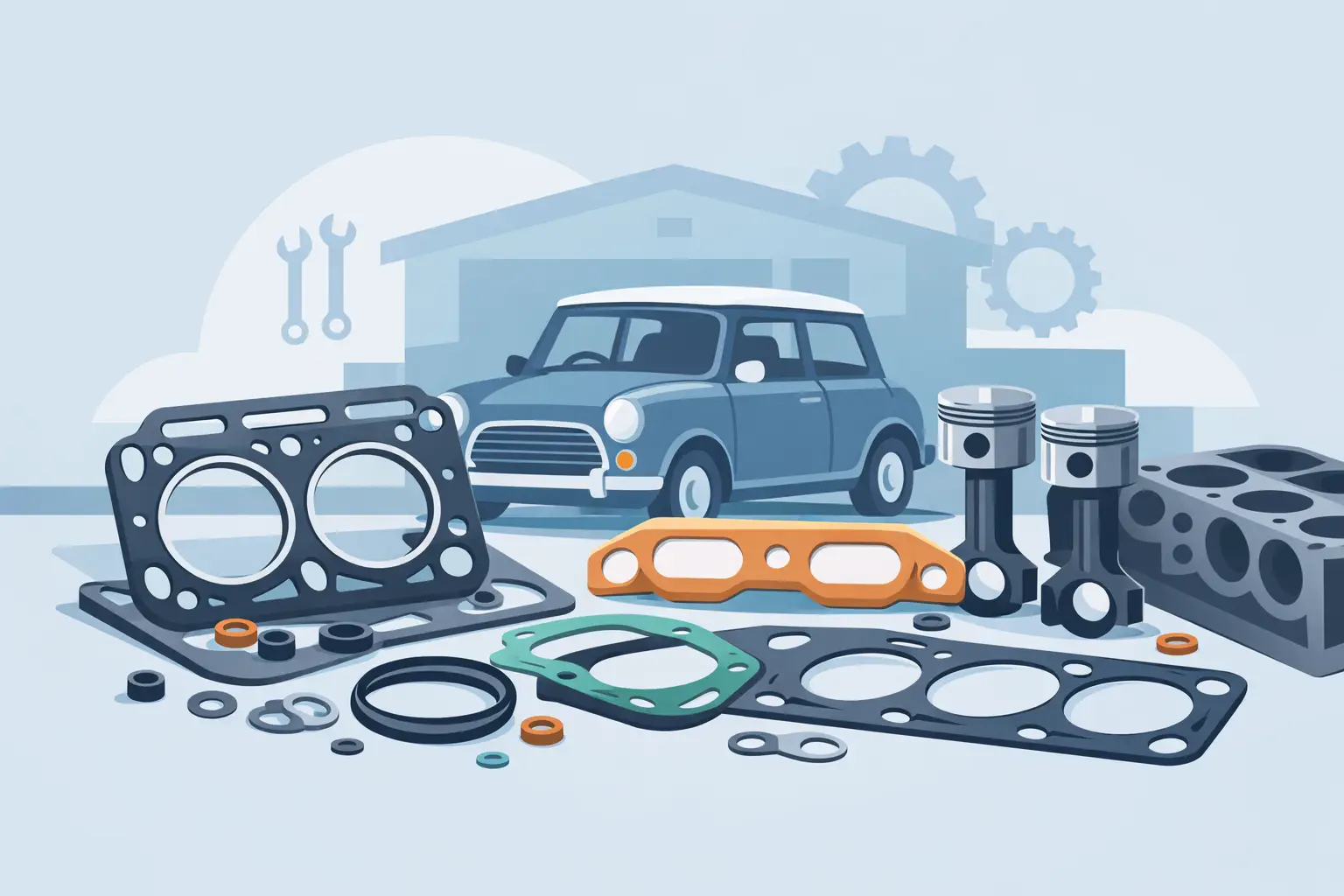
The right choice normally comes down to the job in hand. A top-end gasket set is intended for cylinder-head work. It commonly includes the head gasket along with the inlet and exhaust manifold gaskets, rocker cover gasket, valve stem seals and several smaller sealing items. Exact contents vary, so always check rather than assuming every kit contains the same parts.
For a head refresh, decoke, valve job or replacement head, a top-end set is often the most cost-effective route. There is no point paying for sump, timing cover and lower-engine seals if the bottom end is untouched.
A full engine gasket set makes better sense during a complete rebuild or when the engine is being stripped far enough to expose the timing cover, tappet chest covers, oil pump, sump and crankshaft seals. It brings the essential sealing parts together, helping you keep the build moving and reducing the chance of mixing incompatible individual gaskets.
Do not treat the word “full” as a guarantee of every service item you may need. Some kits may not include an oil pump gasket, thermostat gasket, core plugs, valve stem seals or the particular seals needed for a modified installation. Read the listed contents and make a quick parts check before starting work.
Match the gasket set to the engine, not just the car
A Classic Mini registration plate does not always tell the full story. Many cars have received replacement engines over the years, while others have been rebuilt using larger bores, different cylinder heads or later A+ components. Identify what is actually fitted before ordering.
Start with the engine capacity and block type. The common 848cc, 998cc, 1098cc and 1275cc engines have differences in bore dimensions and gasket requirements. A head gasket must suit the bore size and cylinder spacing. Fitting a gasket intended for a smaller-bore engine to a 1275 is not an acceptable compromise.
Then consider the specification. A standard road engine, an overbored fast-road unit and a competition build may require different head-gasket choices. If the engine has been bored beyond standard size, use a gasket designed with sufficient fire-ring clearance. On a highly modified engine, speak to the engine builder or gasket manufacturer before choosing – compression ratio, head skim, block condition and intended use all affect the decision.
A+ engines can introduce further detail around seals and covers. Small changes to timing cover arrangements, oil seals and ancillary components mean that an apparently similar kit is not always the correct one. If there is uncertainty, use the engine number where possible and compare the parts already removed with the kit contents.
Head gasket material and real-world use
Composite head gaskets are a dependable choice for many standard and mildly tuned A-series engines. They are designed to conform well to correctly prepared faces and are commonly used for everyday road Minis.
Copper-style performance gaskets are often considered for more serious builds, but they are not automatically better for every engine. Their success depends on surface finish, correct clamping and the rest of the engine specification. A premium gasket cannot compensate for warped castings, poor studs or an overheated engine.
For most road-going Classics, the sensible choice is a quality gasket that matches the bore and is fitted to clean, flat surfaces using the manufacturer’s instructions. Spend the money saved on checking the cooling system, as many gasket failures begin with overheating rather than the gasket itself.
What to inspect before fitting new gaskets
A gasket set seals surfaces. It cannot repair damaged ones. Before fitting, take time to inspect the parts that will meet each gasket. This is where a careful home mechanic can avoid the usual repeat jobs.
Check these areas before reassembly:
- The cylinder head and block face for corrosion, pitting, distortion and old gasket material.
- Manifold flanges for warping, cracks and missing studs or damaged threads.
- The timing cover and sump rail for dents around bolt holes, which can stop the gasket clamping evenly.
- Rocker cover and tappet chest covers for distortion, especially where bolts have been overtightened.
- Crankshaft sealing surfaces for grooves that may quickly damage a new oil seal.
Cleanliness is essential, but avoid gouging aluminium or cast-iron faces with aggressive scraping tools. Remove old gasket material carefully, clean out bolt holes where needed and keep oil or coolant out of blind holes that could affect tightening torque.
Fitting details that decide whether it stays dry
Even the best Mini engine gasket sets need correct preparation and tightening. Follow the torque figures and tightening sequence relevant to your engine and fasteners, not a figure found for a different A-series application. Cylinder head studs, bolts and nuts should be in sound condition, with clean threads and correct washers.
Use sealant sparingly and only where the gasket maker or workshop manual calls for it. More sealant is not better. Excess can squeeze into oilways or coolant passages, while a sealant applied to the wrong gasket can prevent it from bedding correctly.
Pay particular attention to cork and rubber gaskets. A rocker cover gasket may be simple, but overtightening the retaining nuts will distort the cover and encourage leaks. Sump gaskets need an even, patient approach, especially on an engine that has seen years of previous repairs. Straightening a distorted flange before assembly is usually more effective than trying to seal it with extra compound.
After a cylinder-head job, follow the gasket manufacturer’s guidance on any re-torque requirement and valve-clearance check. Advice differs by gasket type and engine setup, so do not rely on old workshop habits alone.
Buy for the whole job, not the headline repair
When ordering, lay out the likely jobs around the main repair. A head gasket change may also reveal tired heater hoses, a corroded thermostat housing, worn engine mounts or a leaking bypass hose. They are not part of the gasket set, but replacing access-limited items while the engine is apart can save a second round of work.
For a full rebuild, it is sensible to pair the gasket set with new core plugs, quality engine oil, coolant, filters and any seals excluded from the kit. If the engine is out of the car, inspect clutch release components and the flywheel-side oil seal at the same time. This is not about replacing parts for the sake of it – it is about avoiding the frustrating leaks and failures that are much harder to reach later.
Bull Motif Mini Spares stocks Classic Mini parts around the systems owners actually work on, making it easier to build an order around the repair rather than sourcing each sealing item separately.
A correctly chosen gasket set is one of the least visible parts of a Mini rebuild, but it does some of the most important work. Check the engine specification, confirm the kit contents and prepare every mating face properly. Your Mini may still mark its territory occasionally, but it should not do it because a preventable gasket mistake sent you back under the bonnet.