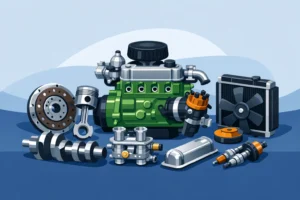
The A-series engine guide starts with one useful fact: the engine in your Classic Mini may look familiar across the range, but the details decide whether a part fits, a rebuild lasts and an upgrade actually improves the car. A 998 and a 1275 are not simply the same unit with different power figures. Bore size, block casting, gearbox, cylinder head, clutch arrangement and ancillary fittings all matter.
For many owners, that is part of the appeal. The A-series is straightforward enough to work on at home, well supported for parts and capable of being built for everything from gentle Sunday use to serious competition. It also rewards careful planning. Buying parts by engine capacity alone is one of the quickest ways to create delays on the bench.
Understanding the Classic Mini A-series engine
The A-series was fitted to Minis from the earliest 848cc cars through to the 1275cc models. It is a compact, overhead-valve, four-cylinder engine with the gearbox housed in the sump. That shared layout is central to the Mini’s packaging, but it also means engine oil has a harder life than it does in a conventional separate-engine-and-gearbox arrangement.
Common Mini capacities include 848cc, 997cc, 998cc, 1098cc and 1275cc. The 998 and 1275 are the units most owners encounter, whether in standard form or as the basis for a replacement engine. A 1275 offers stronger torque and more tuning potential, while a well-set-up 998 can be lively, economical and a very enjoyable road engine.
Do not assume an engine is original because its capacity matches the badge on the boot. Minis have had long working lives, and engine swaps are common. Read the engine number where possible, check the block and head castings, and identify the existing components before ordering. If the history is unclear, photographs and measurements can save a lot of guesswork.
Pre-A+ and A+ engines
One of the first compatibility questions is whether you have a pre-A+ or A+ engine. The A+ version arrived in later Minis and brought a number of detail changes intended to improve durability and production efficiency. It is not a completely different engine, but several components are not interchangeable without checking first.
Differences can include the block, cam followers, distributor drive, timing cover, water pump, oil filter arrangement and engine mounting details. A+ engines commonly use a spin-on oil filter, while earlier units may have a canister-type filter, though conversions exist. Timing components and ancillaries should always be selected to suit the actual engine, not just the vehicle registration year.
Small-bore or large-bore: why it changes your parts list
The 848, 997, 998 and 1098 are generally referred to as small-bore engines. The 1275 is a large-bore engine. This distinction affects more than pistons and head gaskets. Bore spacing, cylinder head choices, gasket selection and available overbores all need to suit the block.
A standard 998 rebuild can be a sensible choice for an owner who wants easy cruising, reasonable running costs and the character of the original car. A 1275 conversion or rebuild makes sense when stronger acceleration and relaxed overtaking are priorities. The trade-off is that extra power puts more demand on cooling, brakes, clutch, driveshafts and the rest of the transmission.
For a road Mini, a mild engine that starts cleanly, holds stable oil pressure and stays cool in traffic is usually more satisfying than a high-output specification that needs constant attention. Be honest about how the car will be used. A weekend show car, a daily driver and a hillclimb Mini need different compromises.
Checks to make before stripping the engine
Before dismantling an A-series, record what is already there. Note the engine number, carburettor type, distributor, cylinder head casting, gearbox remote arrangement and oil filter style. If the engine runs, carry out a compression test and listen for bottom-end knock, timing chain rattle, piston slap and noisy valve gear.
Low compression can point to worn rings, burnt valves, poor valve seating or a head gasket issue. A single low cylinder deserves further investigation rather than an immediate assumption that the whole engine needs a full rebuild. Equally, good compression figures do not prove that the crankshaft, bearings and gearbox are healthy.
Check the oil condition and look for metallic particles. Because the engine and gearbox share the oil supply, debris from a worn gearbox can circulate through the engine. Low oil pressure when hot may indicate tired bearings, a worn oil pump, incorrect clearances or simply an engine that needs more than fresh oil and a filter.
Cooling faults should also be diagnosed properly. A Mini that overheats may have a blocked radiator, tired water pump, sticking thermostat, incorrect ignition timing, weak mixture, silted waterways or a failing head gasket. Replacing only the most obvious part can leave the original problem untouched.
Building a dependable road engine
The best rebuild begins with inspection and accurate machining, not a basket of performance parts. Have the block checked for bore wear, cracking and deck condition. Measure the crankshaft journals, inspect the camshaft and followers, and assess the cylinder head for valve guide wear, corrosion and warping. A reputable machine shop can advise what can be reused and what needs replacing.
Choose pistons, rings, bearings and gaskets to match the measurements taken during machining. Oversize parts are not an upgrade by default. They are fitted because the bores or journals have been machined to suit. This is where fitment accuracy matters most: a set of bearings or a head gasket that is nearly right is not right at all.
During assembly, cleanliness is as important as torque settings. Clean every oilway, use suitable assembly lubricant, check end float and follow the correct tightening sequence for the cylinder head. Replace suspect core plugs, seals and hoses while access is easy. A small saving on these items can mean removing the engine again later.
It is also wise to renew supporting service parts. A fresh oil pump, timing chain, tensioner where applicable, thermostat, water pump, ignition components and engine mounts can make a rebuilt engine far more dependable. Bull Motif Mini Spares can help owners source these parts as a sensible matched order rather than leaving the final jobs to chance.
Sensible A-series upgrades
A mild tune works best when the components complement each other. Improving airflow with a suitable inlet manifold, carburettor needle, exhaust manifold and exhaust system can sharpen a standard engine without making it awkward in traffic. Cylinder head work and a mild camshaft can add useful performance, but both should suit the intended rev range.
A big-valve head and wild camshaft may sound attractive, but can reduce low-speed manners on a road car if the carburation, ignition and compression ratio are not set up around them. More lift and duration are not automatically better. The engine needs enough cylinder pressure and sensible gearing to remain enjoyable away from full throttle.
Any meaningful power increase should be matched by attention to the rest of the Mini. Cooling capacity, brakes, clutch condition and the state of the rubber cones, suspension and tyres all affect whether the finished car feels safe and sorted. On a 1275 build, a properly maintained radiator and correct fan arrangement are particularly worthwhile.
Carburation and ignition need to agree
Many poor-running Minis have sound mechanical parts but an unsuitable needle, incorrect timing or an air leak. Set valve clearances first, then make sure the ignition system is in good order before chasing carburettor settings. Worn distributor components, poor earth connections and tired leads can imitate fuel faults.
Once the engine is warm, set timing and mixture methodically. If you have changed the camshaft, cylinder head, exhaust or carburettor, expect the original settings to need adjustment. A rolling-road session is not essential for every standard rebuild, but it is a sensible investment for a modified engine where fuelling and ignition accuracy matter.
A-series servicing habits that protect your rebuild
Regular oil changes are cheap insurance on an A-series because that oil also lubricates the gearbox. Use a suitable classic engine oil with the correct specification for the engine and change it, along with the filter, at sensible intervals. Check the oil level regularly rather than waiting for a warning light.
Keep an eye on coolant level, fan belt condition, ignition timing and any change in oil pressure or engine noise. Small leaks are common on classic Minis, but a new leak should still be investigated. It may be a simple gasket, or it may be the first warning of excess crankcase pressure, a loose fitting or a worn seal.
A good A-series does not need to be exotic. Start with the right identification, build around measured clearances, and choose upgrades that suit the way you drive. The result is the sort of Mini engine that makes every trip worth taking, whether it is a run to the shops or a long road home after a club meet.