A droning noise that rises with road speed, a rumble through the floor, or unwanted play at the front wheel can turn a good Classic Mini into a car you do not want to push hard. Choosing the best mini wheel bearings is not about chasing a flashy upgrade. It is about fitting correctly made bearings, renewing the associated parts where needed, and assembling the hub properly so the repair lasts.
On a Classic Mini, the front wheel bearing arrangement works hard. The bearings carry the vehicle weight, cope with cornering loads, and live close to brakes, road dirt and weather. A cheap or poorly matched kit can seem fine when first fitted, then develop noise or movement far sooner than it should. For a road car, restoration or fast-road build, dependable quality and correct fitment matter more than a bargain price.
What Makes the Best Mini Wheel Bearings?
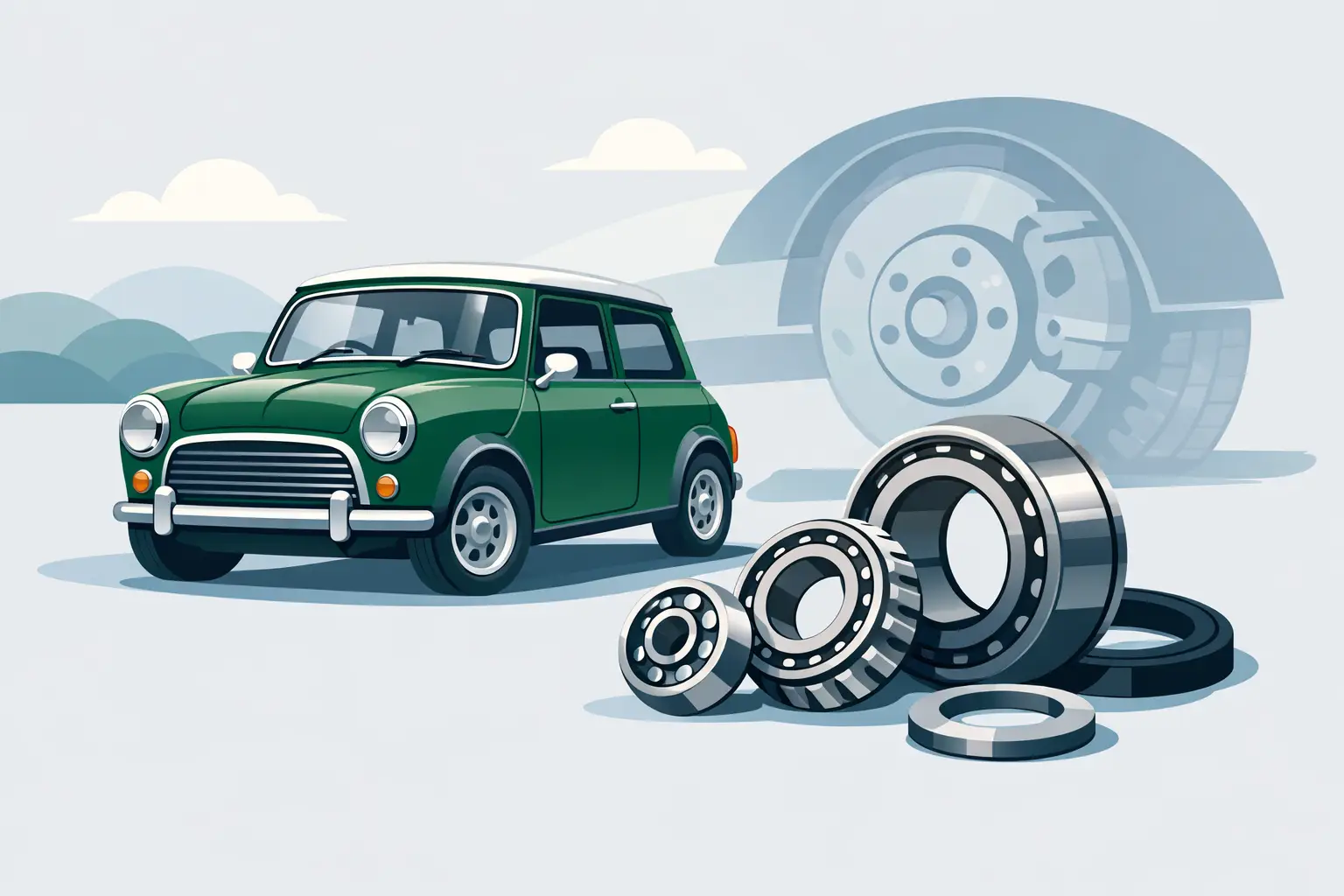
For most Classic Mini front hub applications, you are looking for a taper roller bearing kit designed for the correct hub and model year. Taper roller bearings are well suited to the job because they deal with both radial load – the weight acting down through the wheel – and axial load from cornering.
The best kits have accurately machined bearing cups and cones, consistent rollers, and the correct dimensions for the Mini hub. They should fit cleanly into the hub without being forced or sitting loose, and should run smoothly before grease is applied. Reputable branded bearings and quality kits cost more than unknown alternatives for a reason: tolerances, materials and heat treatment have a direct effect on bearing life.
A bearing kit is only as good as the parts around it. The sensible choice is normally a complete kit that includes the two bearings and races required for one hub, along with the appropriate seal. If the hub is already stripped, reusing an old seal to save a few pounds is false economy. A damaged or hardened seal allows water and contamination into fresh grease, which is exactly how a new bearing begins its short life.
It also pays to inspect the hub itself. A bearing race that has spun in the hub, a damaged seating face, or corrosion in the bore means the new parts may not stay secure. No quality bearing can compensate for a worn-out hub.
Front Wheel Bearings: Know What You Are Replacing
Classic Mini owners often use the phrase wheel bearing to describe several different parts around the front suspension. It is worth separating them before ordering.
The front hub contains the taper roller wheel bearings. These allow the hub and wheel to rotate on the stub axle. The swivel pin assembly has its own bushes, bearings, shims and thrust washers, while the driveshaft and CV joint have separate roles again. Wear in any of these areas can produce a knock, vague steering or wheel movement, but they are not interchangeable faults.
Before condemning a wheel bearing, raise the vehicle safely and hold the tyre at the 12 and 6 o’clock positions. Rock it firmly while someone watches the hub and suspension joints. Movement can point to a bearing issue, but it may also come from the swivel pin, ball joints or loose fixings. Spin the wheel and listen for roughness, then check for a rumbling sound on the road that changes as the car is gently loaded from side to side.
A failed bearing does not always produce obvious free play. Early-stage damage can be heard before it can be felt, especially on a car with decent tyres and a quiet exhaust. Conversely, a Mini with lots of road noise can hide a noisy bearing until it is well worn.
Replace Bearings in Pairs?
There is no rule that says both front hubs must be rebuilt every time one bearing fails. If the other side runs quietly, has no play and its history is known, replacing the faulty side can be perfectly reasonable.
That said, if you are restoring the car, fitting new brakes, or have no idea when either hub was last apart, doing both sides together makes good sense. You get matched components, fresh seals and a known starting point for future servicing. It also avoids stripping the other hub a few weeks later when its tired bearing makes itself heard.
Quality Bearings Versus Cheap Kits
The lowest-priced kit is tempting when a Mini project has already swallowed its budget. Yet wheel bearings are one of the places where quality should come before the cheapest possible option. The cost difference is small beside the labour involved in removing the hub, pressing out races, cleaning everything thoroughly and rebuilding it correctly.
Poor-quality bearings can have inconsistent roller surfaces, inaccurate race dimensions or inadequate corrosion protection. They may feel acceptable on the bench but become noisy after a short period, particularly if the car sees wet weather, long motorway runs or enthusiastic cornering. For a Mini used regularly, a well-made bearing from a recognised manufacturer is a far better investment.
There is also a trade-off with old stock. Genuine-period components can be desirable on a concours restoration, but a bearing that has sat for decades in damp storage is not automatically better than a fresh, reputable replacement. Check that packaging is intact, surfaces are clean and the bearing turns freely. For most working cars, current quality manufacture is the practical answer.
Bull Motif Mini Spares focuses on parts chosen for real Classic Mini servicing and restoration work, rather than leaving owners to guess whether a universal bearing is close enough. Correct application is crucial with a safety-critical rotating component.
Fitting Mini Wheel Bearings Properly
A good bearing can still fail early if it is fitted badly. Cleanliness is the first rule. Any grit left in the hub or pressed into fresh grease can mark the bearing surfaces from the first few miles. Thoroughly clean the hub, stub axle and surrounding components, then inspect them in strong light before assembly.
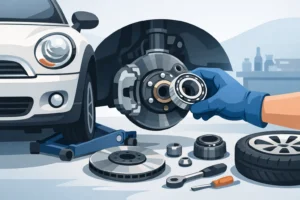
Press bearing races into the hub using the outer edge of the race only. Never drive force through the rollers to install a race, and never strike the bearing directly with a hammer. The same principle applies when fitting the hub onto the stub axle: support and press in the correct place. If you do not have suitable tools, this is a sensible job to give to a workshop rather than risk damaging new parts.
Use a suitable high-melting-point wheel bearing grease and work it properly into the rollers. A smear on the outside is not enough. The grease needs to be packed through the bearing until it emerges around the rollers, then applied to the race and hub cavity as required. Do not fill every empty space solid with grease, as excessive grease can churn and generate heat.
Fit a new seal carefully and make sure it sits squarely. The seal lip must not be nicked during installation. Once the hub is assembled, tighten the hub nut to the specified setting for your exact Mini setup and use the correct locking method. Do not guess at torque figures or rely on feel alone. Hub nuts, drive flanges and fixing arrangements vary across Mini applications, so check a proper workshop manual for the vehicle and components in front of you.
Parts Worth Checking While the Hub Is Off
The hub job is the ideal time to look at the brake disc or drum, pads or shoes, flexible brake hose, CV joint gaiter, ball joints and swivel pin condition. You do not need to replace parts simply because the hub is apart, but catching split gaiters, worn discs or stiff ball joints now can prevent another strip-down later.
If the old bearing has failed badly, inspect the stub axle particularly carefully. Blue discolouration, scoring, pitting or a loose bearing fit are warning signs. Rebuilding a hub onto a damaged stub axle can leave you with persistent play and an unsafe repair.
When Should You Renew Them?
There is no fixed mileage interval for Classic Mini wheel bearings. A lightly used, dry-weather car may cover years without trouble, while a daily-driven Mini that sees winter roads and potholes can need attention much sooner. Water ingress, incorrect assembly, overtightened components and harsh impacts all shorten bearing life.
Renew them when there is confirmed roughness, noise, play attributable to the bearing, contamination after a seal failure, or damage found during a hub rebuild. If you are building a car for regular fast road use or motorsport, start with quality bearings and inspect the hub assembly more often. Higher cornering loads do not automatically demand exotic parts, but they do leave less room for worn components and careless fitting.
The best result is a quiet, smooth hub that you can forget about – leaving you to enjoy the direct steering and character that make a Classic Mini worth maintaining properly.