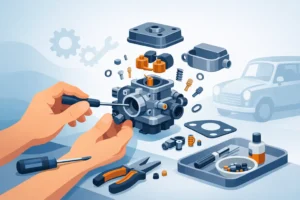
A Classic Mini that cranks happily but will not start, cuts out after a few miles, or loses power under load often sends owners towards the carburettor first. Sometimes that is the right place to look. But before stripping anything down, check the fuel supply. A tired classic mini fuel pump can create faults that feel like ignition, carburation or even overheating problems.
The pump is a small, straightforward part, yet it has a big job. It must deliver a steady supply of clean fuel at the correct pressure without leaks, air locks or vapour issues. Choosing the right replacement is not simply a matter of matching a picture. Your engine type, fuel system layout and existing pipework all matter.
What a Classic Mini fuel pump does
On most carburettor A-series Minis, the fuel pump draws petrol from the tank and supplies it to the carburettor. The carburettor float chamber then controls how much fuel enters the engine. The pump does not need high pressure. In fact, too much pressure can overpower the float needle valve, causing flooding, poor running and fuel leaks.
Early and many later Classic Minis use a mechanical pump mounted on the engine. It is operated by an eccentric on the camshaft, using a lever and diaphragm to move fuel. Some models and modified cars use an electric pump instead, commonly fitted near the rear of the car or close to the fuel tank.
Both arrangements can work well when correctly specified and installed. The important point is that the pump must suit the car, not just the engine bay it happens to be fitted to today. Minis have been repaired, upgraded and modified for decades, so it is worth checking what is actually on your car before ordering.
Mechanical or electric: which pump is right?
For a standard road-going carburettor Mini with the original-style engine arrangement, a mechanical pump is usually the sensible choice. It keeps the system close to factory specification, needs no additional wiring and provides the low-pressure delivery expected by SU and single-carb set-ups. It is also easy to inspect during routine servicing.
A mechanical pump relies on the correct engine components being present. If the camshaft does not have the pump-driving eccentric, or the engine has been built for an electric-pump arrangement, fitting a mechanical unit will not solve the problem. Check the engine block and existing set-up rather than assuming every A-series block is identical.
An electric pump can be a practical option for a modified engine, twin-carburettor installation, motorsport build or a car where the original mechanical arrangement is no longer suitable. It can also make priming easier after a vehicle has stood for a while. However, it needs careful installation. The pump must have suitable low-pressure output, sound electrical connections, proper mounting and safe fuel hose routing.
Electric is not automatically an upgrade. A poorly chosen high-pressure pump can cause more trouble than it cures. For a carburettor Mini, correct pressure and reliable fitment matter more than the label on the box.
Check the pump mounting and pipe connections
Before removing the old unit, look closely at the details. A mechanical pump needs the correct mounting face, lever design, gasket and pipe orientation. Fuel inlet and outlet positions vary, and forcing a hose into a tight bend is an easy way to create a restriction or future leak.
With electric pumps, check hose size, terminal arrangement and whether the unit is intended to push fuel from the tank or pull it over a longer distance. Many electric pumps work best mounted low and close to the tank, where they can push rather than struggle to draw fuel forward.
If you are dealing with an unknown restoration project, take photographs before dismantling. Note the routing of both fuel lines, the location of clips and any inline filter already fitted. A few minutes spent checking can prevent an incorrect order or an awkward refit.
Signs your fuel pump may be failing
Fuel pumps do not always fail completely. More often, they weaken gradually or develop an intermittent fault. A Mini may start and idle well but run short of fuel at higher speed, on hills or after the engine bay has become hot.
Common warning signs include hesitation under acceleration, stalling after sustained running, a noticeable loss of power, fuel starvation at higher revs and difficulty restarting after a stop. A mechanical pump with a damaged diaphragm may also allow fuel to escape from its body or, in some cases, contaminate the engine oil. If the oil level rises unexpectedly or smells strongly of petrol, stop driving and investigate straight away.
An electric pump may become noisy, inconsistent or silent when it should be operating. The familiar ticking of certain pump types is not a complete diagnostic on its own, but a change in sound can be useful information. Check the basics first: fuel in the tank, clean connections, sound earths, an unobstructed fuel line and a filter that is not blocked.
Do not overlook the tank pick-up, rubber hoses and fuel filter. Perished hose can admit air without always dripping fuel, while sediment from an old tank can repeatedly block a new filter or damage a pump. Replacing the pump without addressing contamination is false economy.
Fitting a replacement fuel pump properly
Work in a well-ventilated area, away from heaters, lamps, cigarettes and anything else that could ignite petrol vapour. Keep a suitable fire extinguisher nearby and have rags ready to catch spilled fuel. It is sensible to disconnect the battery before working around fuel, particularly when fitting or diagnosing an electric pump.
For a mechanical pump, clean the mounting face carefully and use the correct gasket. Do not rely on excessive sealant, as loose material can cause problems if it enters the engine. Offer the pump up squarely, making sure the operating lever is positioned correctly against the cam eccentric. Tighten the fixings evenly rather than pulling one side down fully first.
Inspect every rubber hose while access is good. Fuel hose should be suitable for modern petrol and securely clipped, but clips should not be overtightened enough to cut into the hose. Replace questionable pipework now, especially on a car that has been standing or is undergoing a wider restoration.
For an electric pump, use proper terminals, secure wiring and an appropriate fuse. Mount the pump firmly with consideration for vibration and heat. Route fuel lines away from the exhaust, sharp edges and moving suspension components. A fuel system should look tidy because it is supported and protected, not merely because it has been tucked out of sight.
Once fitted, prime the system and inspect every joint before starting the engine. Then run the car and check again, including after a short road test. Fuel leaks can appear only once the hose has warmed, softened or come under normal vibration.
Fitment matters more than a quick fix
The right classic mini fuel pump depends on more than the year on the registration document. Engine swaps, carburettor conversions, replacement blocks and previous repairs can all change the required part. If your Mini has a standard 998cc or 1275cc carburettor engine, an original-style mechanical set-up may be correct. If it has been modified, establish the fuel system specification before choosing a pump.
It is also worth considering how the car is used. A weekend car that spends long periods in the garage may benefit from a thorough inspection of hoses, filter and tank condition whenever the pump is renewed. A regularly driven Mini needs dependable parts that will cope with heat cycles, vibration and modern fuel. For competition or fast-road use, the whole fuel delivery system should be assessed as one package, rather than upgrading one component in isolation.
Bull Motif Mini Spares stocks Classic Mini parts around the systems owners genuinely work on, making it easier to match a fuel pump with the related hoses, clips, filters and service items that help the job last.
A new pump should restore confidence, not become another unknown in the engine bay. Check the specification, fit it carefully and give the rest of the fuel system the same attention. Your Mini will usually tell you when fuel delivery is right: it starts cleanly, pulls consistently and lets you enjoy the drive rather than listening for the next hesitation.