A good mini restoration shop is not about filling a garage with expensive kit and hoping for the best. It is about setting up a space that helps you work through a Classic Mini properly, from strip-down to rebuild, without losing parts, time, or patience. Whether you are tackling your first shell repair or building cars regularly, the right workshop setup makes the job cleaner, quicker, and far less frustrating.
Classic Minis reward methodical work. They are simple compared with many modern cars, but they also have their own quirks – compact packaging, model-year differences, and plenty of areas where poor-quality parts or rushed fitting can create more work later. That is why a restoration space for a Mini needs to be planned around the car itself, not around generic workshop advice.
What a mini restoration shop really needs
The best setups are usually not the biggest. A well-organised single garage can outperform a larger workshop that is cluttered, badly lit, and full of parts piled in corners. For a Classic Mini, usable space matters more than floor area on paper.
You need enough room to open both doors, move around the shell, store removed panels safely, and keep major assemblies separate. Engine parts, interior trim, glass, subframes, and body fittings should all have their own areas. If everything ends up in the same stack of boxes, the build slows down and mistakes creep in.
Lighting is one of the first areas people underestimate. Minis hide corrosion in seams, floors, door steps, scuttle areas, and rear valance sections where poor lighting will cost you. Bright overhead lighting is essential, but side lighting helps just as much when you are checking panel gaps, paint prep, or weld quality.
Ventilation matters too. If your shop is going to handle stripping, cleaning, painting small parts, or running engines, stale air becomes a problem very quickly. You do not need an industrial unit to do things properly, but you do need airflow and some separation between dirty jobs and clean assembly work.
Planning the workshop around Classic Mini jobs
A Classic Mini restoration usually moves through clear phases – assessment, strip-down, shell work, mechanical rebuild, paint preparation, assembly, and final fettling. Your workshop should support that flow.
Strip-down and assessment area
At the start, you need space to inspect the car honestly. That means enough clearance to get underneath, remove trim, pull subframes, and check all the usual trouble spots. If the car arrives and immediately gets buried under tools and loose parts, the project becomes harder to manage from day one.
A sturdy bench nearby helps more than people think. It gives you a proper place to label fixings, bag components, and note what needs replacing. On a Mini, details matter. Hinge screws, clips, brackets, spacers, and trim fittings all have a way of disappearing when there is no routine for handling them.
Body and shell repair area
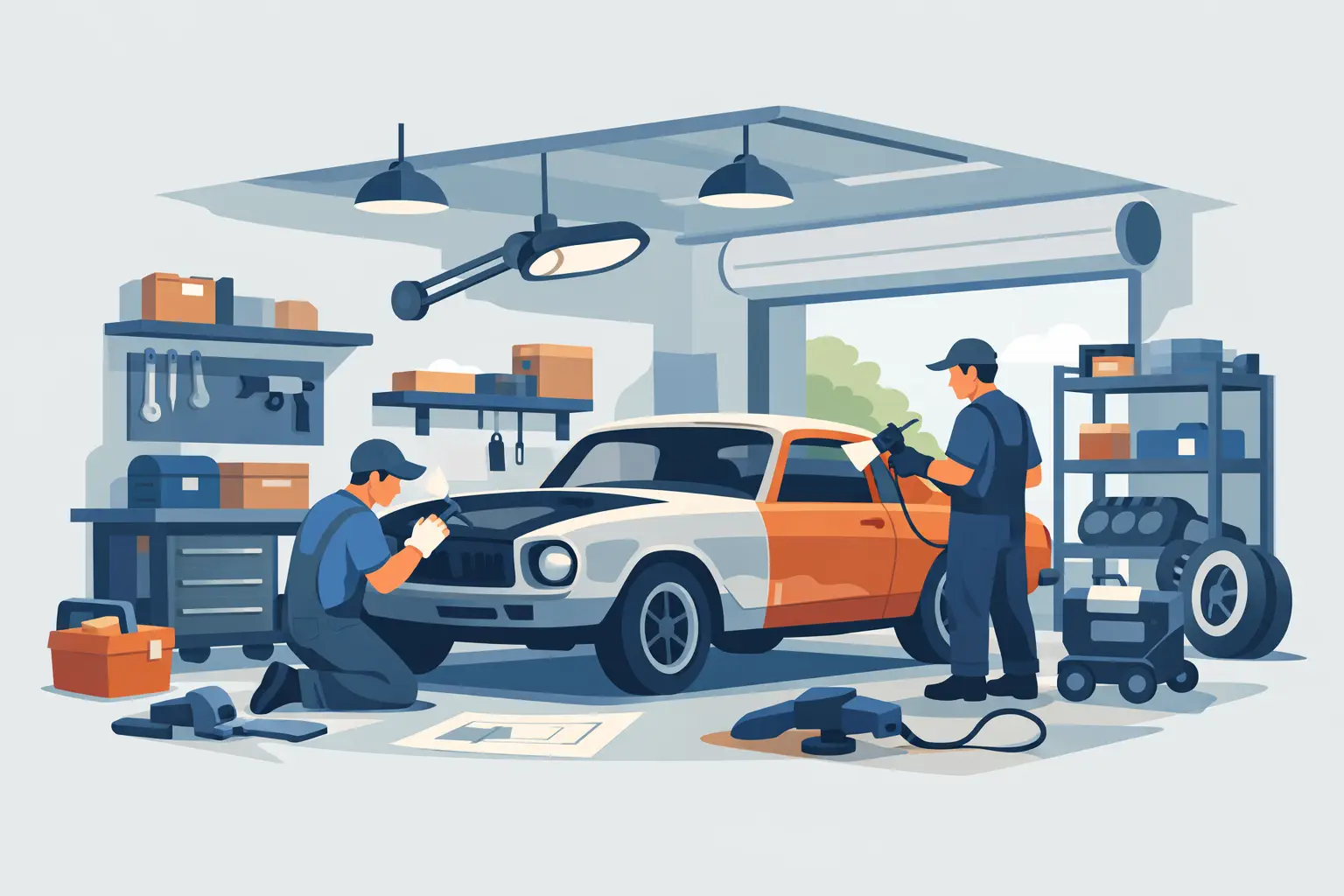
If your mini restoration shop will handle welding, keep that part of the space as clear and safe as possible. Shell work creates dust, sparks, offcuts, and general mess. It should not be mixed into the same zone where fresh interior trim or rebuilt engine components are sitting uncovered.
With a Mini, panel quality and fitment accuracy are worth taking seriously. Floors, sills, front panels, A-panels, door skins, and rear quarters all need careful alignment. Cheap panels can cost more in time than they save in money. If you are doing proper shell repairs, it pays to buy the best panel you can reasonably justify, especially on visible or structural areas.
Clean assembly area
This is where many home workshops fall short. Rebuilding a Mini engine, assembling suspension, fitting a new wiring loom, or installing fresh trim all go better in a clean area away from grinding dust and welding debris. Even a simple partitioned section of the garage can make a real difference.
Assembly also benefits from sensible shelving. Keep seals, gaskets, bearings, clips, and new fasteners in marked containers. When parts arrive, check them straight away and store them by system – engine, braking, cooling, interior, body, electrical. That is far easier than hunting through mixed boxes halfway through a rebuild.
Tools that make a real difference
You can restore a Mini without turning the workshop into a machine shop, but a few basics are non-negotiable. Good hand tools, axle stands, a solid trolley jack, torque wrench, drill, grinder, and bench vice are the backbone of most jobs. Add decent measuring tools and you will avoid plenty of headaches when setting things up properly.
For bodywork, a welder, clamps, cutting tools, and prep equipment are obvious requirements if you are doing repairs yourself. For mechanical work, an engine stand is useful if you are rebuilding units regularly, though not every owner needs one from the start.
The trade-off is simple. Buying tools for one restoration can be worthwhile if you plan to keep the car long term or do future builds. If not, some specialist work may be better outsourced. There is no shame in sending machining, trimming, or paintwork to the right people if it gets a better result. A smart workshop is not one that does everything in-house at any cost. It is one that knows where home effort adds value and where specialist support saves time.
Stocking parts without creating chaos
A restoration shop lives or dies on parts control. Classic Minis are well supported, but that does not mean every part on the market is equal. Fit, finish, and consistency vary, and buying purely on price can leave you reworking jobs you thought were finished.
The sensible approach is to build your parts buying around the systems you are restoring. If the front end is apart, think beyond the obvious service items. Check mounts, hoses, clips, cooling parts, fixings, bushes, and the surrounding hardware while access is easy. The same applies to brake rebuilds, subframe work, and interior refits.
This is where a specialist supplier earns its keep. Instead of piecing an order together across multiple general retailers, it is far easier to source from a place that understands Classic Mini fitment and keeps related categories together. For owners trying to keep momentum on a project, that saves both time and repeat postage. Bull Motif Mini Spares is built around exactly that sort of practical buying.
Storage, labelling, and the jobs you forget about
Most delayed restorations are not held up by one major problem. They are slowed down by dozens of small ones – missing clips, mixed-up bolts, unmarked wiring, scratched trim, lost glass fittings. A tidy workshop prevents those delays.
Use labelled boxes, clear bags, shelves, and simple written notes. Photograph assemblies before they come apart. Mark left and right components. Keep old parts until the new ones are fitted and checked. On Minis, where changes across years and models can catch people out, that habit is especially useful.
Consumables deserve their own place as well. Sealants, primers, grease, oils, abrasives, welding wire, masking materials, and fasteners should not be treated as an afterthought. Running out of small essentials stops more progress than most major component shortages.
Is a home mini restoration shop enough?
For many owners, yes. A well-set-up home garage is enough to complete a very respectable Mini restoration, especially if the work is structured and the car is not being rushed. The key is being honest about your space, skill level, and available time.
If you are dealing with heavy structural repairs, multiple projects, or customer cars, the demands change. You may need better lifting equipment, more secure storage, improved extraction, and clearer separation between fabrication, paint prep, and assembly work. A professional shop setup can increase efficiency, but only if the workload justifies it.
For the average enthusiast, the better approach is usually to improve one area at a time. Start with lighting, storage, and a proper bench. Then build out the tools and stockholding as your projects demand it. That tends to produce a more useful workshop than spending heavily upfront on equipment that rarely gets used.
Building a shop that keeps projects moving
The best mini restoration shop is the one that removes friction from the job. It helps you find the part you need, inspect the work clearly, rebuild components cleanly, and keep the car progressing from one stage to the next. It does not need to be flashy. It needs to be dependable.
If you build your space around the real jobs involved in Classic Mini restoration – shell repair, mechanical rebuild, careful assembly, and accurate parts sourcing – you will end up with a workshop that works as hard as you do. And when the next Mini rolls in, you will be ready for it rather than starting from scratch again.