A Mini gearbox usually tells you what it wants before it fails completely. A weak second gear change, a whine that was not there last month, a tired diff pin, or metallic debris on the drain plug all point in the same direction – the rebuild is no longer a future job. When you start pricing mini gearbox rebuild parts, the real question is not whether to replace a single worn item. It is whether you want to strip it once and do it properly.
On a Classic Mini, the gearbox lives a hard life. It shares oil with the engine, deals with age, heat, debris and, in plenty of cases, years of enthusiastic driving. That means a rebuild is rarely about one magic component. It is about choosing the parts that restore reliability, protect the gears you are keeping and suit how the car is actually used.
What mini gearbox rebuild parts should you replace?
Some gearbox components can be inspected and reused if they are genuinely within tolerance. Others are false economy. Bearings, oil seals, gaskets and baulk rings sit firmly in the replace-while-you-are-there category for most rebuilds. If the box is apart on the bench, those are the parts that make little sense to gamble on.
Bearings are an obvious one. Even if they still turn freely, age and contamination take their toll. A noisy primary gear bearing or worn layshaft bearing will undo the feel of the rebuild very quickly. Good bearings matter because they support everything else. If you build a gearbox around tired bearings, gear engagement and longevity both suffer.
Baulk rings are just as important. If your Mini crunches selecting second or third, or shifts feel vague despite proper adjustment, worn synchromesh parts are usually involved. New baulk rings are not glamorous, but they are often the difference between a gearbox that feels fresh and one that still behaves like a worn-out unit after hours of work.
Then there are the seals and gaskets. They do not add performance, but they save you from the familiar Mini habit of marking its spot more than necessary. Selector rod seals, differential output seals, primary gear seals and the relevant gaskets all deserve attention during a rebuild. It is cheap insurance when compared with pulling the unit again because one old seal was left in place.
The parts that make or break the rebuild
The expensive mistakes tend to happen when the visible wear gets all the attention and the hidden wear is ignored. A proper gearbox rebuild needs a close look at the layshaft, laygear, thrust washers, diff assembly and gear teeth themselves.
The layshaft is a known wear point on many A-series gearboxes. If it is scored, pitted or worn where the needle rollers run, replacing only the bearings will not fix the problem. The same goes for the laygear internals. Once wear starts there, end float and running accuracy suffer, and that has a knock-on effect across the box.
Differential parts deserve the same level of care. Cross pin wear, damaged thrust washers and tired diff bearings can all lead to unwanted movement and noise. On harder-used cars, especially anything with more power than standard or a lot of spirited road use, diff condition is not something to gloss over. A gearbox can shift well enough and still have a differential that is well past its best.
Gear teeth are where it gets more expensive, and more dependent on inspection. Minor polishing is one thing. Chipped teeth, heavy pitting, rounded engagement dogs or obvious damage mean replacement is the sensible route. There is no value in building around suspect gears if reliability matters.
Rebuild kits versus buying parts individually
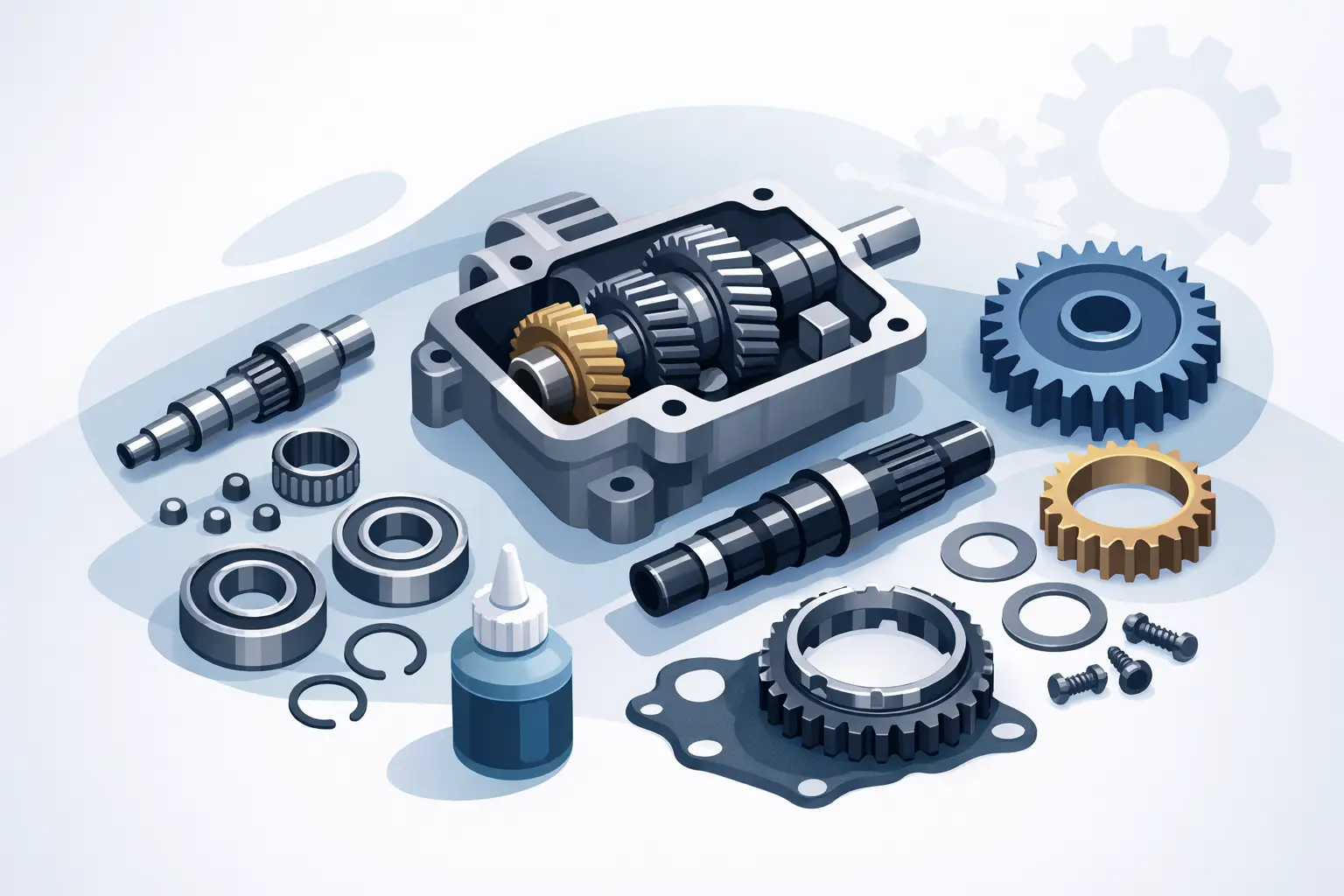
A rebuild kit can be a very sensible place to start, especially if you want the common service items in one hit. For many owners, a kit covering bearings, baulk rings, gaskets and oil seals saves time and avoids missing a basic item during the build.
That said, not every gearbox needs exactly the same parts. A standard road car with one tired synchromesh gear may need a different shopping list from a long-stored project with water contamination, or a performance Mini with a worn diff and uprated internals. Buying individually makes sense when the strip-down reveals damage beyond the usual service items.
This is where dealing with a Mini specialist helps. General transmission stockists may understand bearings in a broad sense, but Classic Mini owners usually need parts matched to specific gearbox types, rod-change or remote applications, and the sort of model-specific details that save time and frustration. Bull Motif Mini Spares is set up around exactly that sort of practical parts sourcing.
Mini gearbox rebuild parts for standard road cars
Most road-going Minis do not need exotic internals. What they need is a dependable set of quality rebuild parts and sensible inspection of the major wear areas. For a standard or lightly tuned car, that often means fresh bearings, baulk rings, seals, gaskets, diff bearings, thrust washers and any worn layshaft components.
The aim is smooth shifting, quieter running and reliability. There is little point fitting aggressive or specialist components if the car spends its life on road tyres, in traffic, and on weekend runs. In those cases, correct fit, decent materials and known quality are worth more than race-spec parts that add cost without solving a real problem.
That also applies to oil control parts. A Mini gearbox that is rebuilt for road use should come back dry where it can be dry, and properly sealed where it matters. A fresh rebuild deserves better than reusing tired washers and old seals to save a few pounds.
When uprated parts are worth considering
Not every rebuild should simply go back to factory specification. If the engine is uprated, if the car sees competition use, or if you drive it hard enough to expose the weak points, stronger or improved gearbox components can make sense.
Straight-cut gears, competition ratios, uprated diff pins and heavy-duty bearings all have their place. But this is where it depends on the car. Straight-cut sets can reduce power loss and suit motorsport applications, but they also bring extra noise that many road drivers tire of quickly. A cross-pin diff upgrade may be sensible on a punchy fast-road Mini, while a mild 998 used for local shows and Sunday runs may never need it.
The same goes for final drive choices. If the gearbox is apart, some owners take the chance to alter the overall gearing. That can transform how the car feels, but it is not automatically an upgrade. Shorter gearing can sharpen acceleration and make motorway cruising busier. Taller gearing can calm the engine on longer runs but make a modest engine feel flatter. The right answer depends on how the Mini is used.
Don’t overlook the parts around the gearbox
A gearbox rebuild can still disappoint if the surrounding components are worn. Worn engine steadies, tired pot joints, sloppy gear linkage parts or clutch issues can all make a fresh box feel worse than it really is.
It is worth checking the gear change mechanism while the engine and gearbox are out or apart. Remote and rod-change systems each have their own wear points, and tired bushes or couplings can leave the shift feeling vague even when the internal gearbox parts are brand new. Likewise, if the clutch release parts or primary gear bush are worn, the rebuilt box may never feel quite right in service.
This is where experienced Mini owners tend to save themselves repeat labour. Instead of treating the gearbox in isolation, they look at the whole assembly and replace the small but known wear items at the same time.
Quality matters more than doing it cheaply
A gearbox rebuild takes time, and on a Mini it is not a job most owners want to repeat because one bargain-bin component failed early. Price matters, of course, but value is about fit, material quality and confidence in what you are fitting.
Poor-quality seals harden early. Inferior bearings can be noisy or short-lived. Badly made syncro components can leave you chasing shift issues that should have been fixed the first time. Spending a little more on dependable mini gearbox rebuild parts usually works out cheaper than doing the work twice.
That is especially true for anyone building a car for distance use, regular driving or a customer vehicle. If the expectation is reliability, parts choice needs to reflect that.
Build the parts list after inspection, not before
It is tempting to order everything before the gearbox is stripped, but the smarter approach is often to start with the known service parts and then add what inspection proves necessary. That keeps the order sensible and avoids guessing at expensive hard parts too early.
Once the gearbox is apart, check every running surface, measure where required and look closely at the usual trouble spots. If the gears are sound, reuse them. If the diff is tired, rebuild it properly. If the layshaft or laygear shows wear, do not try to talk yourself out of replacing them. The Mini gearbox rewards careful judgement, not wishful thinking.
A good rebuild is not about replacing every part blindly, and it is not about saving every old component at all costs. It is about fitting the right parts for the condition of the box and the way the car will be driven afterwards.
If your Mini gearbox is already on the bench, that is the moment to be honest with it. Fit the parts that sort the known weak points, choose quality over shortcuts, and you will only have to enjoy the result rather than strip it again.