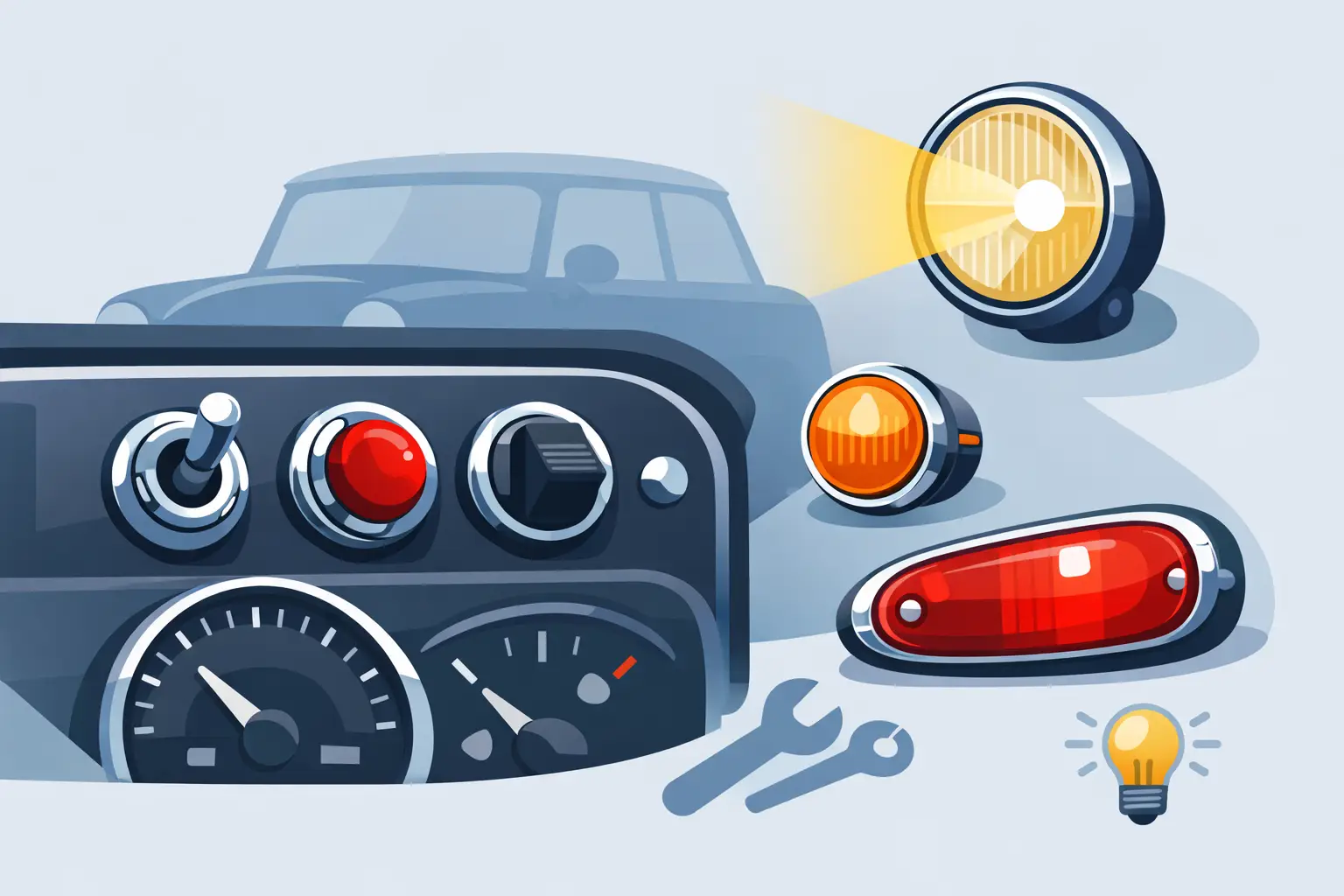
Anyone who has driven a Classic Mini at dusk in drizzle knows how quickly small electrical faults become big annoyances. Classic mini switches and lights are easy to overlook when you are focused on engines, bodywork or trim, but they make a huge difference to safety, usability and the feel of the car. A sticky toggle, a dim warning lamp or a cracked switch panel can turn an otherwise tidy Mini into something that feels unfinished.
Why classic mini switches and lights matter
On a Classic Mini, the switchgear and lighting are used constantly. Headlamps, side lights, indicators, heater fan, wipers, fog lamps, hazard switches and dash illumination all rely on components that are now decades old on many cars. Even if a part still works, that does not always mean it is working well.
Old switches tend to suffer from worn contacts, loose terminals and faded markings. Lights bring their own issues – corroded bulb holders, poor earths, tired lenses and brittle wiring connectors are all common. The result can be intermittent faults that are hard to pin down because they come and go with vibration, moisture or temperature.
For anyone restoring or maintaining a Mini properly, these parts are not cosmetic extras. They sit right in the middle of daily drivability. If you are trying to keep a car original, fitment and appearance matter. If you simply want dependable use on the road, reliability matters just as much.
Common faults in classic mini switches and lights
The most common complaint with switches is inconsistency. A switch may work only when pressed at an angle, or it may feel loose and vague compared with how it should click into place. In many cases the plastic body is sound enough, but the contacts inside are tired. On some cars, previous owners have also mixed and matched parts from different years, which can leave the dashboard looking odd and make fault-finding more awkward.
Lighting faults are often blamed on the lamp unit when the real issue sits elsewhere. A weak earth can make a sidelight dim, a brake light intermittent or an indicator behave strangely. Corrosion around terminals is another regular problem, especially on cars that have seen damp storage or years of road use. If the lens is cloudy or cracked, even a good bulb will not give the clean output it should.
There is also the simple issue of age. Plastic becomes brittle. Chrome and bright finishes lose their edge. Legends on switches wear away. You can live with those issues, but they tend to drag down the whole cabin or exterior presentation, particularly on a well-restored car.
Choosing the right switches for your Mini
When buying replacement switches, the first question is whether you are chasing originality, practicality or a bit of both. That matters because switch styles changed across production years, and what suits a concours-style restoration may not be the same as what suits a regularly used road car.
A period-correct switch helps keep the dashboard looking right and avoids the patched-together feel that some cars develop over time. For many owners, that is reason enough to choose the proper part. On the other hand, if your Mini has already been modified with extra gauges, auxiliary lamps or a custom dash, you may be more interested in a tidy, durable switch that handles the job reliably.
Fitment accuracy is where specialist supply makes a difference. Generic electrical items can sometimes be made to work, but they often create more trouble than they save. Connector types, mounting points and switch appearance all matter on a Mini because access behind the dash is limited and no one wants to strip things back twice.
Getting lighting right without guesswork
Exterior lights
Headlamps, side lights, rear lamps and indicators all need to do two jobs – keep the car legal and make it safer to use. If your lenses are cracked, your reflectors are dull or the lamp units have obvious corrosion, replacing the complete assembly can be the better option rather than trying to revive a half-worn unit.
That said, it depends on the condition of what is already fitted. Sometimes a fresh bulb holder, gasket or lens is enough. Sometimes the housing itself is too far gone. It is worth looking closely before ordering because a targeted repair can be sensible, but piecemeal fixes on badly worn lamps often end up costing more in time and frustration.
Interior and dash lights
Dashboard illumination and warning lamps do not get much attention until they stop working. Then you realise how much you rely on them. A speedo light that barely glows or a warning lamp that flickers can make the car feel older than it needs to.
Interior lighting parts are also one of the easiest ways to sharpen the cabin. Fresh switchgear, clean legends and properly working illumination help the whole dashboard feel sorted. It is not about making the car modern. It is about making it feel correct.
Restoration or replacement?
Not every original switch or lamp assembly should be thrown out. If you are working on a rare specification or trying to preserve as much factory detail as possible, refurbishment can make sense. Cleaning contacts, renewing connectors and carefully restoring original fittings may keep the character you want.
But there is a point where replacement is simply the better job. If a switch is unreliable, if a lamp unit is heavily corroded or if a lens is beyond saving, new parts remove uncertainty. On a car you drive regularly, that counts for a lot. Reliability is part of restoration too.
The same logic applies to partial upgrades. You may keep the correct look while replacing unseen electrical pieces behind the scenes. Purity has its place, but so does wanting your indicators and brake lights to work first time, every time.
What to check before ordering classic mini switches and lights
Before you buy, take a proper look at the car rather than ordering off memory. Mini parts interchange can catch people out, especially on cars built from mixed-year shells, replacement dashboards or modified looms.
Check the year and model, then compare the existing part carefully. Look at terminal layout, mounting method, lens shape and whether the part is dashboard-mounted, column-mounted or fitted elsewhere in the shell. If you are chasing a lighting fault, inspect the wiring and earths as well. A new switch will not cure a broken connector, and a fresh lamp unit will not fix a poor earth point.
This is also the stage to think about the wider job. If you have the dash apart, it may be worth replacing tired bulbs, bezels or surrounding fittings at the same time. If the rear lamp has failed because of corrosion, check the opposite side too. Doing connected jobs together usually saves time.
Quality matters more than the cheapest price
Switches and lighting parts are often seen as small purchases, which makes it tempting to buy on price alone. The trouble is that poor-quality electrical components can fail early, fit badly or feel wrong from the start. A switch that wobbles in the dash or a lamp lens that does not sit properly is not a bargain.
Good parts tend to pay for themselves in fit, finish and fewer repeat jobs. That is particularly true on a Classic Mini, where access can be fiddly and where appearance is such a visible part of the ownership experience. A proper replacement should fit as expected, work consistently and look right in the car.
That is why many owners prefer buying from a Mini specialist rather than a general parts source. With a specialist range, you are far more likely to find components that match the model properly and suit the way these cars are actually restored and maintained.
Building a dependable Mini, one detail at a time
There is a tendency to think of switches and lights as the finishing touches that happen right at the end of a project. In reality, they are part of the foundation. You notice them every time you drive the car, every time it rains, every time you signal at a roundabout or reach for the heater on a cold morning.
Getting those details right does not have to mean overcomplicating the job. It means choosing the correct parts, checking the surrounding wiring and being honest about whether a tired original item is worth saving. For owners who want their Mini to feel properly sorted, these are not minor components. They are part of what makes the car dependable, usable and enjoyable.
If your dashboard feels worn, your lamps are inconsistent or your switchgear has seen better days, sorting it now is usually far easier than chasing faults later – and it is one of the simplest ways to make a Classic Mini feel right again.