A Mini with a weak heater is easy to put up with in July and miserable by November. If the screen takes ages to clear, the cabin never warms up, or the fan sounds busy without moving much air, the fault is usually not mysterious. Most classic mini heater parts wear out in predictable ways, and the fix is often a matter of replacing the right pieces together rather than changing one item and hoping for the best.
That matters because the heater system on a Classic Mini is simple, but it only works properly when each part is doing its job. A tired matrix, split hose, seized valve or crumbling duct can turn a usable car into one that feels damp, cold and awkward to drive in poor weather. If you are restoring, recommissioning or just trying to make a regular-use Mini more civilised, the heater setup deserves proper attention.
Which classic mini heater parts usually fail?
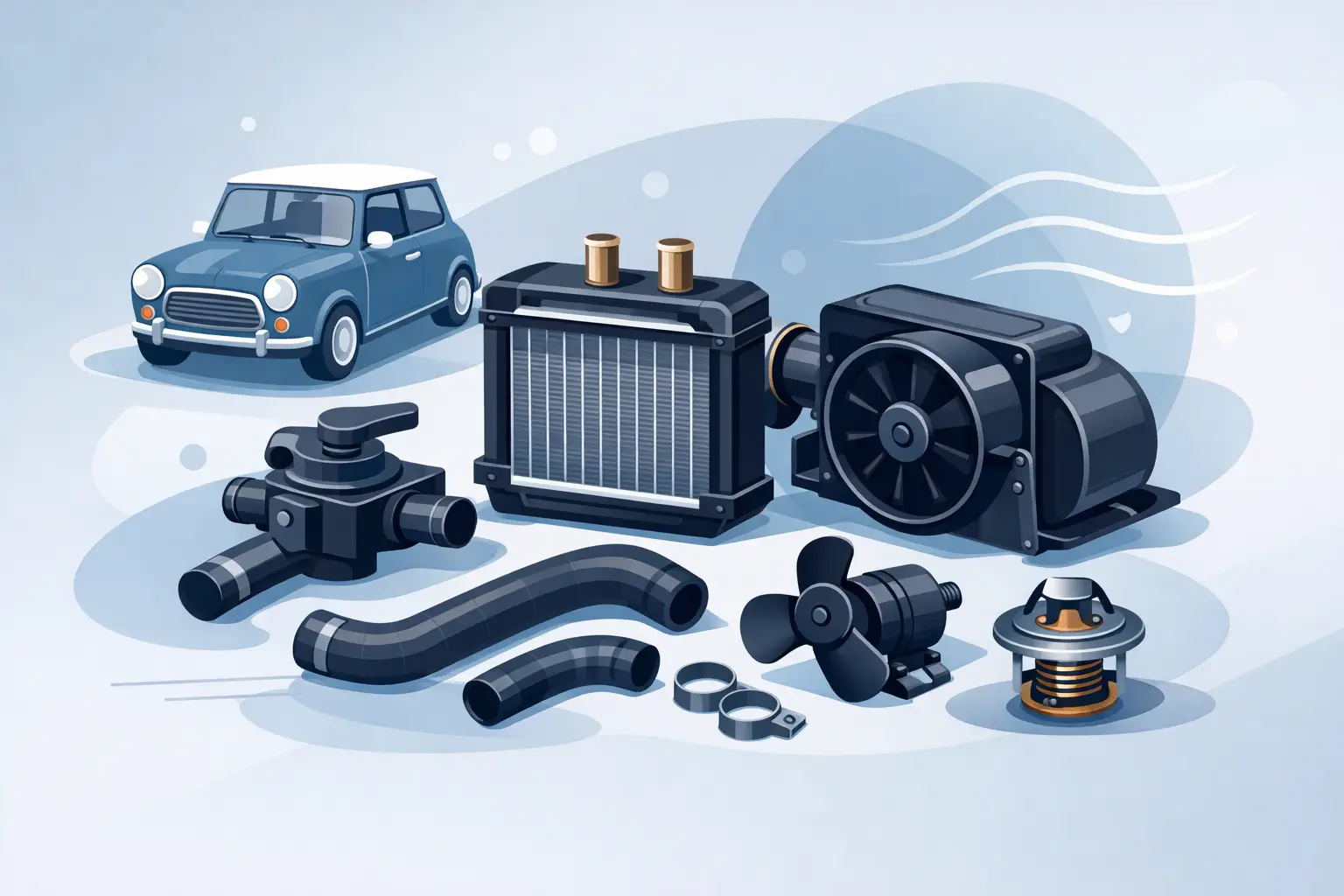
The usual trouble spots are the heater matrix, heater tap or valve, hoses, clips, demister ducting, fan motor, seals and the heater box itself. On cars that have sat for years, you can also find blocked cores, corroded casings and perished foam that lets warm air escape before it reaches the vents.
The matrix is often the headline culprit. If you have a sweet coolant smell inside the car, damp carpets, misting that never really clears or visible coolant staining around the heater unit, the matrix is a likely suspect. Even when it is not leaking, an old matrix can be partially blocked, which means you get lukewarm air at best.
The heater valve is another common weak point. A sticking or leaking valve can leave you with poor temperature control, coolant loss or no hot water flow through the heater at all. Some owners replace the matrix first and only later realise the valve was restricting flow from the start.
Hoses and clips sound basic, but they deserve the same attention as any major component. Old heater hoses harden, crack and swell internally. You may not notice much from the outside, yet coolant flow can still be compromised. If you are taking the system apart, reusing suspect hoses is usually false economy.
Why the heater box condition matters more than people think
A heater box can look serviceable on the bench and still perform badly once fitted. Rust inside the casing, poor seals around the flap areas, loose duct connections and worn mounting points all reduce efficiency. Warm air takes the easiest route, so if the box is leaking or the ducting is loose, your demisters and cabin vents will never see the airflow they should.
This is one area where a piecemeal approach can waste time. Fitting a new fan motor into a badly corroded housing with missing seals will not give the result most owners want. The motor may spin well, but the system as a whole still loses pressure and heat.
It depends on the condition of the car and your plans for it. For a tidy road Mini used all year, refurbishing the complete heater assembly usually makes sense. For a quick recommission on a budget, you might replace only the failed item and revisit the rest later. The key is being honest about the standard you want.
Choosing classic mini heater parts for repair or restoration
There is a difference between getting the heater working and getting it working properly. If your aim is basic function, you can often sort it with a replacement valve, fresh hoses and a flush through the system. If you want strong airflow, decent cabin heat and effective demisting, it is better to treat the heater as a complete system.
Start with the matrix and valve if there are signs of leakage or poor circulation. Add hoses and clips as a matter of course if they are old. Then look at airflow parts – fan motor, ducts, seals and the condition of the heater box. This is where many disappointing repairs fall short. The coolant side gets attention, but the air side stays tired.
Fitment accuracy matters as well. Classic Mini production ran across many years and detail changes do catch people out. Heater components can vary by model and period, so checking the application before ordering saves a lot of grief. A specialist supplier is useful here because the catalogue is built around the car rather than generic dimensions and hopeful guessing.
Signs you need more than a single replacement part
If the heater is noisy, weak and inconsistent, there is a fair chance more than one part has reached the end of its life. A leaking matrix often comes with tired hoses. A sticking valve may have been masking circulation problems elsewhere. Brittle ducting and perished seals often appear on the same cars that still have their original fan motor.
The practical way to judge it is simple. If the system is already apart and several components are clearly aged, replacing only the obvious failure can mean doing the same job twice. Labour is your real cost, even if you are doing it yourself on the drive.
That said, not every car needs a full heater rebuild. A well-kept Mini with a sound heater box and decent airflow may only need a fresh valve and hose set to return to proper working order. It comes down to inspection rather than assumptions.
Common faults that are not actually heater part failures
Not every weak heater is caused by the heater unit itself. Low coolant level, trapped air, a tired water pump, thermostat issues or engine running too cool can all affect heater performance. If the engine never gets up to temperature, the heater cannot produce meaningful heat no matter how good the components are.
Blocked cooling passages also play a part on older engines. You might fit new classic mini heater parts and still get poor output because the rest of the cooling system is full of scale and sediment. That is why a cooling system check should go hand in hand with heater work.
Electrical faults can also mimic heater failure. A poor connection, worn switch or tired wiring can slow the fan motor enough to make the whole system feel ineffective. If the motor sounds lazy or only works intermittently, check the electrical side before condemning the rest.
New parts, refurbished units or upgrade choices?
For most road cars, quality replacement parts are the sensible route. A fresh matrix, reliable valve and new hoses remove the usual failure points and make the car more usable. If originality matters, especially on a period-correct restoration, you may prefer to retain and refurbish the original heater box where possible.
There is a trade-off. Refurbishing original parts can preserve factory character and fit, but only if the base components are sound enough to justify the effort. A badly rusted casing or heavily corroded internals may cost more time than they are worth. In those cases, replacing the assembly or major components is often the cleaner answer.
Some owners also look for improved demisting and stronger airflow rather than strict originality. That can be worthwhile on cars used in real weather, especially if regular winter driving is on the cards. The best setup for a show car is not always the best setup for a Mini that sees wet mornings and dark commutes.
What to replace together for the best result
If the heater is out of the car, it makes sense to think in groups rather than single items. A matrix and valve pair naturally with fresh hoses and clips. A fan motor job pairs with checking ducts, seals and the heater box condition. If the dash is apart for access, it is also a good time to inspect controls and cables.
This approach usually gives better value than chasing faults one by one. It also reduces the chance of filling the system with coolant, testing it, then pulling everything back apart because the next oldest part has failed.
For owners buying parts, this is where a specialist stockist earns its keep. Instead of hunting around several general suppliers, you can source the heater components alongside cooling parts, clips, seals and other bits you will likely need once the job begins. That saves time and helps keep the project moving.
A practical way to buy the right parts first time
Before ordering, identify the exact symptoms. Is it leaking coolant, poor heat, weak airflow, no fan operation or bad demisting? Then inspect what is already on the car. Look for staining, corrosion, split ducting, hardened hoses and loose connections. Finally, match parts to the car’s model and year rather than relying on guesswork.
If the Mini is mid-restoration, buy for the end goal. There is little point fitting the cheapest temporary part if you know the car is being rebuilt to a better standard over winter. On the other hand, if you need reliable heat for current road use, proven fit and dependable quality should come before chasing a few pounds off the order.
Bull Motif Mini Spares serves exactly that sort of job – practical, model-specific parts buying for owners who want to get on with fixing the car rather than decoding generic listings.
A Classic Mini heater will never feel like modern climate control, and it does not need to. When the right parts are in place and the system is sealed, flowing and adjusted properly, it does what it should – clears the screen, takes the edge off a cold day and makes the car far more pleasant to use when the weather turns.