A Classic Mini that cranks happily but fires reluctantly usually points you in one direction – the ignition wants attention. For many owners, the best mini ignition upgrade kits are not about chasing headline power figures. They are about cleaner starting, steadier running, fewer damp-weather misfires, and getting rid of old components that have done their time.
That said, there is no single kit that suits every Mini. A near-standard road car, a fast-road 1275, and a more serious tuned engine all ask different things of the ignition system. The right choice comes down to how you use the car, what distributor you already have, and whether you want a simple reliability upgrade or a more complete change.
What makes the best mini ignition upgrade kits worth fitting?
On a Classic Mini, the ignition system has a hard life. Heat, vibration, moisture and age all work against consistent spark quality. Points wear, condensers fail, caps track, rotors become suspect, and tired leads leak energy where they should be delivering it.
A good ignition upgrade kit tackles those weak points together rather than one at a time. Instead of replacing a single failed item and hoping the rest keeps up, you renew the main wear components as a matched set. That is often the difference between a Mini that feels merely repaired and one that feels properly sorted.
For most road cars, the real gains are reliability and drivability. You may notice sharper starting and cleaner pick-up, especially if the old setup was worn. What you should not expect is a dramatic power increase from ignition parts alone. If your existing system is healthy and correctly set up, the improvement from an upgrade kit will usually be more about consistency than outright performance.
Best mini ignition upgrade kits for different setups
The easiest way to choose is to think in tiers. Not every car needs the most expensive option, but equally there is little point fitting the cheapest basic kit to a heavily modified engine that demands more from the spark.
Stage 1 style kits for dependable road use
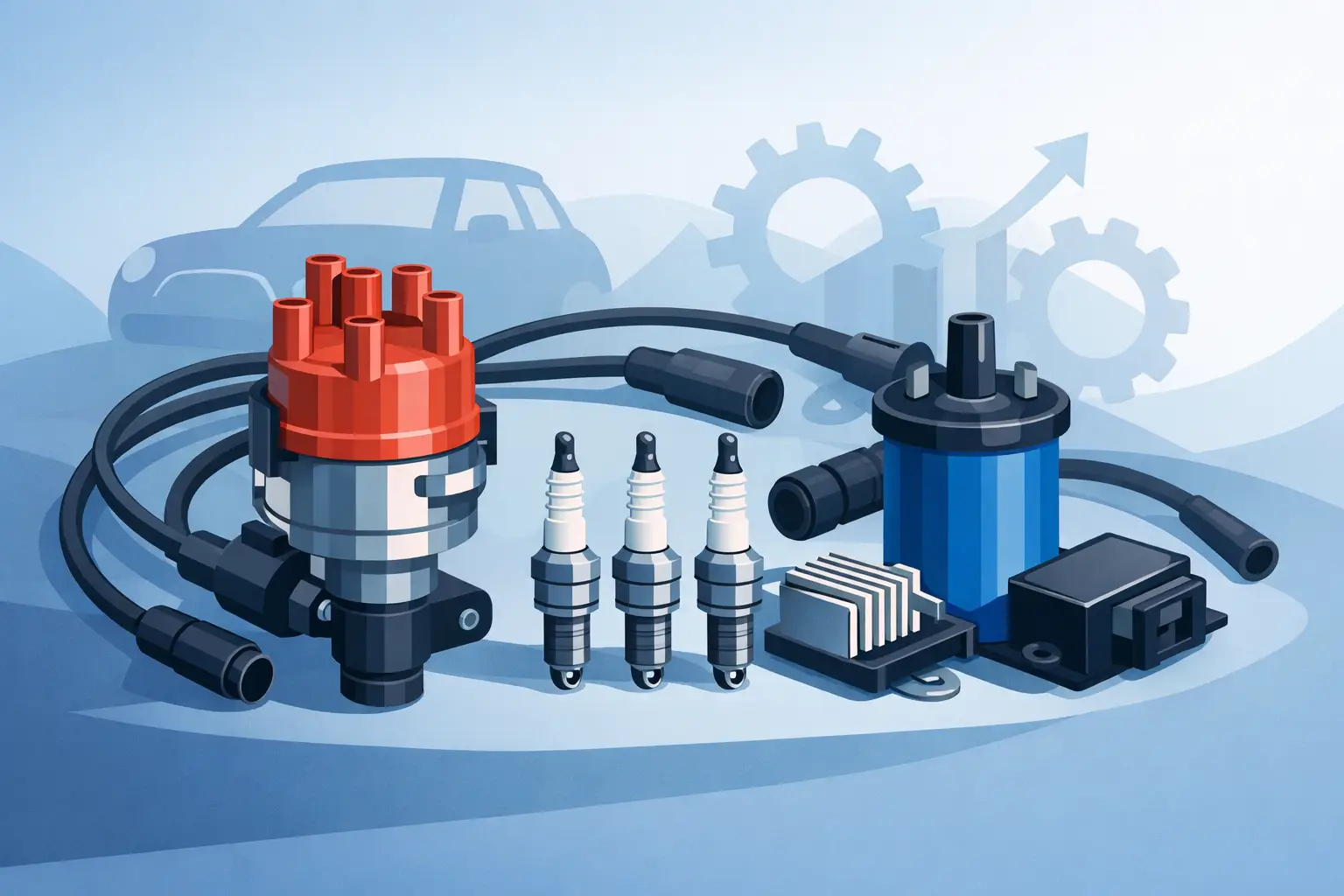
For a standard or lightly modified Mini, a basic upgrade kit built around quality service parts often makes the most sense. That usually means a good cap, arm, plugs, leads and, depending on setup, either fresh points and condenser or an electronic ignition module.
This route suits owners who want straightforward maintenance and original-style fitment. If the car is mainly used for weekend drives, local shows, and fair-weather road miles, this level of upgrade is often enough. The key point is quality. Cheap ignition parts can create more trouble than the worn originals you removed.
Electronic ignition kits for easier starting and less maintenance
For many owners, this is the sweet spot. Replacing points with an electronic ignition module removes one of the most common sources of inconsistency. Once fitted correctly, electronic ignition gives stable triggering without the gradual drift you get as points wear.
This is especially useful on Minis that see regular use or sit for periods between runs. Cold starts tend to be cleaner, idle can become more stable, and you lose the routine job of resetting points gap. It is not a magic fix for a poor engine tune, but it does remove a known weak area.
The trade-off is that electronic ignition still depends on the condition of the rest of the system. If the cap, rotor, coil or leads are poor, a module alone will not make the car faultless. Some owners also prefer to carry their old points as a backup, particularly on longer trips.
Full performance ignition kits for tuned engines
A fast-road or higher-compression Mini may benefit from a more complete upgrade kit that includes a suitable performance coil, uprated leads, quality plugs and electronic triggering. On engines with a cam, better carburation and improved cylinder head work, a stronger and more consistent spark helps the combination work as intended.
This does not mean every tuned engine needs the most aggressive race-spec setup. In fact, many road-going performance Minis are best served by a reliable, well-matched kit rather than the most exotic parts on the shelf. Too much focus on spec-sheet claims can distract from what really matters, which is fitment, timing stability and dependable operation on the road.
Choosing the right kit for your distributor
Before ordering anything, check what distributor is actually on the car. Plenty of Minis are no longer running the exact unit they left the factory with. Lucas and later replacement distributors can differ, and electronic modules are rarely one-size-fits-all.
This matters because the best mini ignition upgrade kits are only the best if they match the distributor body, coil requirements and intended use. A kit for an A-Series with one distributor type may not suit another without changes. If you are unsure, it is worth checking the distributor number or comparing the installed setup before buying.
Coil compatibility is another common stumbling block. Some electronic ignition systems are designed around a specific coil resistance. Fit the wrong coil and you can end up with poor running or a failed module. That is one reason complete kits often make more sense than mixing random parts from different sources.
Reliability first, then performance
Classic Mini owners often ask whether a performance ignition kit is worth it on a standard engine. The honest answer is usually not in full. If the engine is otherwise standard, the big win comes from replacing tired parts with quality equivalents and, where suitable, moving to electronic ignition.
The rest of your tune matters more than catalogue hype. If timing is off, plugs are the wrong grade, carburation is poor, or the engine has vacuum leaks, no ignition kit will tidy all that up. Ignition upgrades work best as part of a properly sorted setup.
On the other hand, if your Mini already has supporting modifications, then a better kit can help the engine make the most of them. A tuned A-Series often feels more responsive when spark delivery is consistent across the rev range. The gain is not always dramatic, but it is noticeable in how cleanly the engine pulls.
What to look for in a quality kit
Build quality matters far more than fancy packaging. A decent rotor arm, properly insulated leads, a reliable cap and the correct coil specification are the foundations. If the kit includes an electronic module, look for proven fitment rather than the cheapest possible option.
It is also worth thinking about how the Mini is used. A fair-weather car that covers modest mileage can be very happy with a simpler package. A Mini used in all seasons, or one that regularly does longer runs, benefits from stronger emphasis on reliability and reduced maintenance.
If originality matters, you may prefer a discreet upgrade that keeps an almost factory appearance. If convenience matters more, a visible modern electronic setup may be the better choice. Neither approach is wrong. It depends on whether your Mini is being judged on period correctness or driven to be enjoyed.
Common mistakes when upgrading Mini ignition
The biggest mistake is treating ignition as a bolt-on cure for every running fault. If the engine has fuelling issues, poor compression or worn mechanical parts, a new kit will not hide them for long. It may improve matters slightly, but it will not solve the root cause.
The second mistake is replacing only half the system. Fitting a performance coil while leaving on old leads and a tired cap is false economy. Likewise, installing electronic ignition without checking the charging system, earths and general wiring condition can lead to frustrating faults that look like bad new parts.
The third is ignoring setup after installation. Even the best kit needs correct timing and a quick check of plug condition and lead routing. Fitment is only half the job.
When a simple service kit is enough
Not every Mini needs a full ignition upgrade. If the car already has electronic ignition, starts well, pulls cleanly and shows no signs of misfire, a quality service kit may be all that is required. Fresh plugs, leads, cap and rotor can restore confidence without changing the system design.
That is often the sensible route on a well-sorted road Mini. Upgrading for the sake of it can be just as pointless as refusing to replace parts that are clearly worn. The right decision comes from the condition of the car in front of you, not a generic parts list.
Our view on the best choice
For most Classic Mini owners, the best balance comes from a matched electronic ignition upgrade kit from a specialist supplier, paired with quality service items and the correct coil. It offers the clearest gain in day-to-day usability without turning a simple road car into an overcomplicated project.
For standard cars, keep it sensible and buy on quality. For tuned engines, choose a kit that supports the spec rather than one that simply sounds impressive. And for any Mini, make sure the basics are right before expecting miracles from new ignition parts.
A reliable spark is one of those upgrades you appreciate every time you turn the key, especially when the weather is against you and the car still starts like it should.