A Classic Mini that skips across bumps, tramlines on worn roads or leans more than it should in quick bends is usually telling you the same thing – the suspension needs attention. The best mini suspension upgrades are not always the most expensive parts on the shelf. They are the parts that match how you actually use the car, fit properly, and work together as a package.
That matters with Minis more than most cars. The suspension is simple, compact and very effective when it is in good order, but every change is easy to feel from the driver’s seat. Get it right and the car feels tight, predictable and eager. Get it wrong and even quality parts can leave you with a Mini that is too harsh, too nervous or simply unpleasant on British roads.
Choosing the best mini suspension upgrades for your car
Before buying anything, decide what the car is meant to do. A road Mini, a fast-road Mini and a competition car may all use upgraded suspension, but they do not want the same setup.
For a mainly road-driven car, comfort and control need to sit together. You want improved turn-in, less float and better stability without making every pothole feel like a kerb strike. For fast road use, you can push further with damping, geometry and stiffness, but there is still a limit if the car spends time on normal A-roads. For track or sprint use, compromise shifts again, and ride quality matters far less than response.
The other point worth being honest about is the base condition of the car. Worn trumpets, tired rubber cones, aged bushes, sagging subframe mounts and poor alignment can make an otherwise decent Mini feel far worse than it should. In many cases, the best upgrade starts with replacing tired standard parts before adding anything more aggressive.
Start with suspension cones and dampers
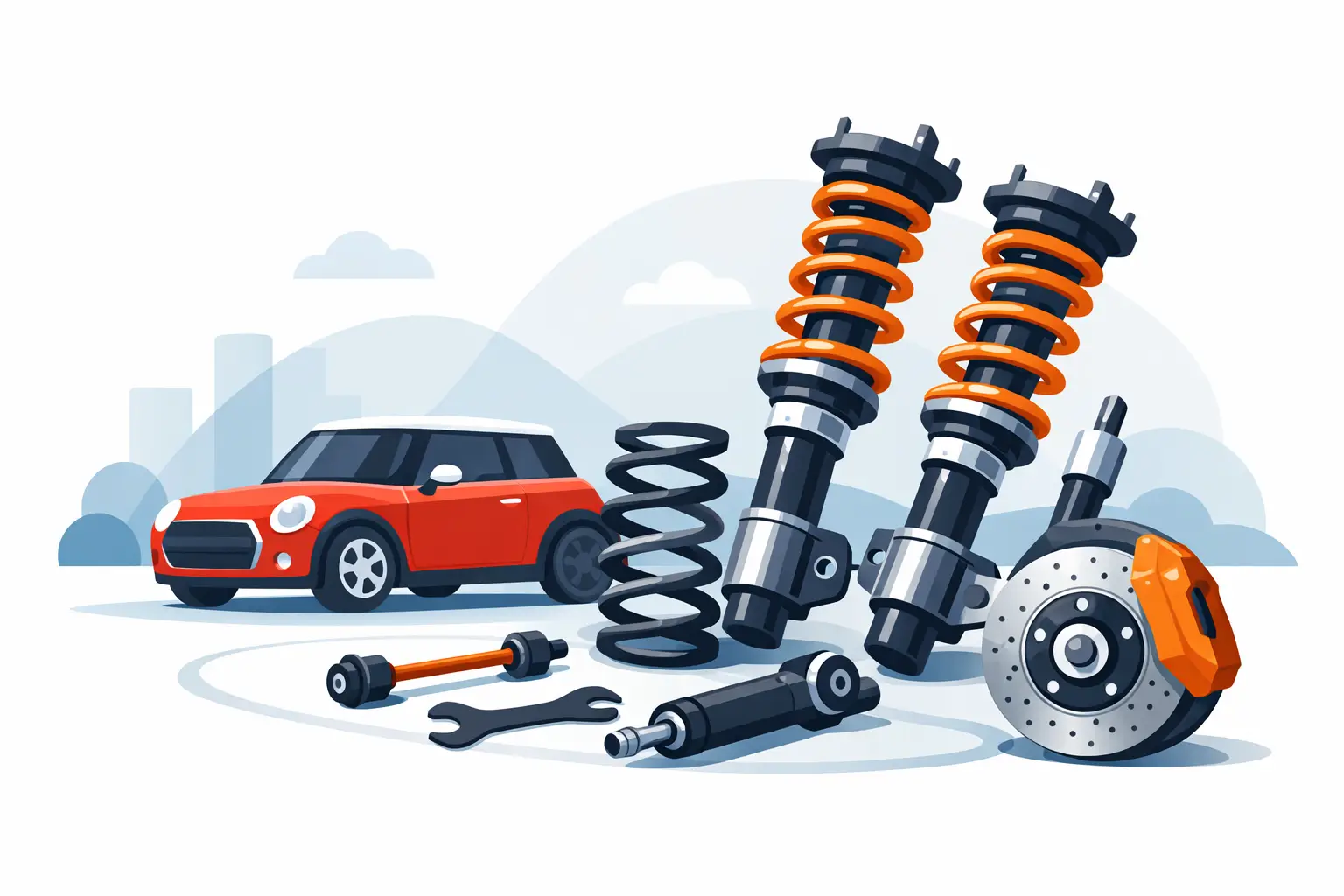
If there is one area that gives the biggest real-world change, it is the combination of cones and shock absorbers. Old rubber suspension cones lose height and rate over time. That leaves the car sitting poorly and behaving inconsistently, often with a choppy ride and vague body control.
Fresh standard-spec cones can transform a road car on their own. They restore the geometry the car was designed around and bring back the Mini’s natural balance. If you want a sensible road setup, this is often a better move than going straight to very firm aftermarket parts.
Dampers are where many owners start, and for good reason. A decent set of upgraded shocks improves control over repeated bumps, reduces wallow and settles the car quicker after weight transfer. On a road Mini, adjustable dampers can be useful, but only if you are prepared to set them properly. Too stiff on the road and the car can start to skip over rough surfaces instead of gripping. Fixed-rate quality dampers are often the better choice for owners who want fit-and-drive improvement without endless fiddling.
Hi-Lo trumpets are one of the most useful upgrades
If the ride height is wrong, everything else becomes harder to judge. Hi-Lo adjusters let you set the car properly, corner by corner, rather than living with whatever height the old hardware gives you. They are one of the most practical Classic Mini suspension upgrades because they help both stance and function.
Lowering a Mini does improve looks and can sharpen response, but there is a point where style starts hurting performance. Too low and the suspension travel disappears, the geometry moves out of its sweet spot and the car can become crashy and nervous. A sensible fast-road ride height nearly always works better than a slammed one.
Bushes, mounts and joints make a bigger difference than people expect
There is no point fitting premium dampers if the suspension is moving around on tired bushes. Rubber bushes, tie bar bushes, knuckle joints and subframe mounts all influence how accurately the car steers and how cleanly it rides bumps.
Standard-style rubber bushes are still the right answer for many road cars. They offer a bit of compliance, they keep noise and harshness under control, and they suit a Mini that sees regular road miles. Poly bushes have their place, especially where durability and sharper location matter, but not every bush on the car needs to be polyurethane. A full poly setup can make the car feel harder edged than some owners want.
This is one of those areas where it depends on use. If the car is a weekend toy or fast-road build, selective poly bushes can work well. If it is a road car you actually enjoy driving distance in, a more balanced mix often feels better.
Anti-roll bars and rear bars – useful, but not always essential
Anti-roll bars are often treated as a must-have, but they are not a magic fix. On a Mini, they can reduce body roll and sharpen the car’s attitude in corners, especially on quicker road setups. Fitted as part of a thought-out package, they can improve confidence and response.
The catch is that bars also change balance. Add stiffness at one end without considering the rest of the setup and you may end up with a car that pushes wide or feels snappy. That is why anti-roll bars make more sense once the basics are sorted – decent cones, good dampers, fresh bushes and correct alignment.
For many road cars, the standard layout in good condition is better than people expect. A bar starts to earn its keep when the driving gets quicker or the suspension package is already more performance-focused.
Adjustable suspension arms and proper geometry
If you are chasing a really sorted Mini, geometry matters. Adjustable bottom arms and tie bars let you set camber and caster more accurately, which has a direct effect on turn-in, straight-line stability and tyre wear.
This tends to be one of the best mini suspension upgrades for fast-road and track-biased cars rather than casual road cars. The benefit is genuine, but only if the car is then aligned correctly. Bolting on adjustable parts and guessing the settings is not an upgrade. It is just adding more variables.
A sensible road-biased setup usually wants moderation. Too much negative camber might look purposeful, but it can make the car twitchy on poor surfaces and wear the inner edges of tyres. The best geometry settings are usually the ones that make the car predictable everywhere, not just sharp on a smooth day.
Do not ignore the rear of the car
A lot of Mini owners focus on the front because that is where most of the steering feel lives, but the rear suspension plays a big part in how stable the car feels. Tired rear cones, old dampers and worn mounts can make the car feel loose, bouncy or unsettled mid-corner.
Refreshing the rear at the same time as the front usually gives a much more balanced result. It also stops the common mistake of improving the front response so much that the neglected rear becomes the weak point. Minis are light and communicative, so imbalance shows up quickly.
The best upgrade path for most owners
If the aim is a road or fast-road Classic Mini that feels noticeably better without turning into a project of its own, there is a sensible order to follow. Start by checking what is worn out. Replace old cones, knuckle joints, bushes and mounts as needed. Fit quality dampers suited to road use. Add Hi-Lo adjusters so the car can be set to the right height. Then get the alignment done properly.
Once that is sorted, drive it. A lot of owners find the car is already where they want it to be. If you still want more response, that is the stage to consider adjustable arms, selective poly bushes or anti-roll bars.
That staged approach usually saves money as well. It stops you buying parts twice and helps you feel what each change has actually done. For a specialist supplier like Bull Motif Mini Spares, that is often the most useful advice to give – buy the parts that solve the problem in front of you, not the parts that sound most impressive in a forum signature.
What to avoid when upgrading Mini suspension
The biggest mistake is mixing random parts with no clear plan. Very stiff dampers, heavily lowered ride height and aggressive bushes might sound like a performance setup, but on real roads it can make the car slower and less enjoyable. Grip comes from tyre contact and control, not just stiffness.
The second mistake is ignoring fitment quality. A Mini responds well to upgrades, but only when the parts are fitted correctly and the rest of the suspension is in sound condition. Even the best components will disappoint if they are installed on a car with tired mounts, poor alignment or hidden wear elsewhere.
The third is expecting one part to do everything. There is no single best suspension part for every Mini. The right answer depends on whether you value comfort, sharper turn-in, improved stance, competition response or a bit of all four.
A well-sorted Mini does not need to be extreme to feel special. Usually, the best results come from quality parts, sensible setup and the discipline to keep the whole system working together. If your car feels better every time the road gets tighter, and still behaves itself on the drive home, you have chosen well.