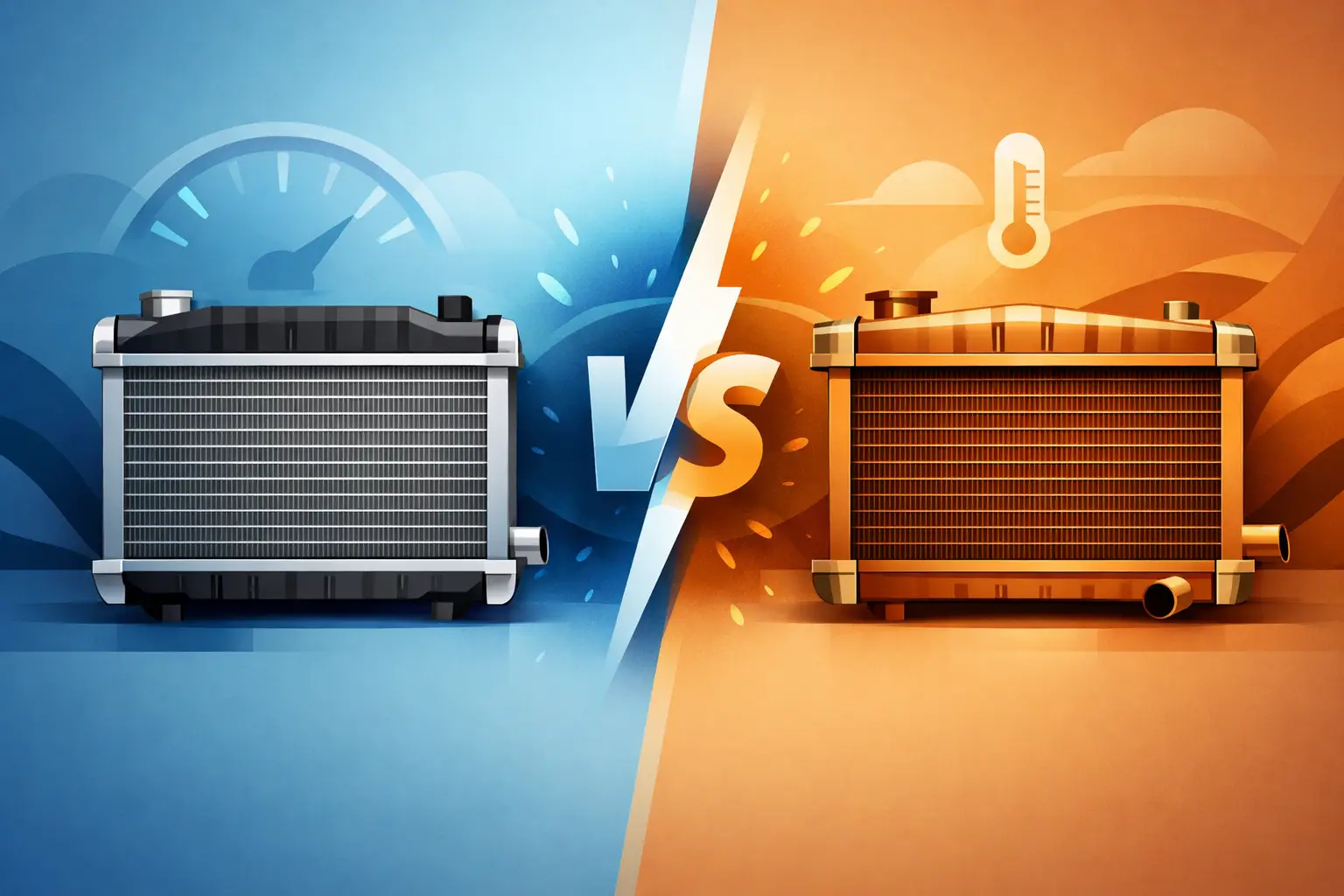
A Classic Mini that starts creeping up the temperature gauge in traffic rarely needs guesswork. The radiator has to suit the engine, the way the car is used and the space available behind the grille. In the mini alloy radiator vs copper debate, neither option is automatically right for every car. A standard road Mini, a period restoration and a tuned fast-road build can all have different answers.
Mini alloy radiator vs copper: the real difference
The original-style copper and brass radiator remains a sensible choice for many Classic Minis. It looks correct, can be repaired by a competent radiator specialist and suits standard or mildly improved engines well when the rest of the cooling system is in good order. That means a sound water pump, correct thermostat, clean block waterways, decent hoses and a properly working fan.
An alloy radiator is usually chosen for its modern core design, lower weight and potential for greater cooling capacity. Many feature wider tubes and a high-efficiency fin arrangement, allowing more heat to be transferred through the core. For Minis that spend time in heavy traffic, cover regular motorway miles or run an uprated engine, that extra reserve can be useful.
The material alone does not tell the whole story. Copper conducts heat very well, but radiator performance depends on the complete design: core thickness, tube size, fin density, airflow, coolant flow and the quality of the build. A tired copper radiator with blocked passages will not outperform a well-made alloy unit simply because it is copper. Equally, a cheap alloy radiator with poor welds or unsuitable fitment is not an upgrade just because it looks purposeful.
When a copper radiator makes the most sense
For an original-spec restoration, copper and brass is usually the natural choice. The traditional appearance matters when the car is being built to period specification, judged at shows or simply kept as close to factory character as possible. It also sits well in an engine bay where the rest of the components retain their original look.
Copper radiators have another practical advantage: repairability. A traditional unit can often be recored, soldered or repaired by a radiator specialist, depending on its condition. That can make it a worthwhile long-term part rather than a disposable component. If you own a car for years and prefer to maintain original equipment, this counts for a lot.
A good-quality standard replacement copper radiator is generally ample for a healthy 848cc, 998cc or 1275cc road engine. Many overheating complaints on otherwise standard Minis stem from sediment in the block, a slipping fan belt, incorrect ignition timing, a failing thermostat or air not being directed through the radiator. Replacing the radiator without addressing those faults can leave the real problem untouched.
Copper is not without its drawbacks. It is usually heavier than alloy, and older units can suffer from internal fouling, damaged fins and leaks around tired soldered joints. A new unit may also cost more than some alloy alternatives. The key is to compare like for like: quality, correct mounting arrangement and compatibility with your Mini, rather than buying on price alone.
Why owners choose an alloy radiator
Alloy radiators are particularly attractive on modified Minis. A larger-bore engine, increased compression, a performance camshaft, spirited road use or long periods of idling can all increase the cooling demand. If the engine is making more heat, a higher-capacity radiator gives the system a better chance of controlling it before the gauge climbs.
Weight saving is modest in the context of a full road car, but it is still welcome on a competition-focused Mini. More importantly, alloy units are often designed around a thicker or more efficient core. That can provide useful headroom on a fast-road, track or hillclimb car where the engine is worked harder than BMC ever intended.
There is a visual consideration too. A clean alloy radiator suits an engine bay built around modern upgrades, especially alongside an electric fan, alloy fittings and performance plumbing. That will not matter to everyone, but there is nothing wrong with choosing a part that fits the character of the build as well as its technical requirements.
Do not assume that an alloy radiator removes the need for good airflow. The Mini’s side-mounted arrangement presents its own challenges. Air must enter through the grille, pass through the core and exit properly. A fan that is the wrong way round, missing shrouding, an obstructed grille or gaps that allow air to bypass the core can reduce cooling efficiency whichever radiator is fitted.
Fitment must come before appearance
Check the radiator is intended for your particular setup. Classic Minis have variations in mounting points, hose positions, fan clearance and cowling arrangements. A thicker core can be beneficial, but it may leave less room around the mechanical fan or associated components. If you are using an electric fan, confirm both the fan position and whether it is set as a puller or pusher for the airflow direction required.
Also check the filler neck and radiator cap specification. The cap controls system pressure, which affects the coolant boiling point. Using the wrong cap can create leaks, poor recovery behaviour or unnecessary stress on hoses and joints. The radiator, cap, expansion arrangement and coolant choice should work as one system.
Cooling performance: look beyond the temperature gauge
A stable gauge is encouraging, but it is not the only test. A Mini should warm up steadily, maintain temperature in traffic and recover after a hard run without pushing coolant out or smelling hot. If the gauge is suddenly reading high after a radiator change, first confirm the sender, wiring and gauge are accurate before assuming the new radiator is at fault.
For a road Mini, an engine that runs too cool is not ideal either. The thermostat helps the engine reach its intended operating temperature, improving drivability and reducing wear during warm-up. Removing the thermostat to disguise an overheating issue is not a proper repair. Find the restriction, fault or lack of airflow instead.
Before fitting any replacement radiator, flush the cooling system thoroughly. A new core can quickly become contaminated if rust, scale and old sealant remain in the engine block. Inspect the bottom hose for internal collapse, check the water pump for leakage or play, and replace perished hoses and weak clips. Fresh correct-strength coolant protects against corrosion as well as frost, so plain water should not be the default fill for a road car.
Durability and maintenance
Both radiator types last longer when the coolant is maintained. Alloy systems are particularly dependent on suitable coolant and clean electrical earths. Stray electrical current through coolant can accelerate corrosion, so make sure engine and body earth straps are present and in good condition. Avoid mixing unknown coolant types, and change coolant at sensible intervals rather than treating it as a fit-and-forget fluid.
Copper and brass radiators also need care. Bent fins restrict airflow, while corrosion and sediment reduce the core’s ability to shed heat. Gentle cleaning from the engine side outward can remove debris, but do not attack the fins with high-pressure water or a stiff tool. They bend easily.
If your Mini sees winter roads, inspect the radiator and surrounding panelwork regularly. Road salt, moisture and trapped debris affect the whole front-end area. Keeping the grille, cowling and radiator clear is simple preventative maintenance that pays off regardless of material.
Choosing for your type of Mini
For a standard road car or a restoration where original appearance matters, a quality copper and brass radiator is hard to argue with. It is proven, appropriate and serviceable. Spend the saved effort on making sure the complete cooling system is clean and correctly assembled.
For a modified 1275, a car that sits in summer traffic, or a Mini used hard on fast road and track, an alloy radiator can be a worthwhile upgrade. Choose a proven unit with correct brackets, hose outlets and fan clearance, rather than forcing a generic radiator to fit. A specialist supplier such as Bull Motif Mini Spares can help you match the radiator to the rest of your cooling parts instead of buying isolated components that do not work together.
Budget has a place in the decision, but the cheapest answer can become expensive if it leaks, fits poorly or leaves the engine running hot. Consider the cost of the radiator alongside the condition of the fan, thermostat, hoses, cap, coolant and water pump. Cooling reliability comes from the whole package.
The best choice is the one that gives your Mini enough cooling capacity without compromising fitment, reliability or the style of build you want to create. Start with an honest assessment of how the car is used, then fit the radiator that supports that job properly.