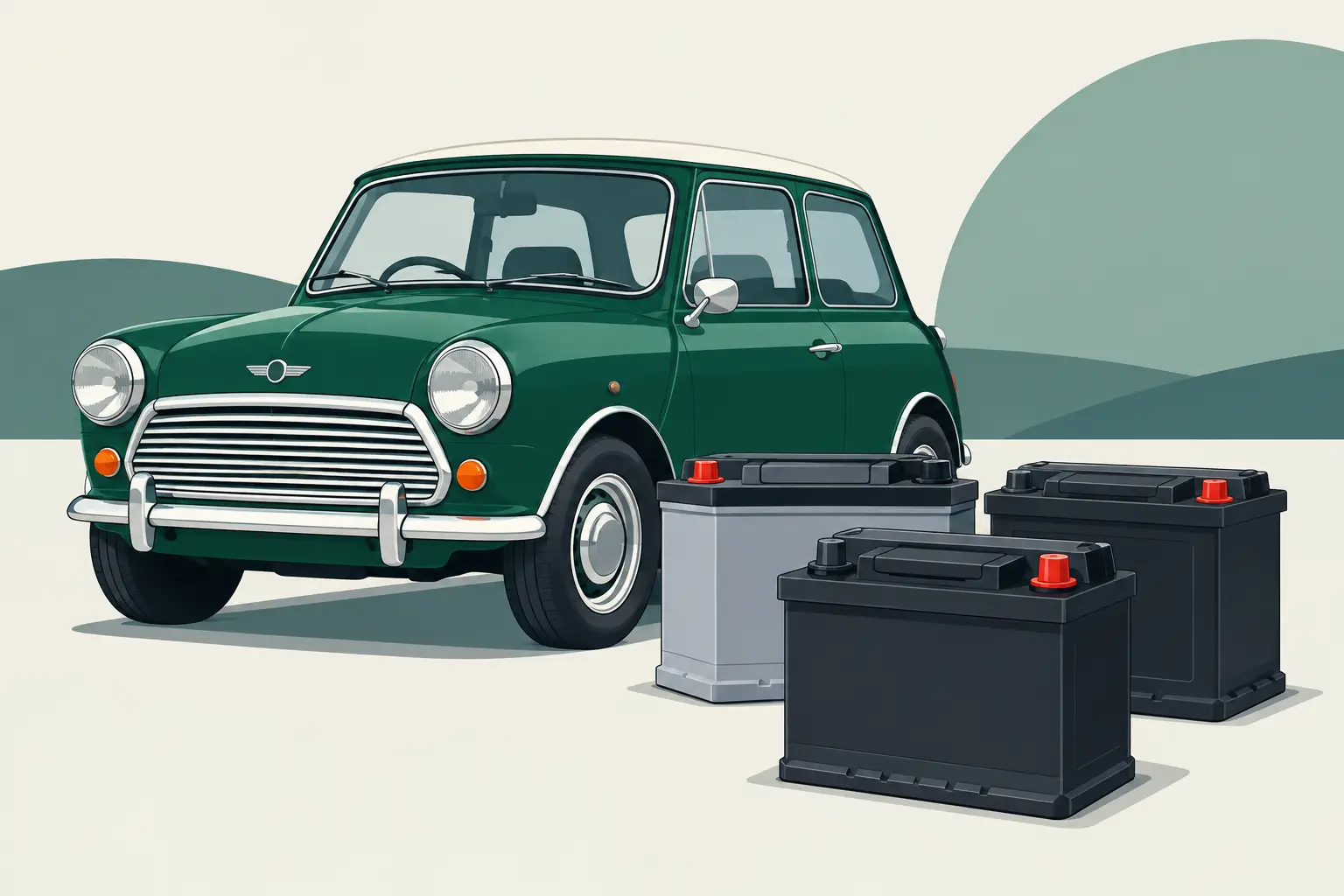
A Classic Mini can have a perfectly healthy engine and still leave you stranded because of one poorly chosen battery. The best Classic Mini battery options are not simply the ones with the biggest numbers on the label. Correct case size, terminal layout, cable condition and the way you use the car matter just as much.
For a regularly driven road Mini, a good-quality conventional 12V battery in the correct compact fitment is normally the sensible choice. For a restoration, a weekend car or a tuned engine, there are a few extra points worth checking before ordering.
Best Classic Mini battery options by how you use the car
The standard-style compact lead-acid battery remains the right answer for most Classic Minis. It fits the original battery location, works with the car’s charging system when that system is in good order, and provides enough starting performance for a standard A-series engine.
A typical 038-size battery is commonly used on many Classic Minis. Before treating any battery code as a guaranteed fit, however, measure the available space and compare its dimensions, terminal arrangement and height with the battery being replaced. Minis have had a long production life, and plenty have been modified, repaired or converted over the years.
For a standard 998cc, 1275cc or mildly improved road car, choose a reputable conventional battery with suitable cold cranking performance rather than chasing maximum capacity. A battery with around 40-45Ah capacity and sensible cold cranking amps is generally ample when the engine, starter motor and earth straps are in proper condition.
If the Mini is used infrequently, a higher-quality maintenance-friendly conventional battery can be worthwhile, but it will not overcome months of standing unused. A smart conditioner is often a better investment than fitting an oversized battery that does not suit the tray or retaining clamp.
Standard flooded batteries: the sensible everyday choice
A conventional flooded lead-acid battery offers the best balance of price, availability and suitability for the majority of owners. It is familiar technology, easy to replace and well suited to Classic Mini charging systems that are correctly maintained.
This is the option to choose for a road-going Mini that gets regular use, whether it is a tidy daily driver, a usable restoration or a weekend car that sees proper journeys. Look for a known brand, a solid warranty and the correct terminal configuration. Saving a small amount on a no-name battery rarely feels worthwhile when it fails on a cold morning.
Some batteries are sold as sealed maintenance-free units. They are still usually conventional lead-acid designs, but they do not require routine topping-up. That makes them neat and practical in the Mini’s boot-mounted battery position, provided the battery is secured correctly and the compartment is kept clean and dry.
AGM batteries: useful, but not automatically better
Absorbent Glass Mat, or AGM, batteries are more resistant to vibration and can cope well with repeated discharge and recharge cycles. They can make sense in a Mini with additional electrical equipment, regular short journeys, a powerful audio system or motorsport use.
There is a trade-off. AGM batteries cost more, and a tired dynamo, voltage regulator or alternator conversion with incorrect charging voltage can shorten their life. They are not a cure for a weak charging system. Before fitting one, check that your charging output is stable and appropriate for the battery specification.
An AGM battery can be a good upgrade where space and terminals match, but it is not essential for a normal Classic Mini. In many cases, spending the difference on new battery leads, earth straps and a charging-system check will deliver more reliable starting.
Lightweight motorsport batteries: specialist equipment
Compact gel, AGM racing and lithium batteries can remove weight and free up space, which may appeal to competition and track-day Mini owners. They are not a straightforward fit-and-forget replacement for a standard road battery.
Small lightweight batteries have less reserve capacity. Leave the lights on, make repeated short starts or run an electric fan in traffic, and they can discharge more quickly than a conventional unit. Lithium batteries also need the correct management, charging approach and secure installation. For a road Mini, the weight saving is rarely worth sacrificing the reliability margin of a full-size battery.
Check fitment before choosing a Classic Mini battery
Battery fitment is about more than length and width. The battery must sit securely in the original tray or battery box, with the proper clamp or retaining strap fitted. A loose battery can damage terminals, crack its case and create a serious short-circuit risk if it contacts bodywork.
Start by checking the physical size of the existing battery and tray. Measure length, width and overall height, including terminals. A battery that fits under a cover but places its terminals too high can foul the clamp, boot board or cables.
Terminal layout is equally important. The positive and negative posts need to be on the correct sides for your existing leads to reach without being stretched across the battery. Do not force or extend tired cables as a workaround. Correct-length battery leads with clean terminals are safer and more reliable.
Classic Minis were built in both positive-earth and negative-earth forms. Many early cars have since been converted to negative earth, particularly when fitted with an alternator, electronic ignition or modern accessories. The battery itself still has clearly marked positive and negative terminals, but the vehicle’s earth arrangement must be understood before reconnecting anything. Never assume a restored or modified Mini follows its original factory specification.
Capacity and cold cranking amps: what actually matters
Amp-hours, shown as Ah, describe stored capacity. Cold cranking amps, or CCA, indicate the battery’s ability to supply a high current in cold conditions. Both figures are useful, but neither replaces correct fitment and a sound electrical system.
A standard A-series engine does not need an enormous CCA figure to start. If a suitable battery struggles, inspect the basics before buying a larger one. Corroded terminals, a weak engine-to-body earth strap, an old starter motor, poor ignition timing or heavy oil in winter can all make starting seem like a battery problem.
A modestly larger capacity can be helpful on a Mini with an electric cooling fan, auxiliary lamps, heated screen, upgraded stereo or frequent stop-start use. It still needs to fit securely and be supported by a charging system capable of replacing the energy used. A dynamo-equipped car driven only on short journeys may not keep up with a heavy electrical load, whatever battery is fitted.
Make the new battery last longer
The battery in a Classic Mini lives in an area that deserves occasional attention. Keep the tray clean, clear any drain points and deal with dampness or corrosion promptly. Acid damage around the battery box is common on neglected cars and can become an expensive repair if ignored.
Clean the terminals and cable ends before installation. They should be bright, tight and protected with a suitable terminal grease or protective spray. Inspect the earth lead at the same time, including its connection to the bodyshell and engine. A corroded earth can mimic a flat battery, cause slow cranking and create odd electrical faults.
After fitting, make sure the battery is held down properly and that no metal tool, trim panel or loose item can bridge the terminals. On a Mini used for competition, long storage or added security, a correctly installed battery isolator can be a sensible addition.
If the car is parked for several weeks at a time, either take it for a proper run regularly or use a suitable smart conditioner. Starting the engine for a few minutes on the drive is not the same as charging the battery. It can actually use more power than the dynamo or alternator puts back.
A quick charging-system check
A fully charged conventional 12V battery should normally show roughly 12.6V at rest. With the engine running, a negative-earth alternator-equipped Mini will commonly show a charging voltage in the region of 13.8V to 14.5V, depending on conditions and system design. Dynamo systems behave differently and should be assessed with their regulator and wiring in mind.
Readings outside the expected range, warning-light issues or repeated battery failures are reasons to investigate the charging circuit rather than replace batteries repeatedly. Check the fan belt, connections, earths, regulator or alternator, and condition of the main battery cables.
The right battery is the one that fits the car properly, matches its electrical demands and is backed by healthy wiring and charging components. Choose quality over headline figures, secure it correctly, and your Classic Mini is far more likely to start when the next decent driving day arrives.