A Classic Mini that crashes over bumps, sits unevenly or wanders under braking is usually telling you the same thing – the suspension needs attention. This classic mini suspension guide is aimed at owners who want to understand what is fitted, what wears out, and where to spend money for the best result on the road.
The Mini’s suspension is one of the reasons the car feels so alive. It gives sharp turn-in, plenty of feedback and a compact layout that makes the most of limited space. The trouble is that many cars are now running with a mix of tired original parts, old pattern replacements and upgrades added over decades. When the set-up is wrong, the car can feel nervous rather than nimble.
How Classic Mini suspension works
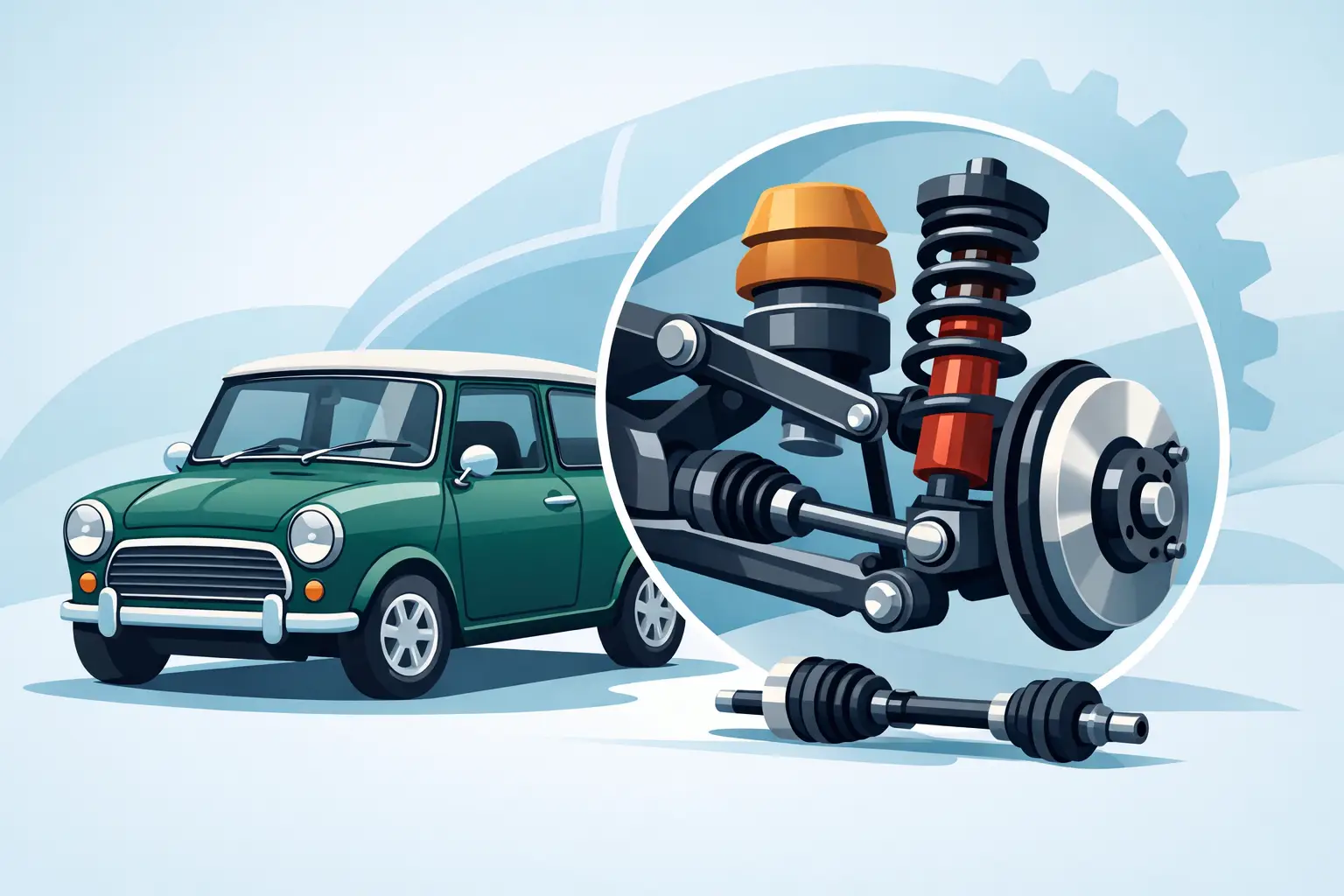
Unlike many small cars of its era, the Classic Mini does not rely on conventional coil springs in standard form. Most road cars use rubber suspension cones, with the wheel movement controlled by dampers and linked front to rear by the suspension geometry built into the subframes and arms. Earlier Hydrolastic cars are a different system altogether, so the first job is knowing which arrangement your Mini has before ordering parts.
On dry suspension cars, the basic components are simple enough: rubber cones carry the springing, trumpets or adjustable trumpets set the ride height relationship, knuckle joints transfer movement, top and bottom arms locate the wheels, and dampers control bounce. Add bushes, tie bars, wheel bearings and correct alignment, and you have the full picture. Ignore any one of those and the car will never feel right, however good the rest of it is.
Classic Mini suspension guide to common wear points
Rubber cones are one of the biggest trouble spots. They sag with age, even on cars that are not driven much. A Mini sitting low, especially at the front, often points to tired cones. The ride also becomes harsher because old rubber loses the progressive action that makes the original set-up work. Many owners assume a low Mini looks sporty, but if the cones are worn out the handling usually suffers.
Knuckle joints are small parts with a big effect. When they wear, you can get knocking, inconsistent ride height and vague suspension movement. If you are replacing cones, it makes sense to inspect or renew the knuckles at the same time. It is false economy to leave old ones in place when access is already there.
Bushes are another area where age matters as much as mileage. Standard rubber bushes generally give the best balance for a road car because they allow proper movement without adding too much harshness. Poly bushes can sharpen things up and last well, but the result depends on where they are used and the quality of the parts. A full poly conversion on a road Mini can feel too hard if the rest of the car is already stiff.
Dampers do not hold the car up, but they decide how controlled it feels. Worn dampers let the car bounce, float and lose composure on uneven roads. Oil leaks are an obvious sign, though some tired dampers simply lose control without leaving much evidence. If the car hops sideways on rough bends, the dampers deserve close attention.
Standard, uprated or adjustable?
This is where a lot of builds go off course. Owners often fit performance parts before restoring the original suspension condition, then wonder why the car rides badly. A fresh standard set-up on good quality components is often better than a mixed collection of cheap adjustable parts.
For a road Mini, standard rubber cones, decent dampers and sound bushes usually deliver the best result. You keep the character of the car without making it tiring to drive. If the car is used for fast road work, adjustable dampers can make sense, but only if they are set sensibly. Winding everything to the hardest setting does not make the Mini handle better. More often, it makes it skittish on British roads.
Adjustable trumpets are useful because they let you fine-tune ride height properly after fitting new cones. That said, they are not a cure for worn suspension. If the cones are tired, adjustable trumpets only mask the issue for a while. Set ride height with good components first, then make small corrections.
Competition cars are a different matter. A sprint, hillclimb or track Mini may need firmer damping, different bush materials and a more aggressive geometry set-up. Even then, there is always a trade-off. What works brilliantly for ten hard laps can be miserable on normal road miles.
Ride height and why it matters
Ride height on a Classic Mini is not just about looks. It affects suspension travel, steering feel, driveshaft angles and the way the car responds under braking and cornering. Too low and the car can bottom out, tramline and lose compliance. Too high and it may feel awkward and less planted.
Many owners chase the low stance seen on show cars, but for a proper road Mini, sensible ride height usually works best. You want enough clearance and enough suspension movement for real roads, especially if the car sees passengers, luggage or rough surfaces. A slightly higher Mini that keeps tyre contact and composure will usually be faster and more enjoyable than one slammed onto its bump stops.
After changing cones or trumpets, let the suspension settle before making final adjustments. New parts can sit differently after a short period of use. It also pays to check that the car sits level side to side and front to rear, rather than assuming matching trumpet lengths will automatically give a perfect stance.
Steering and suspension go together
A lot of handling complaints blamed on suspension are actually a combination of suspension, steering and wheel alignment. Track rod ends, rack mounts, wheel bearings and even tyre choice all influence how the car feels. If the steering is loose or the alignment is out, new suspension parts alone will not fix the problem.
The same goes for subframe mounting points. If the front or rear subframe is moving because mounts are worn or corroded, the whole car can feel unsettled. On restoration jobs, it is worth looking beyond the obvious service parts and checking the structure that holds everything in place.
Alignment should never be an afterthought. Once the suspension is rebuilt, get the geometry checked properly. Even a road-going Mini benefits from careful set-up. Small changes to toe or camber can have a noticeable effect because the car is light and direct.
Choosing parts for the job
Good fitment matters with Mini suspension parts. Cheap components that look similar on the bench can behave very differently once installed. Rubber quality, bush hardness, machining accuracy and overall consistency all matter, especially on a car as sensitive as a Mini.
It is usually best to think in systems rather than one-off parts. If the front end is apart for cones and knuckles, inspect the top arm shaft, lower arm pin, bushes, bump stops and dampers. If the rear is sagging, check the cones, trumpets, radius arm bearings and dampers together. Replacing one visibly worn item while leaving the rest untouched often means doing the same job twice.
For owners rebuilding a car from the shell up, this is one area where planning pays off. Decide early whether the car is standard road, fast road or competition-biased, then buy parts that suit that use. Bull Motif Mini Spares focuses on that practical approach – getting the right components for the way the car will actually be driven.
When to restore and when to upgrade
If originality matters, a correct standard suspension rebuild is often the right answer. It preserves the factory feel and keeps the car enjoyable on typical UK roads. For many classics, especially weekend road cars, that is more valuable than chasing outright stiffness.
If you want a sharper Mini, upgrade selectively. Better dampers, adjustable trumpets and carefully chosen bushes can improve control without ruining comfort. Going too far too early usually creates a car that impresses on paper but feels tiring in the seat.
The best Minis tend to have suspension that is balanced rather than extreme. They steer cleanly, ride with some compliance and stay composed when the road surface turns patchy. That comes from using decent parts, fitting them properly and resisting the temptation to over-specify everything.
If your Mini feels harsh, loose or oddly unpredictable, treat that as a prompt to inspect the whole set-up rather than throwing random upgrades at it. Get the basics right, and the car usually rewards you straight away with the sort of handling that made the Mini famous in the first place. The smart money is nearly always spent on quality, condition and correct set-up before anything flashy.