A Classic Mini never hides bad metalwork for long. A shiny paint finish might distract the eye for a bit, but if the swage lines are off, the gaps are wrong or the steel is thin, it always shows up once the car is back on the road. That is why choosing the right classic mini body panels matters just as much as the welding itself.
For some jobs, any replacement panel that vaguely matches the shape will get a tired Mini through an MOT. For a proper restoration, a long-term road car or a shell you want to be proud of, that approach usually costs more in the end. Better fit means less cutting, less fettling, less filler and a better result once the paint goes on.
Why panel quality matters on a Classic Mini
The Mini’s body structure is compact, but it is not simple. Many panels do more than cover a hole. Sills, floor sections, heelboard areas, front panels, scuttle sections and rear quarter repairs all affect strength, alignment and how the rest of the shell fits together. If one section is slightly out, it can knock on to doors, subframe mounting points, front wings and even bonnet fit.
That is where quality pays for itself. A well-made panel saves time at the bench and avoids the sort of compromise that turns into trouble later. Thin steel, poor pressing lines and inaccurate edges can leave you chasing alignment from one end of the car to the other. On a Mini, that can become a very expensive false economy.
For owners doing work at home, the difference is even more obvious. If you are replacing a doorstep, outer sill or A-panel in your garage rather than on a jig in a bodyshop, a panel that fits as it should gives you a far better chance of getting the shell square and the shut lines acceptable.
Choosing classic mini body panels for the job
Not every repair needs the same level of panel. That sounds obvious, but it is where many projects go off course. If you are patching a localised rust area on a usable car, a repair section may be the sensible answer. If you are rebuilding a car shell-up, mixing cheap repair pieces with high-end structural panels can create more work than it saves.
You need to think about the goal of the build first. A tidy road Mini, a concours restoration, a fast-road shell and a rally car all place slightly different demands on the metal. Original appearance may matter most on one car, while strength and practicality matter more on another.
It also depends on where the panel sits. Visible outer panels need crisp lines and good pressings because poor fit will always stand out. Structural sections need correct dimensions and decent gauge steel because they affect safety, stiffness and long-term durability. In many cases, both matter.
Heritage panels or pattern panels?
This is usually the first question buyers ask, and rightly so. British Motor Heritage panels have a strong reputation in the Classic Mini world because they are generally closer to original specification in shape, pressing and fit. When you are replacing major sections or want the shell to look right, they are often the best starting point.
That does not mean every non-Heritage panel is wrong for every job. Some pattern panels are perfectly usable for smaller repairs or budget-conscious projects, especially if the person fitting them knows how to modify and finish them properly. The issue is consistency. One batch may be decent, another may need much more work.
So the trade-off is simple. Heritage panels usually cost more up front, but often reduce labour and compromise. Pattern panels can help keep a project moving when budget is tight, but the fitter may need to spend more time trimming, reshaping and correcting details. If you are paying bodyshop rates, that extra labour can wipe out the saving quickly.
The panels that commonly need attention
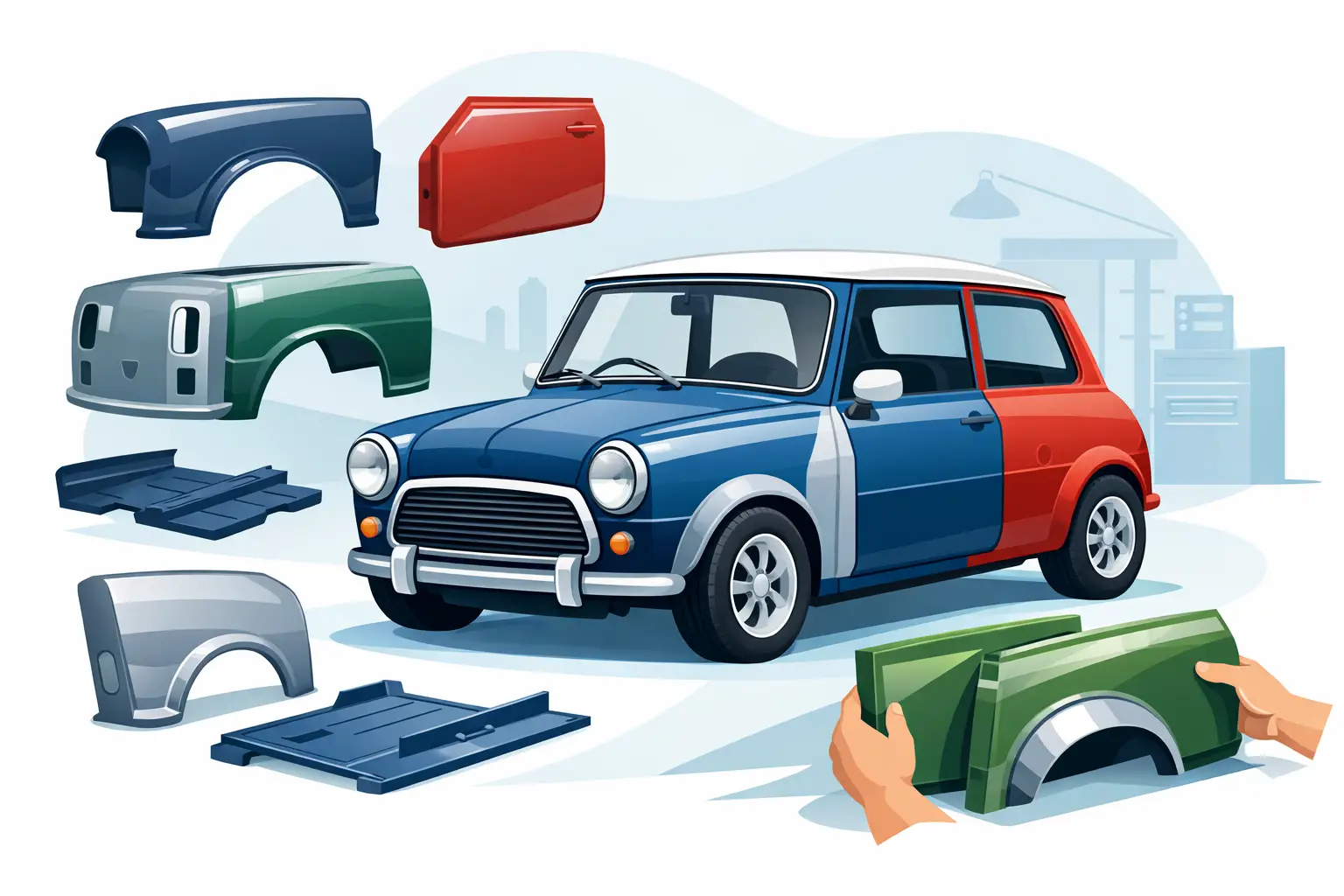
Most Mini restorations circle back to the same corrosion areas. Front wings, A-panels, front panels, scuttle corners, sills, floor pans, boot floor sections, rear valance corners and rear quarter repairs are all regular jobs. Add in door skins, door steps, battery box sections and heelboard repairs, and you have the usual shopping list for many rebuilds.
The important thing is not to buy in isolation. If a front wing has gone, check the A-panel, hinge area and scuttle edge. If the sill is rotten, inspect the inner sill, floor edge and closing panels. If the rear valance needs work, look closely at the boot floor and rear companion bin areas. Minis rust in groups, not one piece at a time.
That is one reason specialists matter. Buying panel by panel from a general parts source can leave you discovering missing related items halfway through the job. A proper Mini supplier understands how these repairs actually happen and how one area affects the next.
What to check before you buy
Fit is the headline issue, but it is not the only one. Pressing accuracy matters because the Mini’s lines are simple and very easy to get wrong visually. Steel thickness matters because weak material can distort under welding and offer less long-term strength. Edges and flanges matter because badly formed returns create extra work before the panel even goes near the shell.
Look carefully at what the panel includes as well. Some are full replacement sections, others are repair pieces. That sounds straightforward, but the difference changes the whole job. A cheaper repair section may seem attractive until you realise it leaves you fabricating adjoining edges or reusing tired metal you should have replaced.
It is also worth checking model fitment properly. Classic Mini production ran for decades, and not every panel suits every year or body detail without adjustment. Mk-specific details, side repeater positions, grille arrangements and later body changes can all affect what you need. When in doubt, measure the car, check the spec and ask before ordering.
Good panels still need trial fitting
Even the best classic mini body panels should never be welded in straight from the box. Trial fitting is part of the job. Bolt on or clamp adjacent panels where possible, hang the door if you are working on an A-panel or sill area, and check the gaps before committing.
This matters because Minis are rarely factory-perfect after years of use, old repairs and previous rust treatment. The shell you have in front of you may have moved slightly, been repaired badly in the past or carry a mix of old and newer sections. A quality panel gives you a better basis to work from, but it still needs to be fitted to the car you actually own, not the one shown in a catalogue drawing.
Any experienced restorer will tell you the same thing. Measure, brace where needed, remove one section at a time and keep checking alignment. Rushing into structural panel replacement is where a lot of shell problems begin.
Buying from a specialist makes the job easier
There is a big difference between a parts seller that happens to stock Mini items and a genuine Mini specialist. When you are buying body panels, that difference shows up quickly. You need accurate descriptions, sensible category structure, dependable stock and someone who understands the difference between a quick repair and a proper rebuild.
That is exactly why many owners prefer a one-stop supplier such as Bull Motif Mini Spares. Being able to source the panel, the seals, fixings, finishing trim, welding consumables and related repair parts from one place saves time and reduces the usual stop-start frustration of a body project.
It also helps when stock is curated around real jobs. If you are rebuilding the front end, you do not want to hunt across ten websites for the obvious surrounding parts. The easier it is to buy correctly the first time, the sooner the shell moves forward.
Cheap panels can be expensive
Every restorer has a story about the bargain panel that took half a day to make usable. Sometimes the flange angle is off. Sometimes the pressing line is soft. Sometimes the dimensions are just enough out to cause problems across the rest of the panelwork. None of that shows on a small product image.
If you are working to a budget, that does not mean you have to buy the most expensive option in every area. It means spending carefully where fit and structure matter most. A sensible build often mixes premium panels in critical or visible areas with more economical repair pieces where the application allows. The key is knowing which is which.
That judgement comes from experience, and if you do not have years of Mini restoration behind you, it makes sense to buy from people who do. A panel that arrives with the right shape, correct application and decent metal is not just a product. It is one less problem on a job that already has enough of them.
The best results on a Classic Mini nearly always come from slowing down at the buying stage. Choose panels that suit the car, suit the repair and suit the standard you want to achieve, and the rest of the build becomes far more straightforward.