A Classic Mini rarely needs just one part. You start with a leaking radiator, then notice tired hoses, a worn engine steady, cracked grille screws and door seals that have seen better days. That is why classic mini parts trends are rarely about one big fashion – they are about how owners are actually using, restoring and improving these cars now.
What we are seeing across the market is practical demand. Owners still care about originality, of course, but they also want better reliability, sensible upgrade paths and parts that fit properly first time. Whether the car is a weekend toy, a full restoration, a daily driver or a fast-road build, buying habits are being shaped by real workshop needs rather than hype.
Classic mini parts trends are being driven by use, not just nostalgia
The biggest shift is that more owners are building Minis to be driven regularly. That changes what sells. Instead of focusing only on show-level details, buyers are spending across cooling, ignition, braking, suspension, weather sealing and interior comfort.
There is still a strong market for period-correct parts and trim, especially for cars going back to original spec. But even in restoration work, there is often a line where originality gives way to common sense. A car can look factory-correct and still benefit from improved cooling, better-quality rubber components and upgraded consumables.
That matters because the average Classic Mini on the road now is not a fresh ten-year-old used car with plentiful dealer stock behind it. These are older vehicles being kept alive through specialist supply, good planning and careful parts choice. Owners know that if a front subframe mount, clutch component or heater valve is due, it makes sense to order the related service parts at the same time.
Body and shell parts remain one of the strongest areas
Rust has not gone out of fashion. If anything, shell repairs have become more deliberate, with owners trying to do jobs once and do them properly. That is keeping demand high for body panels, repair sections, floor sections, sills, front panels, scuttles, battery boxes and closing panels.
British Motor Heritage panels continue to matter because fit and finish save time. A cheaper panel can look tempting until the bodyshop starts trimming, fettling and correcting poor alignment. On a project where labour is the bigger cost, better panel quality often works out cheaper in the long run.
There is also a noticeable trend towards staged restoration. Instead of stripping an entire car at once, owners are tackling one section at a time – rear quarters this winter, front end next year, then paint once the metalwork is right. That approach increases demand for system-based ordering. People want to source the panel, the fixings, the seals, the clips and the finishing parts in one go.
Small fittings are getting more attention
A body rebuild can stall over very small items. Clips, grommets, beading, seam trims, mounting kits and correct fasteners are no longer afterthoughts. More buyers are recognising that these details affect fitment, finish and how long a repair lasts. It is not glamorous, but it is the difference between a car going together properly and a car that always feels half-finished.
Reliability upgrades are overtaking cosmetic spending
A smart set of wheels or fresh brightwork will always have its place, but reliability-led buying is one of the clearest classic mini parts trends right now. Cooling parts are a major part of that. Radiators, water pumps, hoses, thermostats, fan components and expansion solutions are all high on owners’ lists, especially for cars used in summer traffic or longer runs.
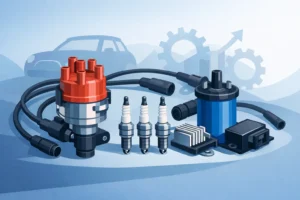
Ignition is another area where buyers are less sentimental than they once were. Plenty still prefer traditional setups, but many want dependable starting and cleaner running over originality for originality’s sake. The same applies to charging and electrical service items. If a Mini is expected to start on the button and cope with modern usage, weak electrics soon move from annoyance to priority.
Brake and suspension refreshes are also getting pulled forward. Owners are not waiting for total failure. Worn bushes, tired dampers, ageing brake hoses and sloppy steering parts make a Mini feel older than it should. Replacing those parts brings the car back to life quickly, and that sort of improvement is easy to feel from the driver’s seat.
Interior trim is moving from luxury to necessity
Interior spending used to be seen as something you did once the mechanical jobs were sorted. That is still broadly true, but trim replacement is increasingly practical rather than purely cosmetic. Seat diaphragms, carpets, sound deadening, door furniture, weather seals and dash components are all in demand because owners want the car to feel usable, not just presentable.
A Mini with draughty seals, a sagging seat base and rattling door cards soon starts to feel more tired than it really is. Fresh trim can make a car more enjoyable without changing its character. For many owners, that is the right balance – keep the period look, but remove the worn-out feel.
There is also stronger demand for parts that complete a cabin properly. Instead of buying one visible item, owners are buying the supporting pieces as well. That means clips, finishing strips, seals and fitting kits are moving with trim lines more often than before.
Performance parts are still popular, but buyers are more selective
The performance market is healthy, but it has matured. Fewer owners are buying random speed parts just because they sound good on paper. More are choosing upgrades that match the way the car is used.
For a road Mini, that often means a well-matched exhaust, sensible carburation or fuelling support, improved engine breathing and better engine steadies rather than an extreme build. For a more serious fast-road or competition car, the focus is still on proven combinations, but buyers are usually more aware that one upgrade can create knock-on requirements elsewhere.
That is why performance parts now tend to sell alongside supporting components. Fit a livelier engine setup and the clutch, cooling and ignition may need attention too. Lower the car and suddenly ball joints, tie bars and suspension bushes become part of the same conversation. It is less about headline parts and more about complete packages that work together.
Originality still matters – just not in every area
Some owners want factory-correct through and through. Others are happy with a car that looks standard but performs better underneath. Most sit somewhere in the middle. The trend is not one direction replacing another. It is buyers becoming clearer about where originality matters to them and where it does not.
A Cooper or rare special edition may justify a stricter approach. A regularly driven city car or weekend toy may benefit from thoughtful upgrades that make ownership easier. The right answer depends on the car, the budget and the goal.
Stock confidence is shaping buying decisions
One trend that does not get enough attention is how people buy when they find the right parts in stock. Classic Mini owners know some jobs snowball. If the key items are available from one specialist source, they are more likely to add related parts there and then instead of waiting for the next order.
That makes specialist stock depth more valuable than ever. A general motor factor might supply a few basics, but restoration and maintenance work often needs exact-fit, model-specific parts across several systems at once. Being able to source service items, body parts, trim, wheels, oils and workshop consumables from a specialist saves time and reduces the guesswork.
This is also why curated categories matter. Most owners do not think in vague product groups. They think in terms of what they are doing to the car – rebuilding the front suspension, replacing a clutch, sorting the cooling system, refreshing the interior or repairing a rusty rear end. A specialist setup that follows that logic helps customers buy more accurately.
What these trends mean for owners
If you are planning work on a Classic Mini, the takeaway is fairly straightforward. Buy for the job in front of you, but think one step ahead. If you are replacing a radiator, inspect the hoses, clips and mounts. If you are repairing bodywork, line up the seals and fittings before paint. If you are improving performance, make sure the supporting components are up to it.
At Bull Motif Mini Spares, that practical way of buying is what the market keeps coming back to. The strongest demand is not for novelty. It is for good-quality parts, sensible upgrade choices and the confidence that a Mini can be restored, maintained and driven properly.
The cars have not changed. What has changed is the way owners approach them – with a bit more planning, a bit less compromise and a sharper eye for parts that do the job properly.