If your Mini clunks over bumps, sits oddly, or never quite feels settled through the steering wheel, the subframe is one of the first places worth checking. Classic mini subframe parts do far more than hold things in place – they affect alignment, ride quality, braking feel, and how the whole car behaves on the road.
On a Classic Mini, the front and rear subframes are structural parts of the car’s character. They carry suspension loads, locate key running gear, and take years of punishment from water, road salt, oil leaks and hard use. That means when you are restoring, repairing or freshening up a tired car, it is rarely just about the frame itself. The surrounding hardware matters just as much.
Why classic mini subframe parts deserve proper attention
A lot of Mini owners start with the obvious problem. Maybe there is visible rust on the front subframe, a cracked mounting point, or rear toe that looks suspect. Fair enough. But subframe jobs have a habit of revealing the rest of the story once everything is apart.
Mounting bushes compress and split. Bolts seize or stretch. Captive nuts can give trouble. Tie bar brackets wear. Suspension pins and associated fixings may have been fitted and removed several times over the decades. If you only replace the one failed item, you can end up rebuilding around tired parts and chasing the same issues again six months later.
That is why experienced Mini owners usually treat the job as a system rather than a single component. It saves time, avoids repeat labour and gives a better result once the car is back on its wheels.
Front and rear subframes are different jobs
The front subframe tends to get the most attention because it carries the engine, front suspension and steering assembly. Any wear here can show up as vague handling, uneven braking feel, steering movement or unpleasant knocking. Corrosion is also common, especially around the towers, mounting points and lower sections where grime and moisture collect.
The rear subframe has a quieter life in some respects, but when it is worn or rusted the effects are just as noticeable. Rear instability, poor wheel alignment, odd tyre wear and a car that never quite feels planted can all point to trouble at the back. Rear mounting points and heelboard areas also deserve a close look before ordering parts.
This is where buying the right classic mini subframe parts matters. Some jobs need a complete replacement frame. Others need the supporting pieces that restore proper location and strength. The trick is knowing which route fits the car in front of you.
The parts most owners end up needing
Subframe work nearly always grows beyond the headline item. Even if you are starting with a complete frame, there are a handful of parts that commonly need replacing at the same time.
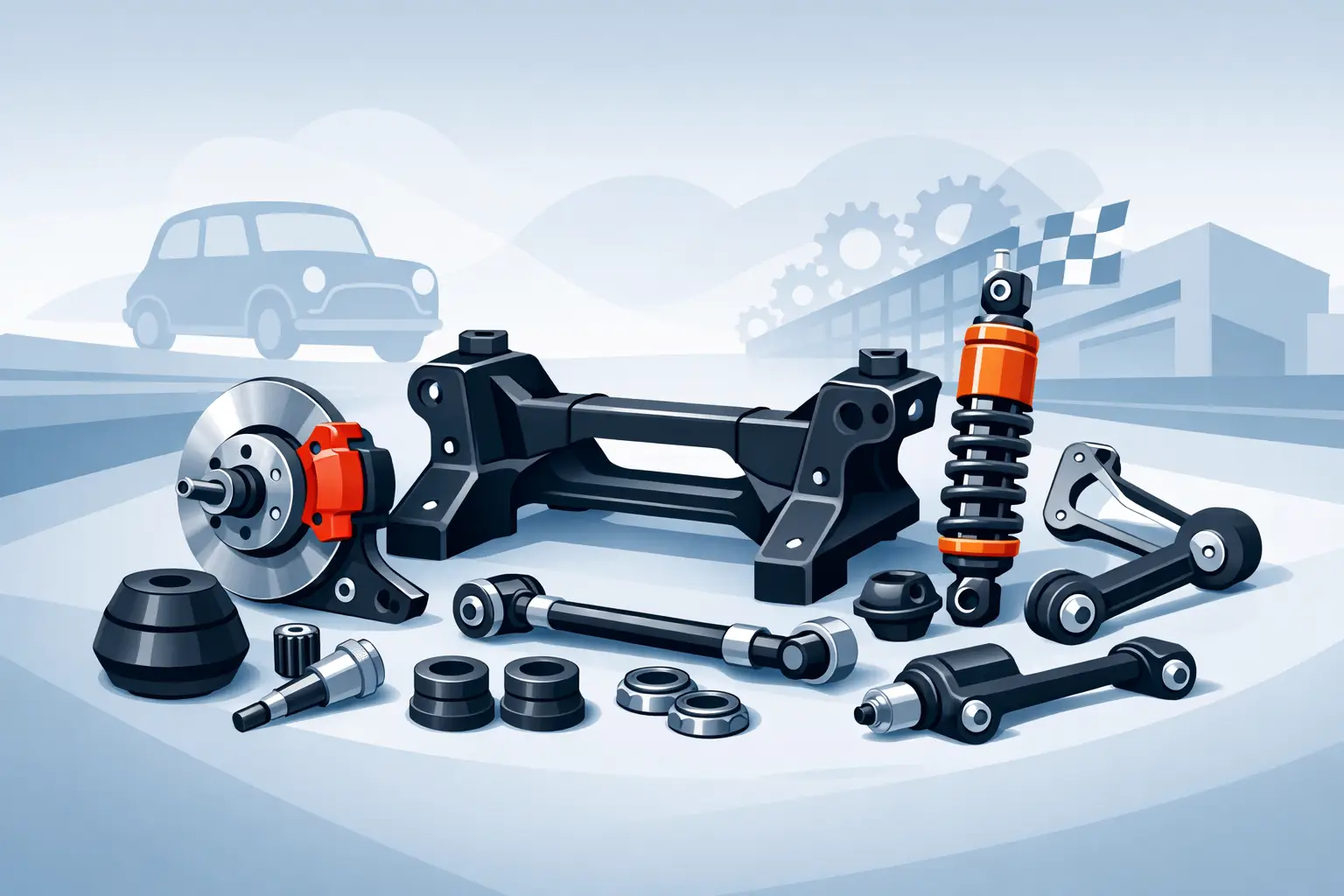
Mounting bushes are top of the list. Old rubber bushes can sag, crack or soften with age, which changes how the subframe sits in the shell. Some owners prefer standard rubber for road cars because it keeps the car civilised and closer to original feel. Others go for uprated bushes to reduce movement. Neither option is automatically right – it depends on whether the car is a road-going restoration, a fast-road build or something used harder.
Fixings matter more than people think. Original bolts may look usable until you clean them up and find corrosion, damaged threads or stretched shanks. Reusing questionable hardware on a structural job is a false economy. Fresh bolts, washers, nuts and the correct brackets make assembly cleaner and more dependable.
Then there are the surrounding support items. Front towers, brackets, trunnion-related mounting hardware, tie bar fittings, rear radius arm mounting components and various repair sections all come into play depending on the condition of the car. On a Mini, one worn point tends to put extra strain on another, so it pays to inspect the lot while access is good.
Repair section or complete replacement?
This is one of the biggest decisions in any subframe job. If corrosion is localised and the rest of the frame is sound, a repair section can make sense. It keeps more of the original part, can be cost-effective, and may suit a car where originality matters.
The catch is that localised rust is not always as localised as it first appears. Once the frame is stripped and cleaned, weak metal often extends beyond the obvious hole or crack. If multiple areas are suspect, or the frame has been repaired badly in the past, a complete replacement is usually the better long-term answer.
The same thinking applies to mounting points in the bodyshell. A new subframe will not fix a weak or distorted shell mounting area. Before ordering, check the surrounding structure carefully. There is no point fitting quality parts to tired metal and hoping for the best.
Fitment accuracy saves grief
Classic Minis span years of production changes, running updates and owner modifications. That means fitment is not always as simple as front or rear, old or new. Engine conversions, suspension changes and earlier repair work can all affect what is actually on the car.
This is where specialist supply earns its keep. The right part is not just the one that roughly resembles what came off. It is the one that matches the car’s specification, intended use and the other components around it. Getting that right first time saves returns, delays and the sort of workshop language neighbours can hear.
For owners doing a home rebuild, it also helps to group the job properly. Instead of buying one subframe item at a time, it is usually smarter to plan the whole assembly. Think frame, mounts, bushes, fixings, brackets and any wear items that become accessible once stripped. It is easier to do the work once than keep taking it apart.
Original feel or uprated setup?
Not every Mini owner wants the same result. Some want factory-style ride and handling, especially on a restoration where originality counts. Others want sharper response and less movement from the subframe under load.
Standard-type bushes and mounting components are often the right call for a road car that needs comfort, predictability and period character. Uprated bushes can tighten things up, but they may also increase vibration and make the car feel harsher. On a fast-road or competition-biased Mini, that trade-off may be perfectly acceptable. On a Sunday runabout, maybe not.
The same applies across the rest of the job. A subframe rebuild is a good time to improve reliability and accuracy, but it does not have to turn into a race-car project unless that is genuinely the aim.
Common signs your subframe parts need attention
A Mini rarely sends one neat warning. More often, the symptoms overlap. Knocks over rough roads, steering that feels unsettled, uneven tyre wear, wandering under braking, visible corrosion, or mounting bushes that look crushed or split are all worth taking seriously.
Sometimes the clue is in the stance. If the car sits unevenly, or alignment refuses to stay where it should, the issue may not be the obvious suspension component at all. A tired subframe or worn mounting hardware can throw the whole setup off.
For cars in long-term restoration, the best approach is simpler still. If the subframe is already out and there is any doubt about the surrounding parts, inspect everything and replace what is suspect while it is accessible. Labour is usually the expensive bit, whether you are paying a workshop or spending your own weekends on the garage floor.
Buying smarter for a subframe rebuild
When sourcing classic mini subframe parts, it pays to think beyond the headline price. Quality, fit, stock availability and knowing you can get the related parts in one place all make a difference. A cheap frame or bush set is no bargain if it causes fitting issues or leaves you short of the hardware needed to finish the job.
Specialist stock is especially useful on Minis because projects often move in stages. You might start with a front subframe, then find you also need mounts, tower bolts, brackets, bushes and adjacent repair parts. Being able to source the lot from a Mini-focused supplier saves time and helps keep the build moving. That is exactly why owners come to specialists such as Bull Motif Mini Spares rather than trying to piece everything together from general motor factors.
A little planning goes a long way here. Before ordering, note the car’s year, any known modifications, whether you are keeping it standard or uprating it, and which parts are definitely being reused. That makes it easier to buy once and buy properly.
One job, done properly
Subframe work sits in that awkward category between routine servicing and full restoration. It is not glamorous, but it has a huge effect on how a Classic Mini drives and how confident you feel behind the wheel. Get it right and the car feels tighter, truer and more predictable. Get it half-right and the faults have a habit of hanging around.
If you are at the point of replacing or rebuilding, treat the assembly as a package. Check the frame, the mounts, the bushes, the fixings and the shell mounting points together. A Mini rewards careful work in this area, and once it is back on the road, you will feel the difference every time you turn in, brake hard or hit a rough B-road.