A tired cabin can make a solid car feel half-finished. Sagging door cards, cracked crash pads and worn carpets stand out every time you open the door, which is why classic mini interior trim is usually one of the first areas owners want to sort properly.
The trick is not just buying a fresh set of parts and hoping for the best. Interior trim on a Classic Mini sits right at the point where originality, comfort, fit and budget all meet. Get it right and the car feels complete. Get it wrong and even expensive parts can look slightly off, fit poorly or clash with the age and style of the shell.
What classic mini interior trim really includes
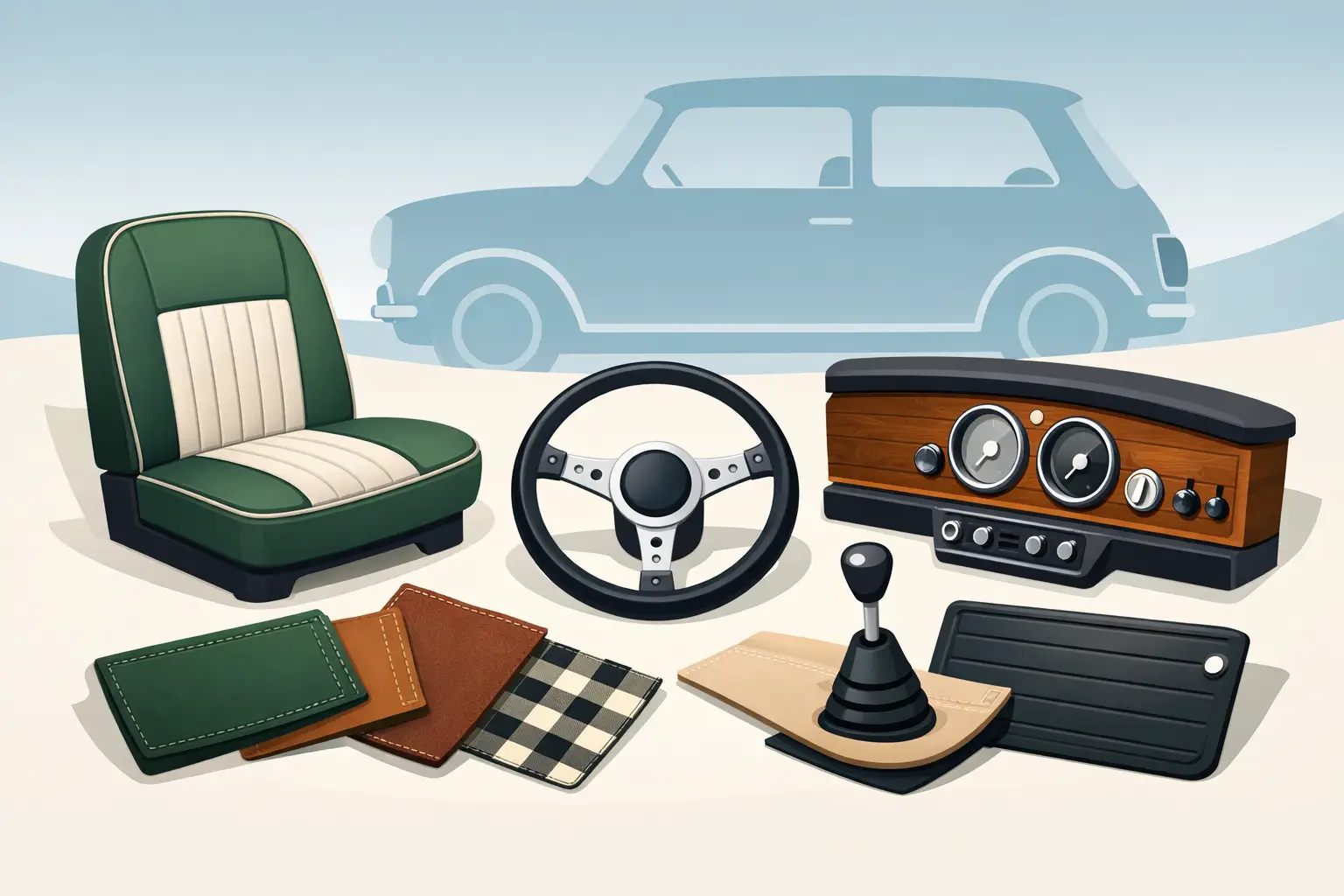
When most owners talk about interior trim, they are usually thinking of the visible cabin parts – door cards, seat covers, carpet sets, headlining, dashboard trim, parcel shelves and the smaller finishing pieces that stop the inside looking bare. In practice, it often stretches further than that. Window seals, clips, handles, escutcheons, sound deadening, gear lever gaiters and fixing kits all play a part in how finished the interior looks once it goes back together.
That matters because trim jobs rarely stay limited to one item. Replace old door cards and you may find the clips are weak, the moisture membranes are missing and the handles are too pitted to refit against fresh panels. Fit new carpets and the underlay underneath may suddenly look past saving. This is why experienced Mini owners tend to treat the cabin as a system rather than a pile of separate cosmetic parts.
Original look or usable upgrade?
This is usually the first real decision. If the car is a period-correct restoration, the aim is normally to match the original grain, colour, stitching pattern and hardware as closely as possible. On an earlier car, that can mean being quite careful with seat style, door pocket design and dashboard finish. A later road car or lightly modified Mini gives you more freedom, especially if you want better wear, easier cleaning or a smarter overall finish.
There is no single right answer here. A show-standard Cooper restoration has different needs from a Mini used every week in British weather. Vinyl may be the proper choice for one build, while a tougher or more modern trim material makes better sense for another. Likewise, a full carpet set with extra insulation can make the car more civilised on the road, but it may not suit a stripped-back fast road or competition setup.
The best approach is to be honest about how the car will be used. Owners sometimes buy for the idea of the car rather than the reality of it. If it sees regular road miles, wet shoes and tools in the boot, choose trim that can cope.
Start with the parts you cannot hide
Some interior jobs are forgiving. Others are in your eyeline every time you drive. Seat covers, front carpets, dash trim and door cards deserve the closest attention because poor fit or cheap finish shows up immediately.
Door cards are a good example. On a Classic Mini, they are simple in shape, but they still need the right board, correct holes and decent clip positions. If the board material is flimsy or the trim is badly cut, you will see waves, loose corners and fixing points that never quite sit right. The same goes for seat covers. A good set can transform the cabin, but only if the foam underneath is still serviceable. Worn seat diaphragms and collapsed foam will make even smart new covers look baggy.
Carpets can be slightly more forgiving, but only to a point. The right moulding and edge finish make a difference, especially around the front footwells, heel board and rear bin areas. If you are fitting a full set, it is worth checking for moisture first. A damp floor, leaky screen seal or rotten heel board will ruin new trim far quicker than most owners expect.
Why fitment matters as much as appearance
Classic Mini interiors are compact, which means small fit issues are more obvious than they would be in a larger car. A dashboard lower rail sitting slightly wrong, a headlining with poor tension or a carpet edge that will not tuck in neatly can spoil the whole effect.
That is why it pays to buy parts from a proper Classic Mini specialist rather than trying to piece together generic items. Model-specific knowledge matters. There are differences across years and trim levels, and not every part suits every shell without adjustment. Mk1 and Mk2 details differ from later cars, and modified interiors can introduce another layer of complexity around dash layouts, extra gauges, harnesses and aftermarket seats.
It also helps to think about how parts install before ordering. Some jobs are straightforward enough for a home garage, while others take patience and a bit of experience. Headlinings are the classic example. They can look brilliant when fitted well, but they are not the easiest part to get right first time. If you are tackling one yourself, expect it to take longer than planned.
Matching trim to the rest of the build
A smart interior works because everything looks like it belongs together. That does not mean every part must be standard. It means the materials, colours and finish need to make sense with the car.
If the exterior is close to factory specification, a wildly modern interior can feel out of step. Equally, if the Mini sits on wider wheels, upgraded suspension and a sportier engine setup, a slightly more purposeful cabin can suit it far better than trying to force strict originality. Black trim remains a safe option because it works with most body colours and hides use well, but period colours and lighter tones can lift the cabin when the rest of the car supports them.
This is also where the smaller pieces matter. Fresh handles, matching gear lever gaiters, tidy switch surrounds and clean parcel shelf trims often make more difference than owners expect. The cabin reads as one whole space. If one area is fresh and the rest is left tired, the contrast stands out.
Don’t ignore the unseen parts
One of the easiest mistakes in a trim refresh is spending the budget on visible parts and overlooking the bits underneath. Sound deadening, insulation, clips, seals, membranes and fastening hardware are not exciting to buy, but they have a big effect on the final result.
A new carpet set over old, uneven underlay will never sit as well as it should. Door cards fitted without proper moisture barriers can soon absorb damp and distort. Reusing tired clips often leads to rattles, loose panels and broken edges during installation. In a small car like a Mini, squeaks and vibrations are much harder to ignore, so it is worth renewing the basics while everything is apart.
This is often the point where owners save time by ordering from one place rather than chasing each small item separately. A specialist supplier such as Bull Motif Mini Spares can help you gather the obvious trim parts and the less glamorous fittings that actually make the job go together properly.
Restoring in stages still works
Not every Mini owner wants or needs a full interior retrim in one hit. Plenty of cars are improved in stages, and that is often the sensible route if you are balancing restoration work with keeping the car on the road.
If that is your plan, begin with the worst-worn areas and the parts that affect day-to-day use. Front carpets, seat repairs and door furniture usually give the biggest immediate improvement. After that, move on to the dash area, rear trim panels and finishing details. The key is to think ahead so that colours and materials still match when you complete the next stage.
Staged work also gives you a chance to deal with hidden issues as they appear. Pulling out old carpets may uncover surface rust, poor welding repairs or wiring that needs attention. Better to find that before the fresh trim is glued down than after.
A few common buying mistakes
The first is assuming all trim kits are equal. They are not. Material quality, cut, stitching and board strength vary, and those differences are obvious once fitted.
The second is ordering on appearance alone. A trim part can look right in a photo and still be wrong for your model year or interior layout. Always check compatibility carefully, especially on dashboards, seat styles and door fittings.
The third is forgetting what sits around the main part. New seat covers may need foams. Door cards may need clips and handles. Carpets may need insulation and edge fixings. Planning the whole job usually saves money compared with stopping halfway to order the missing pieces.
A well-trimmed Mini does more than look tidy. It changes how the whole car feels, from the first glance through the window to the moment you shut the door and head out. Choose parts that suit the car you actually own, not just the one in your head, and the finished interior will feel right every time you get behind the wheel.