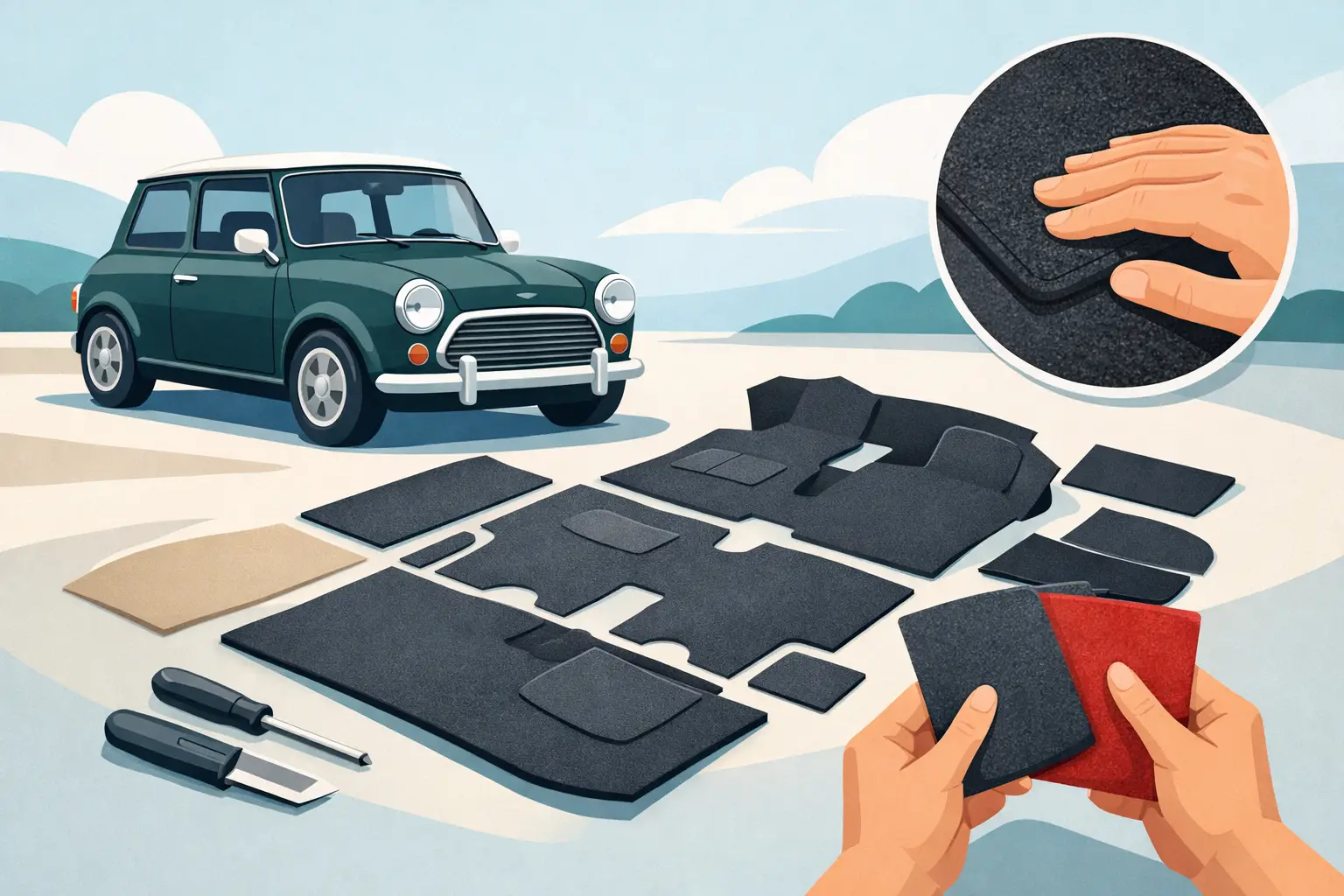
A tired floor can make an otherwise smart Mini feel unfinished. The right classic mini carpet set does more than tidy the cabin up – it improves comfort, cuts down road noise a touch, and gives the whole interior a more cared-for look. If you are restoring a shell, freshening up a usable car, or replacing worn trim after years of regular driving, getting the carpet set right saves time, money and aggravation later.
Why the right classic mini carpet set matters
On a Classic Mini, the cabin is compact and every detail is easy to notice. Worn heel pads, faded pile, poor edging or a loose fit around the seat mounts stand out straight away. A decent carpet set helps tie the seats, door cards and mats together, while also covering old adhesive marks, surface blemishes and the day-to-day wear that builds up around the floorpan and tunnel.
There is a practical side as well. Minis let in more noise, heat and vibration than most modern cars, so interior trim has a real job to do. Carpet will not transform the car into a luxury saloon, but a properly fitted set can take the edge off the cabin and make longer drives more pleasant. If the old carpet has gone thin or damp over time, replacing it is often part of making the car feel right again.
What to look for in a classic mini carpet set
Fit should be first on the list. A carpet set can look good in photos and still become awkward once it is on the car. On a Mini, where the floor shape is simple but tight, you want pieces that sit properly around the footwells, tunnel, rear bins and seat base area without endless trimming. Some minor fettling is normal, especially on older cars with previous repairs, sound deadening added later, or slight variation between model years. That said, you should not be fighting every section.
Material quality matters just as much. A budget set may be fine for a quick tidy-up on a usable car, but there is usually a visible difference in pile, backing and edging compared with a better-quality kit. Cheaper carpet can look thin, crush quickly and show wear around the driver heel area much sooner. If the car is a long-term keeper, or if you have already spent properly on seats, trim and paint, it makes sense to choose a set that matches the standard of the rest of the build.
You also need to think about finish. The edging, heel pad, cut lines and overall consistency make a big difference once fitted. On a Mini interior, small flaws are hard to hide. If originality matters, pay close attention to the style and colour that best suits the age and spec of the car. If the aim is a clean, practical cabin rather than concours accuracy, durability may matter more than exact factory appearance.
Restoration car or regular driver?
This is where it depends on how the Mini is actually used. A show car, weekend toy and year-round driver do not need exactly the same interior trim.
For a restoration, the carpet set is part of the overall finish. You are looking for the right appearance, consistent colour and a fit that complements the rest of the cabin. In that case, it is worth taking more time over model compatibility and trim choice. A carpet set that looks close enough in a daily driver can feel out of place in a carefully rebuilt car.
For a regular-use Mini, durability becomes more important. Muddy shoes, damp weather and repeated heel wear will all take their toll. A practical carpet set with decent backing and solid edging often makes better sense than chasing perfect originality if the car is used often. The same applies to lightly modified cars where comfort and usability take priority over factory-correct presentation.
Getting the fit right before you order
The easiest mistake is assuming all Classic Minis use the same carpet layout. In reality, there are variations depending on age, floor arrangement and interior setup. Seat mounting points, tunnel shape, soundproofing thickness and other changes made over the years can affect how a set sits once fitted.
That is why it pays to check the actual spec of your car, not just the registration year. A Mini that has been restored before may have later seats, different floor sections, added insulation or non-standard trim. If you are buying for a car that has had years of modifications, measure what is in front of you rather than relying on guesswork. Specialist suppliers are useful here because they understand where those differences tend to catch people out.
If your old carpet is still in the car, remove it carefully and compare each area. That gives you a proper view of the floorpan, reveals any repairs that need attention, and helps confirm whether the new set is likely to need light trimming or more involved adjustment.
Before fitting a new carpet set
A new carpet should not go into a damp or unfinished shell. It sounds obvious, but it is one of the most common ways to spoil fresh trim. If the floor has any signs of water ingress, surface rust, old adhesive residue or damaged sound deadening, deal with that first. Carpet will cover a problem for a while, but it will not cure it.
This is also the time to sort the details that are awkward once the interior is back in. Check seat mounts, pedal box area, floor bungs, wiring runs and any underlay or insulation you plan to keep. If you are replacing interior trim as part of a wider refresh, it often makes sense to do everything in the right order rather than fitting carpet and then pulling it back out for jobs that could have been done beforehand.
Let the carpet settle before final fitting if it has been folded in transit. Laying the pieces out flat helps them relax and makes alignment easier. It is a simple step, but it can save a lot of unnecessary pulling and trimming.
Fitting tips that make a difference
Take your time. Minis are simple cars, but a rushed interior job always shows. Start by loosely positioning the main sections and checking how they sit around fixed points before committing with adhesive or fasteners. Work from the obvious reference areas first, then move out to the edges.
Dry-fitting is worth the effort. It lets you see where the carpet naturally wants to sit and where small adjustments may be needed. Only trim where necessary, and only in small amounts. You can always take a bit more off, but you cannot put it back.
Adhesive choice matters too. Too little and the carpet lifts or creeps; too much and the job becomes messy very quickly. The aim is a secure, neat fit, not glue spread over everything. If you are also using underfelt or insulation, remember that added thickness can alter how the carpet lies around the tunnel and seat crossmember.
Colour, finish and the rest of the interior
A carpet set should work with the rest of the cabin, not fight it. Black is the safe option for many owners because it hides marks well and suits most trim combinations. That makes sense on a regularly used Mini or one with a mixed interior assembled over time.
Other colours can look spot on in the right car, especially if you are trying to match period trim or complete a more faithful restoration. The trade-off is that lighter shades show dirt more easily and may need more upkeep. There is no right answer here – it comes down to whether the car is built for convenience, originality or a bit of both.
The texture and edging also affect the final look. If the seats and door cards are already smart, a thin or poorly finished carpet can let the whole interior down. On the other hand, a good set can lift a fairly ordinary cabin and make it feel finished without changing anything else.
Is a cheaper carpet set worth it?
Sometimes yes, sometimes no. If you are turning a car around on a budget, improving a project before sale, or replacing a genuinely tatty old set in a casual-use Mini, an entry-level kit may do the job. It can still be a worthwhile improvement if expectations are realistic.
Where cheaper sets tend to disappoint is long-term fit and wear. If the backing is weak, the pile is poor or the cut is inconsistent, the carpet may start looking tired far sooner than you would like. That false economy becomes obvious if you end up replacing it again after a short period.
For many owners, the sensible middle ground is to buy the best set that suits the car’s use. That is usually better value than either buying the absolute cheapest or overspending on concours-level trim for a Mini that sees regular wet-weather mileage.
Buying from a specialist makes life easier
Classic Minis are not generic classics, and carpet sets are not generic trim. Fitment questions, model-year differences and quality variations are far easier to deal with when you are buying from a supplier that knows these cars properly. That is one of the reasons owners come to specialists such as Bull Motif Mini Spares rather than trying to piece a car together from general sources.
A proper specialist understands how carpet fits into the wider job as well. If you are refreshing the whole interior, you may also be dealing with seat hardware, soundproofing, trim clips, rubber seals or floor repairs. Having that knowledge and range in one place helps you get the job done once and do it properly.
A new carpet set is one of those parts that changes how the whole car feels the moment you open the door. Choose with the use of the car in mind, fit it carefully, and your Mini will look cleaner, smarter and more finished every time you get in.