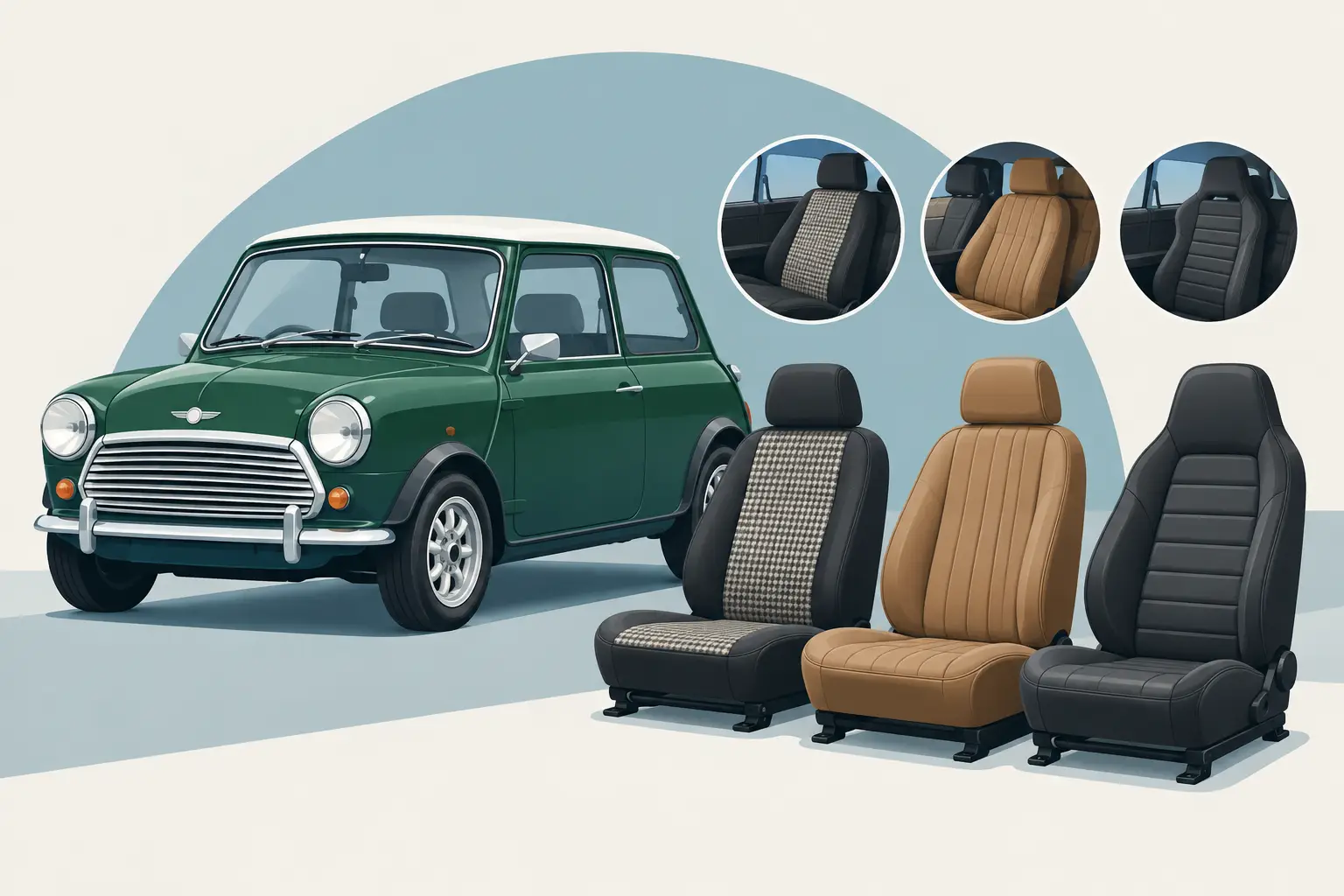
A Classic Mini can feel brilliantly direct until you have spent an hour folded into a worn driver’s seat. Sagging diaphragms, collapsed foam, split vinyl and loose runners do more than spoil the cabin – they affect support, driving position and, ultimately, how much you enjoy using the car. Choosing Classic Mini seats is therefore not just a trim decision. It is a question of originality, fitment, comfort and the way you intend to drive the Mini.
Start with the job your Mini needs to do
Before looking at materials or seat styles, decide what you need from the car. A concours Mk1 or Mk2 restoration calls for a different approach to a regularly used 1990s Cooper, a track-day build or a Mini fitted with a roll cage. The best seat is not always the newest or most heavily bolstered option. It is the one that suits the car, fits correctly and keeps the driver properly supported.
For an original-style restoration, rebuilding the factory seats usually gives the right look and preserves the character of the interior. The correct pattern, piping, headrest arrangement and seat shape can make a major difference to a car’s value and period feel. This matters particularly where the rest of the car has been restored accurately.
For a road Mini used often, a later reclining seat or a well-chosen aftermarket alternative may be the sensible choice. You gain adjustment and, in many cases, better support. The trade-off is that the cabin can lose some of its original appearance, while wider seat bases may make access and rear passenger space tighter.
Original Classic Mini seats or replacements?
Factory Mini seats changed considerably over the years. Early fixed-back designs have a simple period look but offer limited adjustment and modest lateral support. Later cars brought reclining front seats, different headrest arrangements and revised trim patterns. A seat that looks broadly similar can still be wrong for the year of car, so check the details before buying trim or replacement frames.
Original seats are often worth saving. A tired-looking pair may need new diaphragms, webbing, foam, covers, clips and runners rather than complete replacement. The frames themselves are frequently serviceable once surface corrosion is dealt with and moving parts are checked. Re-trimming also lets you retain the correct shape, especially where a modern universal seat would look out of place.
Replacement seats suit owners whose original frames are beyond repair, who need more adjustment or who are building a modified Mini. Reclining seats can make it easier to find a comfortable driving position, while more sculpted designs hold the driver better through corners. However, do not choose on appearance alone. The narrow cabin places real limits on width, shoulder support and adjustment travel.
Seat width matters more than most owners expect
The Mini cabin is compact, and the handbrake, gear lever and door cards are all close to the front seats. A wide aftermarket seat can foul the door, restrict access to the handbrake or make it awkward to select gears. Deep side bolsters may also be uncomfortable if you get in and out frequently.
Measure the available space in your own car, including the room needed for the seat to slide and recline. Bear in mind that carpet thickness, sound-deadening and repaired floor pans can all alter the final height. If you are tall, even a small increase in seat base height can leave you looking through the top of the windscreen rather than comfortably down the road.
Check runners, subframes and mounting points
A sound seat is only as good as its mounting. Classic Mini seats use model-specific runners and mounting arrangements, and these must suit both the seat and the floorpan. Do not assume that a pair of seats from another Mini will simply bolt into place. Variations between early and late cars, as well as previous repairs and modifications, can affect fitment.
Inspect the runners for bent sections, worn locks and excessive play. The seat should slide smoothly, then lock positively in position. A driver’s seat that rocks under braking or shifts on its runners is not a minor annoyance – it needs attention before the car is used. Check that all fixings are present, correctly sized and tightened into sound metal.
The floor around the mounting points deserves the same scrutiny. Minis commonly suffer corrosion, and fresh carpet can hide weak metal or poor previous repairs. If the floorpan, crossmember area or mounting reinforcement is compromised, repair it properly before fitting new seats. Adding smart trim over an unsound mounting point is false economy.
With aftermarket seats, use brackets and runners designed for the intended application wherever possible. Homemade mounts may appear to fit but can create poor driving position, inadequate support or a mounting that is difficult to inspect. For competition use, requirements may be more specific still, particularly if harnesses, roll cages or fixed-back bucket seats are involved.
Comfort comes from support, not softness
A very soft seat can feel pleasant for the first few miles but leave you tired after a longer run. What matters is support under the thighs and lower back, a backrest that holds you without forcing your shoulders forward, and a seating position that allows full pedal travel without stretching.
If the original seat base has sunk, replacing tired diaphragms or webbing can transform it. New foam helps restore shape, but take care not to build the cushion too high. Many Mini owners already sit high relative to the windscreen, especially in cars with later, thicker seat designs.
Set the seat so that your left leg can fully depress the clutch without locking the knee. Your wrists should reach the top of the steering wheel with your shoulders against the backrest. These are practical starting points, not hard rules, but they quickly reveal whether a seat and runner combination is working. If you have changed steering wheel position, pedal boxes or floor coverings, reassess the whole driving position rather than treating the seat in isolation.
Trim choices: vinyl, cloth and leather-look finishes
Seat trim has to cope with damp coats, muddy shoes, sunlight and the occasional oily hand. Vinyl remains popular because it suits the period appearance of many Minis, wipes clean easily and is available in styles close to original. Quality matters: cheap material can feel stiff, fade quickly or split around seams.
Cloth inserts can improve comfort in warm weather and give more grip when cornering. They also tend to hide minor wear better than plain vinyl, although they need more care to keep clean. Leather and leather-look finishes can lift a custom interior, but they may not suit every restoration and can become hot in summer or cold on winter mornings.
Choose the trim alongside the rest of the cabin. Door cards, rear seat covers, carpets, headlining and parcel shelf trim all affect the finished result. A carefully selected seat cover can make an older interior look right again; a mismatched pattern can draw attention away from an otherwise tidy car.
Do not overlook rear seats and safety items
Front seats get most of the attention, but a faded or split rear bench can make the whole cabin look unfinished. Rear seat covers, backboard trim and related fittings are worth addressing during an interior refresh, particularly if the front seats are being retrimmed. It is usually easier to achieve a consistent colour and finish when the work is planned together.
Check the seat belts while the seats are out. Look for frayed webbing, corrosion around mounting points, damaged buckles and sluggish inertia reels. Seat belt anchorages are separate from the seat mounts, but both areas must be sound. If you are fitting different seats, make sure the belts route and latch correctly without rubbing on the frame or being trapped by the runner mechanism.
Modified seating can also affect insurance, especially where the car has been changed for fast-road or competition use. Declare significant alterations and keep details of the mounts and components used. It is a straightforward step that can avoid trouble later.
Build the cabin around how you use the car
There is no single correct answer for Classic Mini seats. A carefully rebuilt factory set is hard to beat in an original road car. Recliners can make a frequent-use Mini more comfortable, while properly installed bucket seats have a place in a focused performance build. The right choice depends on your car’s age, condition and intended use.
When planning a restoration or refresh, it pays to inspect the frames, runners, floor mounts, belts and trim as one job. Bull Motif Mini Spares can help owners source the seat and interior items needed to replace worn parts properly rather than making do with a seat that never quite fits. Get the foundations right, and every drive feels more like the Mini was built around you.