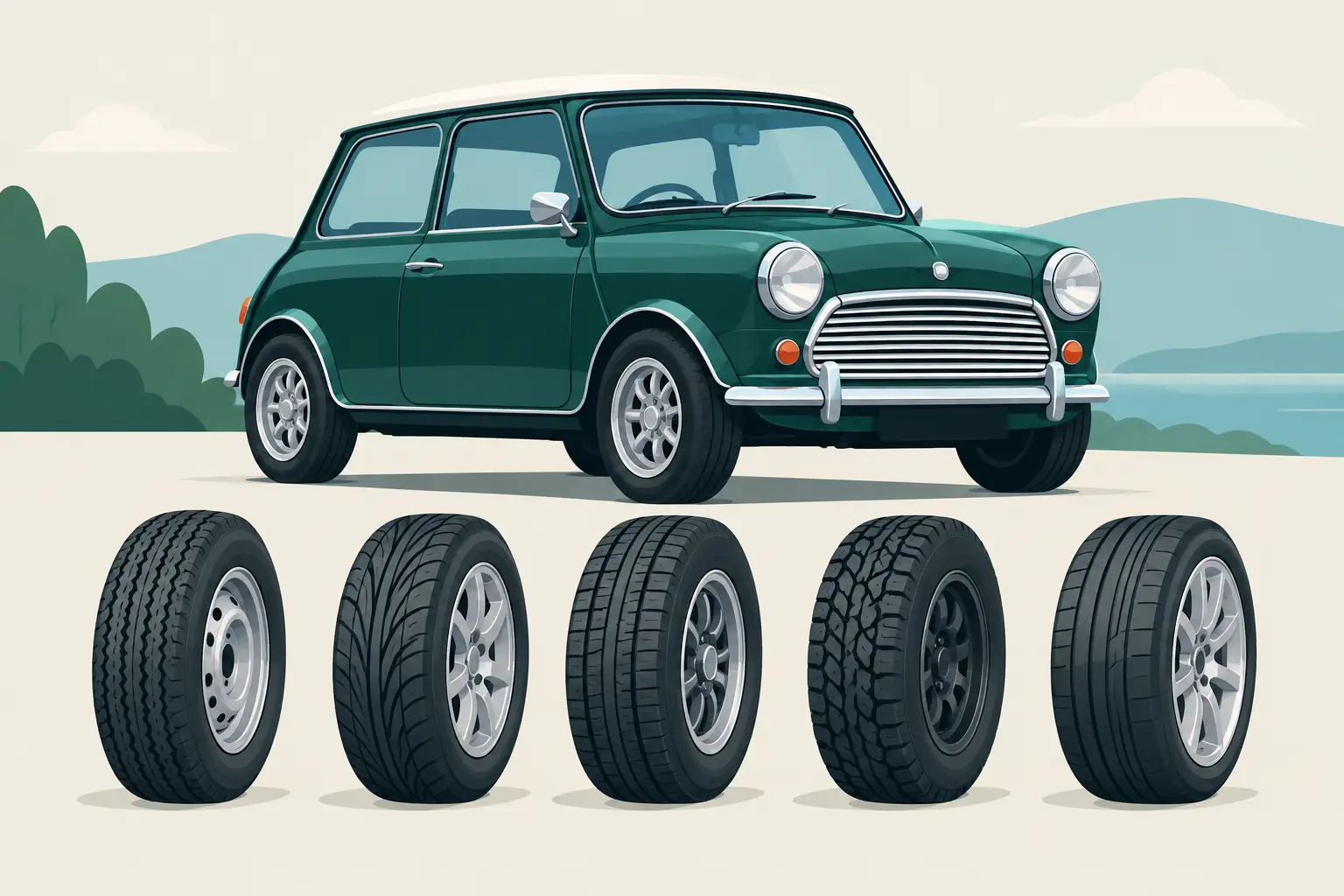
A Classic Mini can feel completely different after a tyre change. The steering may become lighter or heavier, the ride can sharpen up or turn fidgety, and wet-road confidence can improve dramatically. That is why a proper Mini tyre comparison starts with more than finding the cheapest tyre in the right diameter. Wheel size, tyre profile, intended use and the condition of the suspension all matter.
For a car with such compact dimensions and direct steering, tyres are one of the most noticeable upgrades or maintenance items you can buy. The right choice should suit the way your Mini is used, not just the way it looks on the driveway.
Start with the wheel size on your Mini
Classic Minis left the factory with several wheel and tyre combinations over their long production run. Ten-inch wheels are the traditional choice, while 12-inch wheels are common on later cars. Thirteen-inch wheels are a popular period performance upgrade, particularly on cars running wider arches.
Before comparing brands or tread patterns, check the full size marked on the tyre sidewall and confirm the wheel diameter. A tyre marked 145/70 R12, for example, is designed for a 12-inch wheel. The first figure is the section width in millimetres, the second is the sidewall height expressed as a percentage of that width, and R12 is the rim diameter.
Common Classic Mini sizes include 145/80 R10 and 165/70 R10 on 10-inch wheels, 145/70 R12 and 165/60 R12 on 12-inch wheels, and 175/50 R13 on many 13-inch setups. That does not mean every size will suit every car. Arch clearance, wheel width, offset, ride height and steering lock all need checking, especially where wider wheels or lowered suspension have been fitted.
A tyre that physically mounts to the wheel may still rub the front wing, inner wing, suspension components or wheel arch on full lock and compression. It is far better to confirm fitment before ordering than discover the problem after a fresh set has been fitted.
Mini tyre comparison: choose for the job
There is no single best tyre for every Classic Mini. A restored 998 used for sunny weekend runs has different needs from a 1275 road car tackling wet B-roads, and both differ from a track-biased Mini on adjustable suspension.
| Use | What to prioritise | Practical trade-off | |—|—|—| | Everyday road use | Wet grip, predictable handling, sensible wear | A softer tyre may wear faster than a harder touring design | | Original-style restoration | Correct appearance, suitable period sizing, comfortable ride | Choice can be narrower, particularly for 10-inch tyres | | Fast road driving | Strong shoulder support, steering response, wet performance | Wider, lower-profile tyres can make the ride firmer | | Track or hillclimb use | Dry grip, heat tolerance and precise response | Specialist compounds may be poor in standing water and wear quickly |
For most road-going Minis, a quality road tyre from a recognised manufacturer is the sensible middle ground. It should warm up quickly, clear water effectively and give progressive feedback when pushed. The Mini’s low weight means it does not always need an extreme performance compound to feel lively.
If the car sees regular rain, do not treat wet grip as a secondary detail. A Classic Mini has a short wheelbase, little sound insulation and very direct responses. A tyre that breaks away abruptly in the wet can make an otherwise enjoyable car tiring to drive. Look for a modern tread design with effective water clearance rather than choosing solely by an aggressive-looking pattern.
Width is not automatically an upgrade
Moving to a wider tyre can improve the planted look of a Mini and may offer more dry-road grip. However, it also changes the way the car steers. Wider rubber generally increases steering effort at parking speeds and can make the car follow ruts, road joints and poor surfaces more readily.
On a standard or lightly modified road Mini, a modest tyre width often gives the most balanced result. The car remains nimble, the steering keeps its character and the suspension is not asked to control unnecessary unsprung weight. Very wide wheels and tyres can suit the right build, but they should be chosen as part of a complete setup rather than as a cosmetic change alone.
Profile matters as much as width. A taller sidewall can absorb rough roads and preserve the supple feel many owners enjoy from a 10-inch Mini. A lower profile offers a quicker response but transmits more bumps through the car. On tired suspension bushes, worn dampers or incorrect tracking, low-profile tyres can make existing faults feel worse.
Check load and speed ratings, even on a light car
Classic Minis are light, but the tyre must still meet the correct load and speed requirements for the vehicle. The rating is moulded into the sidewall alongside the size. It is not an area for guesswork or a place to compromise simply because a bargain tyre is available.
The key point is to fit a tyre with ratings that meet or exceed the requirements for your Mini. This becomes particularly relevant on modified cars with more power, heavier equipment or regular motorway use. If you are unsure, compare the existing approved fitment, vehicle documentation and the tyre manufacturer’s data before buying.
Also avoid mixing radically different tyre types across the car. Matching all four tyres gives the most predictable handling. If replacing only a pair, fit the same size and ideally the same pattern and construction as the existing tyres. Where that is not possible, the newer or better pair is generally best fitted to the rear to help preserve stability in wet conditions.
Do not ignore the wheels and suspension
A new tyre cannot compensate for a bent wheel, failing ball joint or incorrect alignment. On a Mini, small setup issues are felt quickly through the steering wheel. Before fitting tyres, inspect the wheel rims for corrosion, cracks and damage around the bead seat. A slow leak from a corroded wheel can be mistaken for a tyre problem.
Once tyres are fitted, have the tracking checked. Incorrect toe settings can scrub away the inner or outer shoulder surprisingly quickly, while also making the car wander or feel reluctant to self-centre. Camber settings, ride height and the condition of the cones, trumpets, dampers and bushes influence wear too.
If one tyre has worn badly while the opposite side looks healthy, investigate the cause rather than simply replacing the damaged item. Uneven wear often points to an alignment or suspension issue that will spoil the next tyre just as quickly.
Age matters as much as tread depth
A Classic Mini that covers low annual mileage can wear tyres out by age before it wears them out by tread. Rubber hardens over time, particularly on cars stored outside, left stationary for long periods or exposed to sunlight. The tread may look generous, but grip can still be well below what a fresh tyre provides.
Check the date code on the sidewall when assessing an older Mini or recommissioning a stored one. Look closely for cracking around the sidewalls, between tread blocks and near the bead. Any bulge, cut that exposes internal structure, persistent pressure loss or visible cracking is a reason to replace the tyre.
The legal minimum tread depth is only the starting point. For a Mini used in British weather, replacing tyres before they reach that limit is a sensible safety decision. Water clearance reduces as tread becomes shallow, and a lightweight front-wheel-drive car can lose confidence quickly in heavy rain.
Tyre pressures complete the setup
Even an excellent tyre will not perform properly at the wrong pressure. Too low, and the steering can feel vague while the shoulders wear excessively. Too high, and the ride becomes harsh, the contact patch changes and the centre of the tread may wear more quickly.
Use the pressure specification appropriate to your wheel and tyre combination, not a figure copied from an unrelated modified Mini. Original handbook figures can be a useful starting point for standard fitments, but wider tyres, different constructions and non-standard wheels may require a different setting. Check pressures cold, use an accurate gauge and inspect them regularly rather than waiting for the car to feel wrong.
A few minutes spent checking tyre condition, pressure and wheel security before a longer run is worthwhile. It keeps the Mini driving as it should and helps you spot a developing problem before it becomes a recovery job.
For owners restoring, maintaining or improving a Classic Mini, tyres deserve the same careful selection as brakes, steering and suspension parts. Bull Motif Mini Spares can help you source the right size for your wheel setup, but the best result always comes from matching the tyre to the car, its condition and the roads you genuinely drive.