A Classic Mini cooling system has little spare capacity when it is working hard. Long queues, summer traffic, a tuned engine or a tired radiator can soon put the needle higher than you would like. That is why a mini electric fan kit review needs to look beyond the fan itself. The useful question is whether the complete kit will suit your engine, radiator, wiring and the way you actually use the car.
For many Minis, an electric fan is a sensible reliability upgrade. It can reduce unnecessary load from the engine-driven fan, provide airflow when the car is stationary and give more control over when cooling assistance is needed. It is not, however, a cure for a blocked radiator, poor ignition timing, a failed thermostat or weak coolant circulation. Fit the right kit to a sound cooling system and it can be a worthwhile improvement. Fit one to hide an existing fault and the original problem will still be there.
What a Mini electric fan kit should include
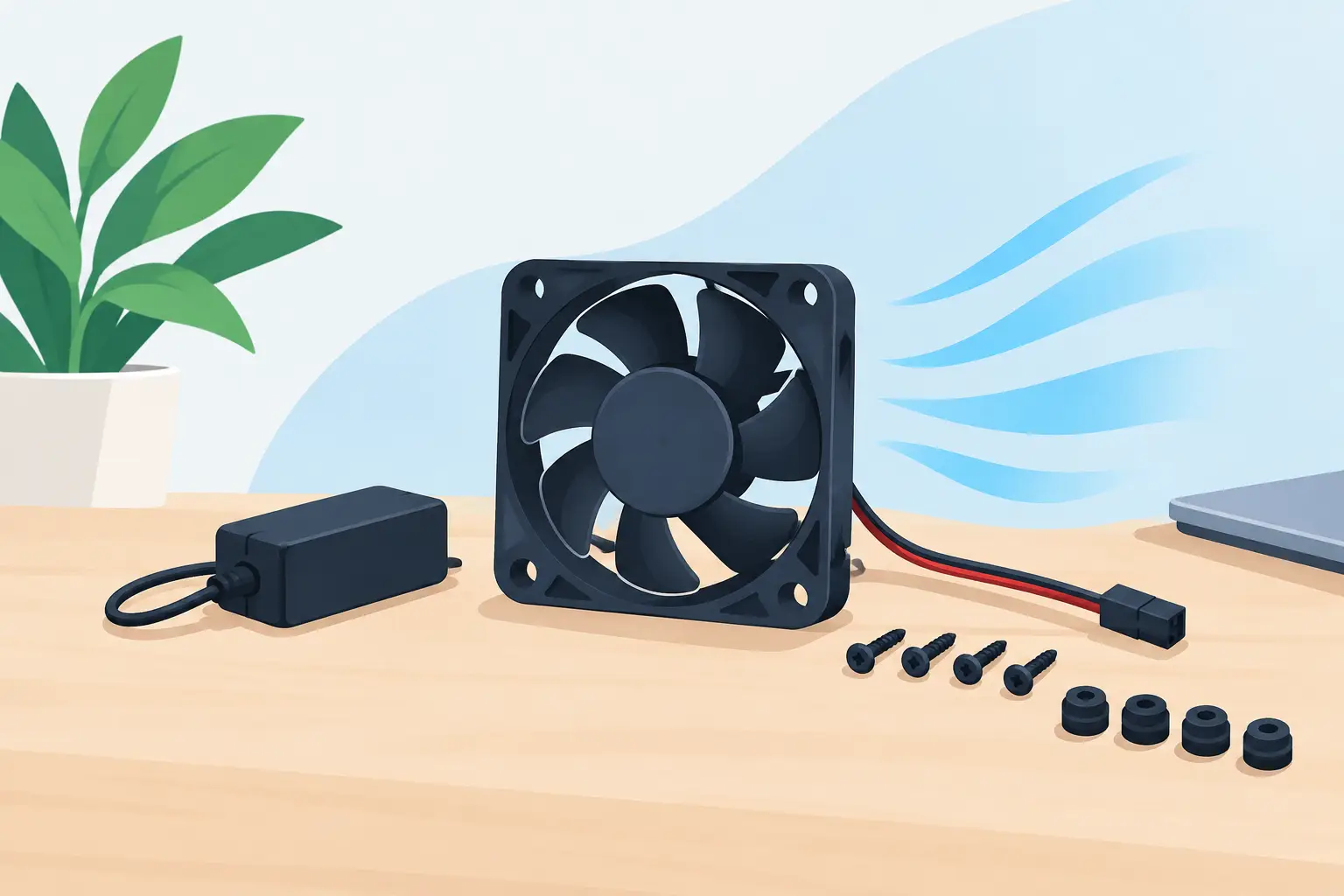
A proper kit is more than a small fan and a bag of fixings. At minimum, check that it includes a correctly sized fan, a secure mounting arrangement and wiring capable of handling the fan’s current draw. The better-equipped kits also include a relay, fused supply, switching method and clear fitting instructions.
The relay matters. Running a fan directly through a small dashboard switch can overload the switch and wiring, leading to heat, voltage drop or eventual failure. A relay allows the fan to draw power through a suitable fused feed while a low-current circuit operates it. This is a straightforward detail, but it separates a dependable installation from one that may cause trouble later.
Thermostatic switching is usually the most practical option for a road Mini. It brings the fan on automatically when coolant temperature reaches the chosen point, then switches it off once the temperature falls. A manual override switch is still useful, particularly for motorsport, heavy traffic or diagnosing a cooling issue, but it should not be the only way the fan operates unless you are prepared to watch the gauge constantly.
Also check the kit’s fan direction and intended mounting position. An electric fan must move air through the radiator in the correct direction. Fans can be configured as pushers or pullers, but the installation must suit the available space and maintain a clear path for airflow. A fan fitted backwards may sound busy while making cooling worse.
Mini electric fan kit review: where the gains come from
The chief benefit is stationary airflow. At speed, the radiator receives airflow from the car moving through the air. In a queue, that natural airflow disappears and the cooling system depends on the fan. An electric unit can provide consistent airflow at the moment it matters most, rather than turning all the time with engine speed.
Removing or reducing reliance on an engine-driven fan can also reduce parasitic drag. The difference will not transform a standard road car, but it is a sensible part of a broader engine bay and cooling upgrade. Owners of modified Minis may value the extra clearance and control as much as any modest performance gain.
There is a trade-off. An electric fan places demand on the charging system when operating. On a healthy alternator-equipped Mini this is generally manageable, but a car with tired connectors, weak earth straps, an ageing battery or a low-output charging setup should be checked before fitting. If the headlights dim noticeably when accessories are used, resolve the electrical condition first.
Noise is another consideration. Many modern slim fans are quieter than older designs, yet any electric fan can be heard when it cuts in. For a regularly used road car, that is normally a reasonable exchange for better cooling control. For a concours-focused restoration, the look, sound and originality of the installation may influence the decision differently.
Fitment checks before ordering
Classic Minis vary considerably after decades of repairs, engine swaps and previous modifications. Never assume that a kit listed for a Mini will clear every radiator, grille, oil cooler, hose route and front-panel arrangement. Measure the available space and inspect the car before buying.
Start with the radiator and its mounting position. Look for bent fins, damaged side plates, coolant staining and evidence of previous repairs. A fan cannot compensate for a radiator that is internally restricted or externally packed with dirt. Check the radiator cap too, as the correct pressure is part of the system’s ability to control coolant temperature.
Then inspect the hoses, thermostat housing, water pump and bypass arrangement where applicable. A collapsed lower hose, an incorrect thermostat or a leaking hose clip can produce overheating symptoms that appear to be a fan problem. If the temperature gauge has become unreliable, verify its sender, wiring and gauge operation before making changes based on its reading alone.
For the fan installation itself, consider these practical points:
- Confirm fan diameter and depth against the space around the radiator and front panel.
- Check whether the kit uses brackets, a shroud or through-core mounting ties, and whether that method is suitable for your radiator.
- Plan a protected route for the wiring away from moving parts, sharp edges and exhaust heat.
- Make sure there is a suitable fused supply, relay position and clean earth point.
Through-core fixings are common and can make installation easier, but they need fitting with care. Overtightening or allowing a tie to rub can damage delicate radiator fins or tubes. A purpose-designed bracket arrangement may take longer to fit, but is often neater and easier to service.
How the kit performs on a standard and modified Mini
On a well-maintained standard 998cc or 1275cc road Mini, an electric fan is most useful as traffic insurance. It should cycle on only when needed, helping stabilise temperatures after a motorway run, during town driving or while waiting at an event. If it runs almost constantly, treat that as a sign to inspect the rest of the cooling system rather than accepting it as normal.
On a modified 1275cc, fast-road engine or a Mini used for spirited summer driving, the case is stronger. Increased power commonly means more heat, and the car may spend time at low speed after a hard run. A correctly controlled electric fan supports the radiator when airflow is poor and lets the engine cool in a more predictable way.
Motorsport use is more dependent on the specific setup. A track Mini may benefit from a manual override, a carefully selected temperature switch and additional attention to ducting, radiator condition and coolant specification. The fan is only one part of the package. Air needs to be guided through the radiator, not simply allowed to escape around it.
Wiring quality decides long-term reliability
A fan kit can be mechanically fitted in an afternoon, but do not rush the electrical side. Use appropriately sized cable, proper crimp terminals and insulated connections. Avoid twisted wires covered in tape. The Mini’s compact engine bay and under-bonnet heat make poor connections more likely to corrode or loosen over time.
Take the main feed from a suitable protected source, fit the specified fuse close to that feed and mount the relay where it is accessible but protected from water and heat. Earth the fan to clean bare metal or a proven earth point, then protect the connection afterwards. A poor earth can make a perfectly good fan appear weak or intermittent.
Test the system before refitting trims or tidying the final wiring. Check that the fan starts at the intended temperature, rotates in the correct direction and switches off again as the coolant cools. If a manual override has been fitted, confirm that it operates the relay rather than carrying the motor load itself.
Is an electric fan kit worth it?
For a Mini that sees regular road use, summer traffic or upgraded engine power, a quality electric fan kit is usually a practical purchase. The improvement is not dramatic in the way a new exhaust or carburettor may feel, but dependable temperature control protects the work and money already invested in the engine.
It may be less necessary for a lightly used, standard car with a healthy original cooling system and little stop-start driving. In that case, servicing the radiator, thermostat, hoses and ignition may deliver all the cooling confidence required. Originality-conscious owners may also reasonably prefer to retain the factory arrangement.
The best result comes from matching the kit to the car rather than buying on fan diameter or price alone. At Bull Motif Mini Spares, the sensible approach is the same as with any Mini upgrade: establish the condition of the system first, choose parts that fit the intended use, and fit them properly. A fan should be the finishing touch to a sorted cooling system, not the only thing keeping the temperature under control.