A Classic Mini that starts first turn, holds a steady temperature in traffic and feels right on the road usually comes down to one thing – staying on top of the basics. That is exactly where a good mini service parts guide earns its keep. Whether you are freshening up a weekend car, sorting a newly bought project or keeping a regularly used Mini dependable, the right service parts save time, prevent repeat jobs and help you avoid chasing faults one item at a time.
What a mini service parts guide should actually cover
Service parts are not just the obvious consumables you change at every interval. On a Classic Mini, routine maintenance also means looking at the surrounding components that affect reliability, drivability and wear. A car can have fresh oil and plugs yet still run poorly because an ignition lead is breaking down, a thermostat is sticking or a tired gasket is allowing a small leak to become a bigger one.
That is why it makes sense to think in systems rather than isolated parts. Engine, ignition, fuel, cooling and braking all overlap on these cars. If you are already working in one area, it often pays to replace the nearby wear items at the same time, especially if access is awkward and the parts are inexpensive compared with the labour involved.
Start with the standard service essentials
For most owners, the core service job begins with oil, filters and ignition items. These are the parts that directly affect how the engine starts, runs and lasts.
Engine oil and the oil filter are first on the list. The A-Series is tough, but it rewards regular oil changes far more than long intervals. If the car has been standing, if its history is patchy or if it is new to you, a fresh oil and filter change gives you a clean baseline straight away.
Spark plugs are another straightforward but important item. Correct heat range and proper gap matter, particularly on modified engines or cars that spend time in traffic. While you are there, check the condition of the plug leads, distributor cap, rotor arm and contact components if the car still runs a points setup. Many running issues blamed on carburettors turn out to be ignition faults.
Air filters should not be overlooked either. A clogged element affects mixture and response, and on a tuned Mini with a different carburettor or intake arrangement, choosing the right filter setup can make a noticeable difference. Fuel filters are equally cheap insurance, especially on cars with older tanks or unknown fuel line condition.
Cooling parts matter more than many owners expect
Classic Minis are not shy about telling you when cooling maintenance has been ignored. Overheating in traffic, fluctuating temperature readings or unexplained coolant loss often come down to serviceable parts rather than major engine trouble.
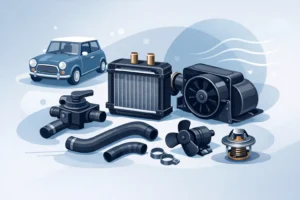
A thermostat is a simple starting point. If the car takes too long to warm up or runs hot without obvious reason, replacing it is sensible. Hoses and clips deserve the same attention. Old rubber can look acceptable until it softens under heat and pressure, and weak clips can turn a minor seep into a roadside stop.
It is also worth checking the radiator cap, water pump condition and fan belt. The belt is easy to forget because it may not fail dramatically straight away, but cracking, glazing or poor tension can cause charging and cooling problems together. That is a typical Mini trait – one small part can affect more than one system.
Braking service parts are not the place to cut corners
If a Mini has been parked for a while, brake service parts should move up the list quickly. Fluid absorbs moisture over time, seals harden, and friction parts can become contaminated or uneven even if the mileage is low.
Pads, shoes and brake fluid are the obvious items, but a proper look should include discs or drums, flexi hoses, wheel cylinders and master cylinder condition. If the pedal feel is inconsistent, if the car pulls under braking or if there is visible seepage, replacing the worn hydraulic parts early is usually cheaper than waiting for wider damage.
Quality matters here. Cheap friction materials can feel poor from the first drive, and inferior hydraulic parts may not last. For a road Mini, you want predictable braking and proper fitment, not the hassle of stripping the same corner twice because a bargain component was not up to the job.
Suspension and steering parts often get missed in a service plan
Not every service schedule puts suspension and steering under the same heading as filters and plugs, but on a Classic Mini they deserve regular inspection. The car is light, direct and sensitive to wear. A small amount of play can change the way it drives.
Track rod ends, ball joints, wheel bearings, bushes and suspension cones all affect handling and tyre wear. If the steering feels vague, the ride height looks uneven or the car knocks over poor surfaces, these areas need attention. On older cars, perished rubber is just as common as outright mechanical wear.
This is also where the trade-off between originality and usability comes in. Standard-type components often suit a road car best, while uprated bushes or adjustable parts may appeal if you use the car harder. There is no single answer – it depends on whether the Mini is a standard restoration, a fast-road build or something used regularly in modern traffic.
Choosing the right parts for your Mini
A useful mini service parts guide is not only about what to replace. It should also help you choose the right version of each part. That matters because Classic Minis span different years, engine sizes, ignition setups, brake arrangements and trim changes. Even cars that look similar can need different components.
Model identification comes first. Engine type, registration year and whether the car has been modified all affect the parts list. If the previous owner has fitted upgrades, never assume the car still matches factory specification. Distributor components, carburettor parts, filters and brake items are common areas where modifications catch owners out.
Then there is the question of quality level. For a quick recommissioning job on a budget project, a standard replacement may be enough. For a long-term restoration or a Mini you rely on, it is usually better to buy the best quality available. Better materials, more accurate fit and fewer returns make a real difference, especially on service parts you do not want to revisit every few months.
When it makes sense to buy in kits
Service kits can be the simplest way to avoid missing something obvious. If you are doing a routine annual service, a bundled set of oil filter, air filter, plugs and related consumables keeps the job straightforward. It also reduces the risk of placing multiple small orders because one item was forgotten.
That said, kits are only useful when they match the car properly. A modified Mini may need a more tailored approach. If you run a different carburettor, non-standard ignition or upgraded braking setup, picking individual items can be the better route. Convenience is useful, but accuracy comes first.
Common mistakes that cost time
The first is changing only the failed part and ignoring the surrounding wear items. Replacing a single hose but leaving the rest old and brittle rarely saves much in the long run. The second is buying on price alone. Ill-fitting gaskets, poor-quality ignition parts and inconsistent rubber components can create more trouble than the originals you removed.
Another common mistake is treating service work as separate from inspection. A Mini service should be a chance to check for oil leaks, loose mountings, split gaiters, corrosion around fixings and anything that suggests a bigger job is developing. Catching those problems early is often the difference between a simple weekend repair and a much more expensive strip-down later.
A practical approach to ordering service parts
The easiest way to stay organised is to build your order around the area of the car you are working on. If you are servicing the engine, include filters, plugs, leads if needed, gaskets, oil and any small fittings likely to disturb during the job. If you are refreshing the cooling system, think beyond the thermostat and include hoses, clips and coolant-ready consumables.
That system-based approach is how many owners and workshops avoid repeat downtime. It is also why specialists such as Bull Motif Mini Spares are useful for Classic Mini maintenance – the catalogue is built around the way these cars are actually repaired, not just generic registration lookups.
A well-kept Mini does not need guesswork, only the right parts and a sensible plan. If you treat service items as the foundation rather than the afterthought, the car will usually repay you with easier starts, better manners and fewer unpleasant surprises when you would rather be out driving it.