When a Classic Mini suddenly loses its indicators, wipers or heater fan, the fault often gets blamed on the switch or the wiring loom. Fair enough – those can fail too. But mini fuse box faults are one of the first places worth checking, because a tired fuse box can create intermittent faults that waste hours if you start elsewhere.
On a Classic Mini, the fuse box is simple compared with modern cars, but that simplicity can be misleading. A poor connection at the fuse clips, corrosion on the terminals or the wrong fuse fitted can leave you chasing a problem that comes and goes with vibration, damp weather or even a firm slam of the door. That is why it pays to treat the fuse box as more than just a holder for a couple of fuses.
Why mini fuse box faults are so common
Most Classic Minis are now decades old, and the electrical system has usually lived through moisture, heat cycles, previous repairs and a fair bit of owner improvisation. The fuse box sits in an environment where corrosion and oxidation can build up over time, especially if the car has been stored, used in wet conditions or suffered water ingress.
The other issue is tension. The metal clips that grip the fuse weaken with age. Once that happens, the fuse may still look fitted correctly, but the contact is no longer tight enough to carry current reliably. You get a circuit that works one minute and fails the next. Sometimes tapping the fuse box or moving the fuse slightly brings everything back to life, which is a strong clue that the fault is in the connection rather than the component being powered.
Previous wiring work can make things worse. Extra accessories, replacement spade terminals and non-standard wiring repairs can put more strain on the fuse box than it was ever meant to handle. A Mini that has had spot lamps, a radio, additional gauges or other period add-ons fitted may well have seen a few electrical shortcuts along the way.
The usual symptoms of a faulty Mini fuse box
The signs are rarely dramatic at first. More often, you get odd electrical behaviour that seems unrelated until you trace the circuits back to the same point. Intermittent failure is the classic symptom. Wipers might stop midway, the heater fan may work only on occasion, or the indicators may fail and then come back after a short wait.
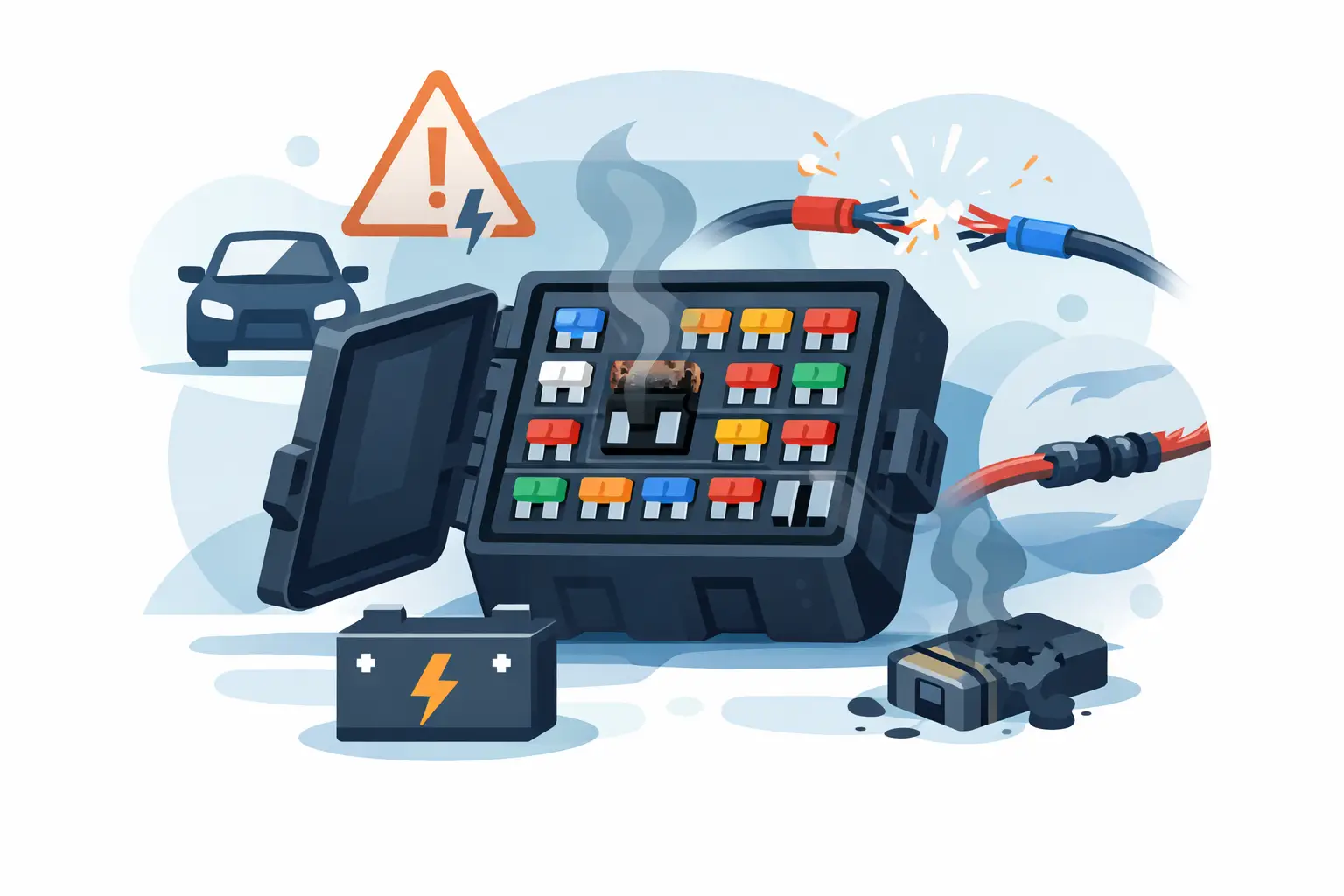
You might also notice heat discolouration around the fuse clips or the plastic body of the fuse box. That points to resistance in the connection. Resistance creates heat, and heat makes the contact worse, so the problem tends to snowball. In some cases, the fuse itself is fine but the holder has become the weak point.
Another common sign is a fuse that looks intact yet the circuit is still dead. That often means corrosion on the fuse ends or inside the clips. On older cars, a visual check is not enough. A fuse can look serviceable and still fail to pass current properly.
Common causes of mini fuse box faults
Corrosion is top of the list. The ends of the fuse and the contact surfaces in the clips oxidise over time, especially if the car sits unused for long periods. Even a small amount of corrosion can create enough resistance to cause erratic operation.
Loose fuse clips are nearly as common. Once the clips lose their spring tension, the fuse is no longer held securely. Vibration from normal driving then causes intermittent contact. On a Classic Mini, that is not exactly a rare event.
Incorrect fuse ratings also cause trouble. A fuse that is too high a rating may allow a wiring fault to continue without proper protection. One that is too low may blow repeatedly and send you looking for a short that does not exist. It is always worth checking that what is fitted matches the car’s requirements, not what happened to be in the toolbox.
Heat damage is another issue. If a poor connection has been present for a while, the fuse box terminals can become discoloured, brittle or slightly distorted. At that point, cleaning alone may not be enough. Once the metal has lost its shape or temper, the connection will usually remain unreliable.
Then there is simple age. Plastic goes brittle, terminals fatigue and decades of use take their toll. Sometimes the fault is not dramatic – the fuse box has just reached the stage where replacement is the sensible fix.
How to check the fuse box properly
Start with the basics. Disconnect the battery before touching the fuse box or removing any wiring. It is a small job, but it is still part of the electrical system, and taking chances here is not worth it.
Remove each fuse and inspect both the fuse and the clips. If the fuse ends are dull, pitted or green with corrosion, clean them or replace the fuse outright. Fuses are inexpensive, and if there is any doubt, new ones remove one variable straight away.
Look closely at the clips themselves. They should grip the fuse firmly. If a fuse feels loose or rattles in place, the clip tension is suspect. You can sometimes improve the grip carefully, but there is a limit. If the metal is tired, bent or heat-damaged, replacement is the better option.
Check the rear terminals as well. Loose spade connectors, corrosion on the terminals or signs of overheating all point to trouble. A connector that has gone dark or looks scorched has likely been running hot. That is not a fault to ignore, because heat in the electrical system tends to spread the damage beyond the original contact point.
A test lamp or multimeter helps here. Check for power into and out of the fuse with the circuit live. If power reaches one side of the fuse but not the other, despite the fuse appearing intact, you have found a high-resistance connection or failed fuse contact.
Repair or replace?
It depends on what you find. Light corrosion and a bit of surface oxidation can often be sorted with a careful clean and fresh fuses. If the fuse box is structurally sound, the clips remain tight and the terminals are in good condition, a tidy-up may be enough to restore reliability.
If there is visible heat damage, weak clips or badly corroded terminals, replacement is usually the smarter route. It saves repeat faults and gives you a known good starting point. On a car you actually want to use, reliability matters more than squeezing a few more months out of a worn electrical part.
This is especially true on restored or regularly driven Minis. There is little point fitting fresh lamps, switches or motors if the power supply through the fuse box remains unreliable. One weak link can undermine the rest of the system.
Preventing future Mini fuse box faults
The best prevention is keeping the electrical system clean, dry and correctly loaded. Use the proper fuse ratings, make sure terminals are tight and avoid stacking extra electrical demand onto tired original components without thought. If the car has gained accessories over the years, it is worth checking whether they have been wired sensibly.
Regular inspection helps more than people think. You do not need to strip the car every month, but if you are already servicing, chasing a minor electrical gremlin or recommissioning a Mini after storage, a quick fuse box inspection is time well spent. Catching corrosion early is easier than tracing an intermittent fault later.
Quality replacement parts matter too. Cheap electrical components can be false economy if the fit is poor or the terminals are weak from new. When you are sorting a Classic Mini, dependable parts save time as well as frustration. That is why Mini owners tend to come back to specialists such as Bull Motif Mini Spares rather than trying their luck with generic stock.
When the fault is not the fuse box
Of course, not every electrical issue comes down to the fuse box. A failed switch, bad earth, broken wire or faulty component can produce very similar symptoms. That is the trade-off with older wiring systems – several faults can look the same from the driver’s seat.
Still, the fuse box is one of the easiest checkpoints and one of the most overlooked. If you rule it out early, the rest of your diagnosis becomes much more straightforward. If you find a problem there, you may save yourself pulling apart half the dash or replacing parts that were never faulty in the first place.
A Classic Mini rewards methodical fault-finding. Start simple, inspect carefully and do not trust appearances alone. A fuse box can look passable and still be the reason your electrics are playing up. Sort that properly, and the rest of the car often becomes a lot easier to live with.
If your Mini’s electrical faults seem random, start with the humble fuse box before you condemn anything more expensive – it is often the small, tired parts that make the biggest nuisance.