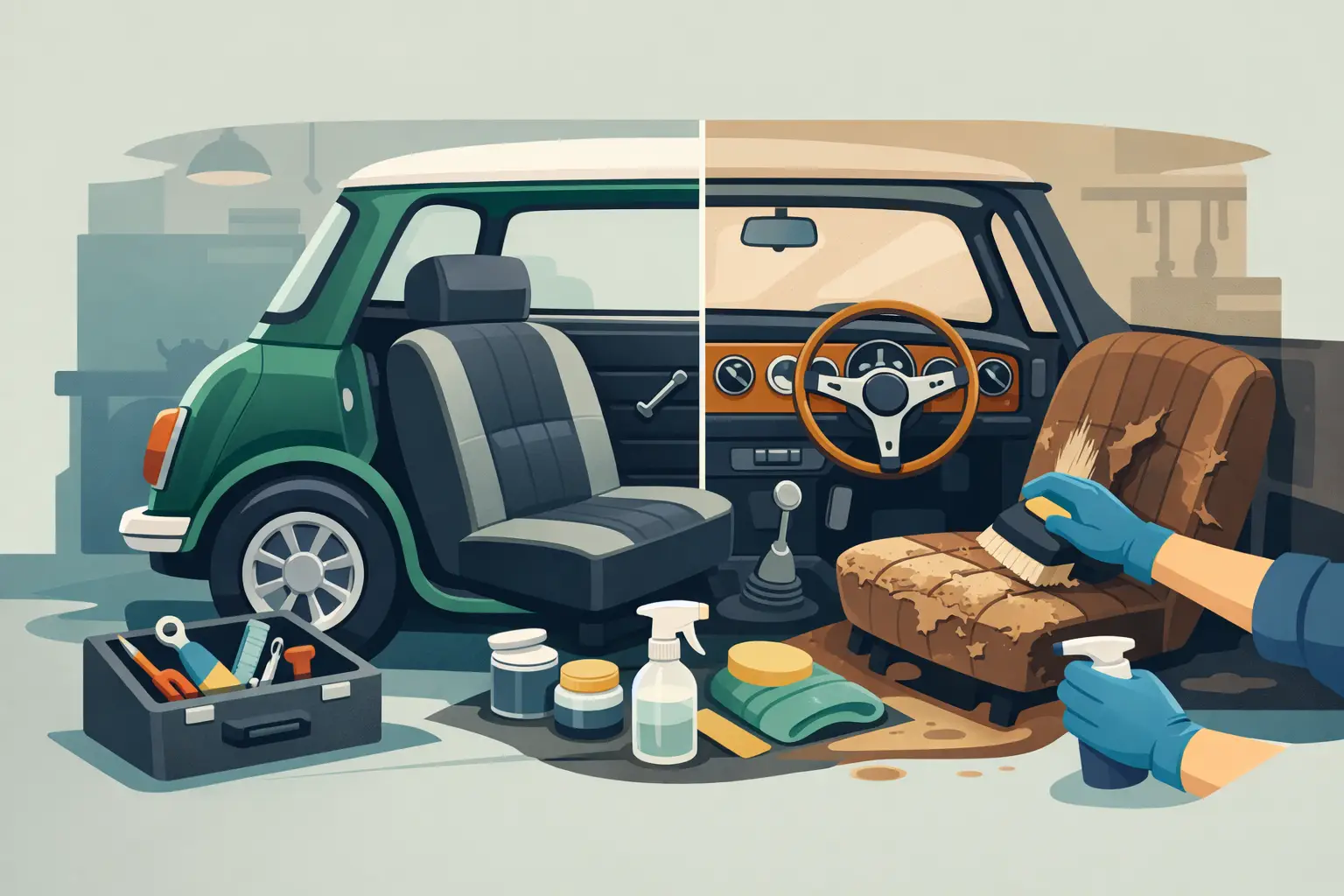
A Classic Mini interior tells you a lot about the car before you even turn the key. Sagging seat foam, cracked door pockets, damp carpets and a warped dash rail usually mean years of use, a few leaks, and repairs done in a hurry. If you’re working out how to restore classic mini interior parts properly, the job is less about hiding wear and more about putting the cabin back together so it looks right, fits right and lasts.
The good news is that Mini interiors are simple compared with many classics. The bad news is that simple does not always mean quick. Most disappointing results come from rushing the trim stage, fitting poor-quality parts, or ignoring the reason the old interior went bad in the first place.
Start with the shell, not the trim
Before you order carpets or seat covers, check the bodyshell and cabin for the things that ruin new interior parts. A Mini that lets water in through screen seals, door membranes, floor grommets or rear light apertures will soon spoil fresh sound deadening and carpet sets. If the floor has surface rust, treat it now. If there are welded repairs to complete, do them before any trim goes back in.
This is also the time to inspect mounting points. Seat crossmembers, subframe tunnel areas, pedal box fixings and rear bin sections all affect how the interior fits. If the shell is uneven or previous repairs have altered panel positions, you may need to fettle carpet edges or trim panels later. That is normal on an older Mini, but it is far easier to deal with before everything is clipped and glued into place.
Decide what kind of restoration you want
There is no single answer to how to restore classic mini interior trim because the right route depends on the car. A concours-style Mk1 or Mk2 restoration needs a different approach from a tidy road car or a fast-road Mini with upgraded seats and fresh carpeting.
If originality matters, pay close attention to grain, stitch style, seat pattern and the correct colour combinations for the model year. If usability matters more, you might choose improved seat foams, better soundproofing and harder-wearing materials that still suit the car. Neither approach is wrong, but mixing the two without a plan usually gives a finish that feels neither original nor purposeful.
A proper parts list helps here. Break the job into seats, door cards, rear quarter panels, carpets, headlining, dash area, switches, gear lever gaiter, seals and fixings. Many interiors get held up by tiny missing parts rather than the obvious major items.
Strip the interior carefully
Mini trim panels and fittings do not always come out gracefully after decades in place. Screws round off, clips snap and old hardboard cards can crumble around mounting holes. Remove everything methodically and label it. Even if you are replacing most of it, the old parts show how things sat originally and where cut-outs, folds and fasteners were placed.
Take photos as you go, especially around seat mounts, rear side panels, dash fittings and underlay placement. This saves time when it is going back together and helps if a previous owner has changed anything. Watch for hidden repairs too. It is common to find extra self-tappers, homemade brackets or odd bits of foam stuffed behind panels to stop rattles.
Seats make or break the job
If the seats look tired, the whole cabin looks tired. Many restorers focus on covers first, but worn diaphragms, collapsed foams and loose frames are usually the real problem. Fresh covers pulled over a poor base rarely look right for long.
Check the seat frames for cracks, bent runners and corrosion. Repair or replace what is beyond use. Then inspect the seat base support and foams. On a Mini, proper shape matters. Flat seat bases and misshapen backrests not only look wrong, they make the car less pleasant to drive.
When choosing covers, fit matters more than chasing the lowest price. Good trim should pull tight without excessive force, line up around seams and not leave baggy corners. The same applies to rear seat covers. A well-fitted rear bench does a lot to lift the whole cabin because it is such a visible area through the glass.
Carpets and underlay need a dry, sound base
A new carpet set transforms a Mini quickly, but only if the floor underneath is sorted. Paint the floor properly if needed, seal any bare metal and make sure drain points and bungs are correct. Then decide how much sound deadening and insulation you want. More insulation can make a road car feel more refined, but if you overdo it with the wrong material, trapped moisture can become a problem.
Pre-formed carpet kits save time, though some still need trimming around seat mounts, heelboard sections and companion bins. Test-fit before using adhesive. In a Classic Mini, small alignment errors at the front can turn into untidy edges further back. Work from the centre out and check that the handbrake, gear lever and seat mounting holes all sit where they should before cutting.
If the car is used regularly, choose carpet material with durability in mind. Light shades can look smart, but they also show every mark from wet shoes and workshop hands.
Door cards, trim panels and moisture protection
Door cards are one of the most obvious visual upgrades, but they are often ruined by the same thing that wrecks carpets – water. Before fitting new cards, make sure the inside of the doors is clean, drains are open and moisture membranes are in place. Skipping the membrane is a classic false economy.
Check door furniture at the same time. Window winders, handles, pull straps and escutcheons should all work smoothly and sit square. Loose mechanisms behind the card will make even a newly trimmed door feel cheap. Rear quarter panels deserve the same care, especially if speakers or belts have been added in the past and left rough cut-outs.
Small details count here. Correct clips, cups, finishing trims and fasteners make panels sit flat and reduce rattles. On a Mini, you hear everything, so a tidy fit is not just cosmetic.
Dash, switches and the bits you touch every time
The dash area is where the interior either feels fresh or obviously half-finished. Cracked crash pads, faded switchgear and a scruffy steering wheel pull the eye straight away. If your Mini has a painted metal dash, the finish needs to be right because any flaws stand out. If it has a later dash assembly with binnacles and mouldings, check for warped plastic and broken fixing tabs before reassembly.
This is also the point to sort heater controls, vents, switch labels and gauge lighting. There is little point fitting nice trim around controls that feel sticky or inoperative. While access is good, inspect the wiring for poor joins or brittle insulation. A tidy interior should still be a usable one.
Headlining takes patience
Headlinings can test anyone’s patience, especially on cars where window rubbers, glass and seal fitment all play a part in the final result. If the existing headlining is stained or sagging, replace it only after you are confident there are no leaks from screen or rear window apertures.
Fitting headlining material neatly is all about tension and sequence. Too loose and it sags. Too tight and seams can pull awkwardly or clips may not hold properly. If you have never done one before, this is the part of the interior restoration where taking your time matters most. A rushed headlining job tends to stare at you every time you get in the car.
Choosing parts well saves doing it twice
When owners ask how to restore classic mini interior areas properly, a lot of the answer comes down to buying parts that suit the job. Some items can be cleaned and reused. Others are simply past it and will let the whole finish down. There is little value in spending hours on installation if the materials are thin, the grain is wrong or the fit is inconsistent.
Using a specialist supplier helps because Mini interiors changed across years and models, and the small fitment differences matter. Seat styles, dash layouts, door furniture and trim colours are not one-size-fits-all. Getting those details right from the start is usually cheaper than ordering twice. For owners tackling a full refresh, Bull Motif Mini Spares can help source the interior parts needed without sending you round the houses.
Expect a bit of fettling
Even good reproduction trim parts may need minor adjustment. Holes sometimes need easing, board edges may need slight trimming, and older shells are rarely perfectly uniform. That does not mean the parts are wrong. It means you are restoring a classic Mini, not assembling a new hatchback.
The trick is to fettle carefully and only where needed. Offer each part up, mark accurately, and trim in small amounts. Once material is cut away, you do not get it back.
Finish it like it matters
A properly restored Mini interior is more than fresh vinyl and clean carpet. It should smell dry, the seats should support you properly, the doors should shut without trim buzzing, and every handle and switch should feel like it belongs there. That final ten per cent – clips, seals, edging trims, correct screws, clean glass, aligned mats – is what separates a quick tidy-up from a cabin you are proud to show when someone leans in for a look.
Take your time, fix the causes as well as the symptoms, and build the interior in the same careful way you would build the rest of the car. A Classic Mini always rewards that sort of work the moment you slide into the seat and shut the door.