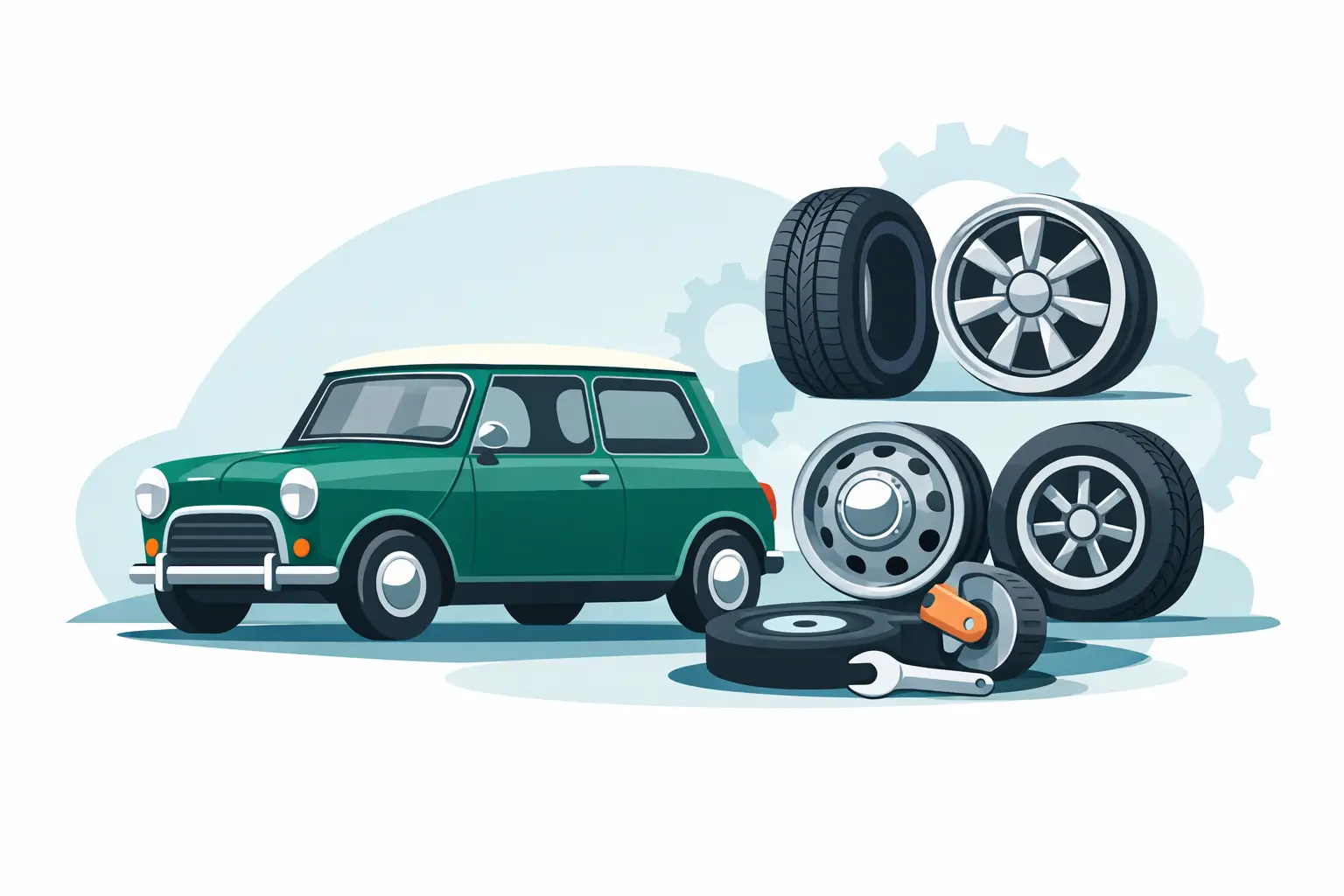
A Classic Mini can feel sharp, nervous, planted or downright awkward based on one simple area – the tyres and wheels. Get that combination right and the car feels like a Mini should. Get it wrong and you can end up with heavy steering, rubbing arches, vague turn-in or a ride that makes every B-road feel worse than it is.
When owners ask about classic mini tyres and wheels, the answer is rarely just a size chart. It depends on how the car sits, which brakes it runs, whether the suspension is standard or modified, and what you actually want from the car. A show car on wide arches needs something different from a road car on 10-inch steels, and both are different again from a fast-road Mini that sees regular spirited use.
Why classic mini tyres and wheels matter so much
The Mini is unusually sensitive to wheel and tyre changes because the car is light, compact and direct. Small differences in width, offset and tyre profile can be felt immediately through the steering wheel and seat. On many modern cars, a change of wheel style is mostly cosmetic. On a Classic Mini, it alters the way the whole car behaves.
Tyre sidewall height affects ride quality and steering feel. Wheel width changes the shape of the tyre contact patch and can influence how the car loads up in corners. Offset decides where the wheel sits relative to the hub and arch, which is where fitment problems begin if the wrong choice goes on. Even the tyre brand matters more than owners sometimes expect, because some tyres run wider or squarer than others despite sharing the same marked size.
That is why there is no single best setup. There is only the best setup for your car and the way you use it.
Choosing classic mini tyres and wheels by wheel size
10-inch wheels
For many owners, 10-inch wheels are the proper Mini look. They suit period builds, early cars and anyone chasing that classic stance without overdoing it. They also keep steering light and usually preserve a more compliant ride, especially on a car that still sees real road miles.
The catch is brake clearance. Not every brake setup will fit behind 10-inch wheels, so wheel choice often starts with the brakes rather than styling. If your Mini runs larger disc conversions, 10-inch wheels may be off the table unless the kit is specifically designed around them.
On a road-going car, 10-inch wheels can make a Mini feel eager and alive. Tyre choice is more limited than it once was, though, so availability sometimes narrows the decision.
12-inch wheels
Twelve-inch wheels are a common middle ground. They can work well on later cars, on Minis with disc brakes, and on owners who want broader tyre choice without stepping into a more heavily modified look. They often suit fast-road builds because they offer practical brake clearance and a useful range of widths.
A good 12-inch setup can still look tidy and period-correct enough for many restorations, especially if the car is not aiming for strict factory originality. Ride quality can remain acceptable, but tyre profile becomes more important here. Go too low and the car starts to lose some of the forgiving nature that makes a Mini enjoyable on ordinary roads.
13-inch wheels
Thirteen-inch wheels are usually chosen for appearance, wider tyres or a specific modified style. They can fill arches well and suit cars with wider bodywork, but they are not automatically an upgrade. Steering can become heavier, tramlining can increase, and clearance issues become more common.
This is where owners often run into rubbing on the front arches, contact with the rear on compression, or awkward geometry side effects. A 13-inch wheel package can work, but it needs more care. Suspension setup, ride height and arch choice all matter. If the car is mainly for road use, it is worth being honest about whether the look is worth the compromises.
Width, offset and fitment
Wheel diameter gets most of the attention, but width and offset are where many fitment problems actually come from. A wheel that is too wide for the tyre or for the car can create poor sidewall support, odd steering feel and arch interference. A wheel with the wrong offset can sit too far inboard and foul suspension parts, or too far outboard and catch the arch lip.
On a Classic Mini, even a setup that physically bolts on is not always a good setup. There needs to be clearance at full lock, under compression and across the range of movement the suspension sees on real roads. A car that looks fine on the driveway may start rubbing the first time it hits a dip with passengers on board.
This is why buying purely by appearance often costs more in the long run. Spacers, trimming, arch changes and geometry correction can soon turn a simple wheel swap into a bigger job.
Tyre profiles and how the car feels
Low-profile tyres can sharpen steering response, but there is always a trade-off. Less sidewall generally means a firmer ride and more impact harshness. On a lightweight Mini with short wheelbase and direct steering, that trade-off can feel bigger than expected.
A taller sidewall often suits road driving better. The car feels more progressive, rough surfaces are less intrusive, and the steering retains that lively but manageable character that owners enjoy. For a standard or mildly upgraded road Mini, that balance is usually more rewarding than chasing an aggressively low-profile look.
Tyre compound and construction matter too. A premium tyre with good wet-weather behaviour is often a better investment than a wider budget tyre that offers less grip where it counts. Many Classic Minis cover mixed road use, not dry summer miles only, so predictable braking and cornering in the wet should carry real weight in the decision.
Matching the setup to the car
A standard restoration usually benefits from a wheel and tyre package that stays close to original intent. That means sensible widths, proven fitment and tyres that preserve ride comfort. These cars are at their best when they feel light, accurate and easy to place on the road.
A fast-road Mini can justify a slightly wider wheel and a more performance-focused tyre, especially if the suspension and brakes have been upgraded to match. The key is balance. There is little point fitting wide wheels if the geometry is tired, the dampers are worn or the suspension cones are past their best.
A show or modified build gives more freedom on style, but it still pays to think practically. If the car scrubs on lock, follows every rut in the road and feels tiring to drive, the novelty wears off quickly.
For motorsport use, the answer changes again. Grip, heat management and intended surface become the priority, and what works on a sprint or hillclimb Mini may be a poor road choice. In that case, the whole package should be chosen around the event and regulations rather than everyday comfort.
Common mistakes with classic mini tyres and wheels
One of the most common mistakes is assuming all tyres in the same size measure the same in reality. They do not. Some have a squarer shoulder, some run wider, and some need more arch clearance than expected.
Another is overlooking the condition of the rest of the running gear. Wheel bearings, suspension bushes, track rod ends and alignment all affect how a new wheel and tyre package feels. If the front end is tired, a fresh set of wheels will not cure it.
The third is choosing a wheel first and trying to force the car around it. It is usually better to start with the car’s purpose, brake setup and bodywork, then work towards a wheel and tyre combination that fits properly.
What to check before you buy
Before ordering, confirm your brake type, wheel diameter, width and likely offset. Check whether the car has standard arches or wider bodywork, and whether the suspension height has been altered. If the car has already been modified by a previous owner, never assume what should fit still does.
It is also worth checking the age and condition of the tyres currently on the car, even if the tread looks usable. Old rubber can harden and spoil the way the Mini drives. Many handling complaints blamed on suspension actually start with tyres that are simply past their best.
For owners who want to avoid guesswork, dealing with a specialist makes life easier. A proper Classic Mini supplier such as Bull Motif Mini Spares understands the usual fitment pitfalls and can help narrow down what actually suits your car, rather than what merely looks good in a photo.
The best classic mini tyres and wheels are not always the widest, rarest or most expensive. They are the ones that fit properly, suit the car’s job and make every mile feel right. If you choose with that in mind, the Mini will tell you straight away that you’ve got it right.