Ask any Mini owner what they prefer and the mini carburettor vs injection debate usually starts before the kettle has even boiled. It is one of those subjects where the right answer depends less on fashion and more on how you use the car, how original you want it to stay, and how much hands-on fettling you actually enjoy.
For some owners, a carburettor-fed Mini is part of the whole point of owning one. For others, the later injection setup makes more sense because they want easier starting, cleaner running and less time spent chasing idle issues. Both systems can work very well when the parts are right and the setup matches the engine.
Mini carburettor vs injection – the basic difference
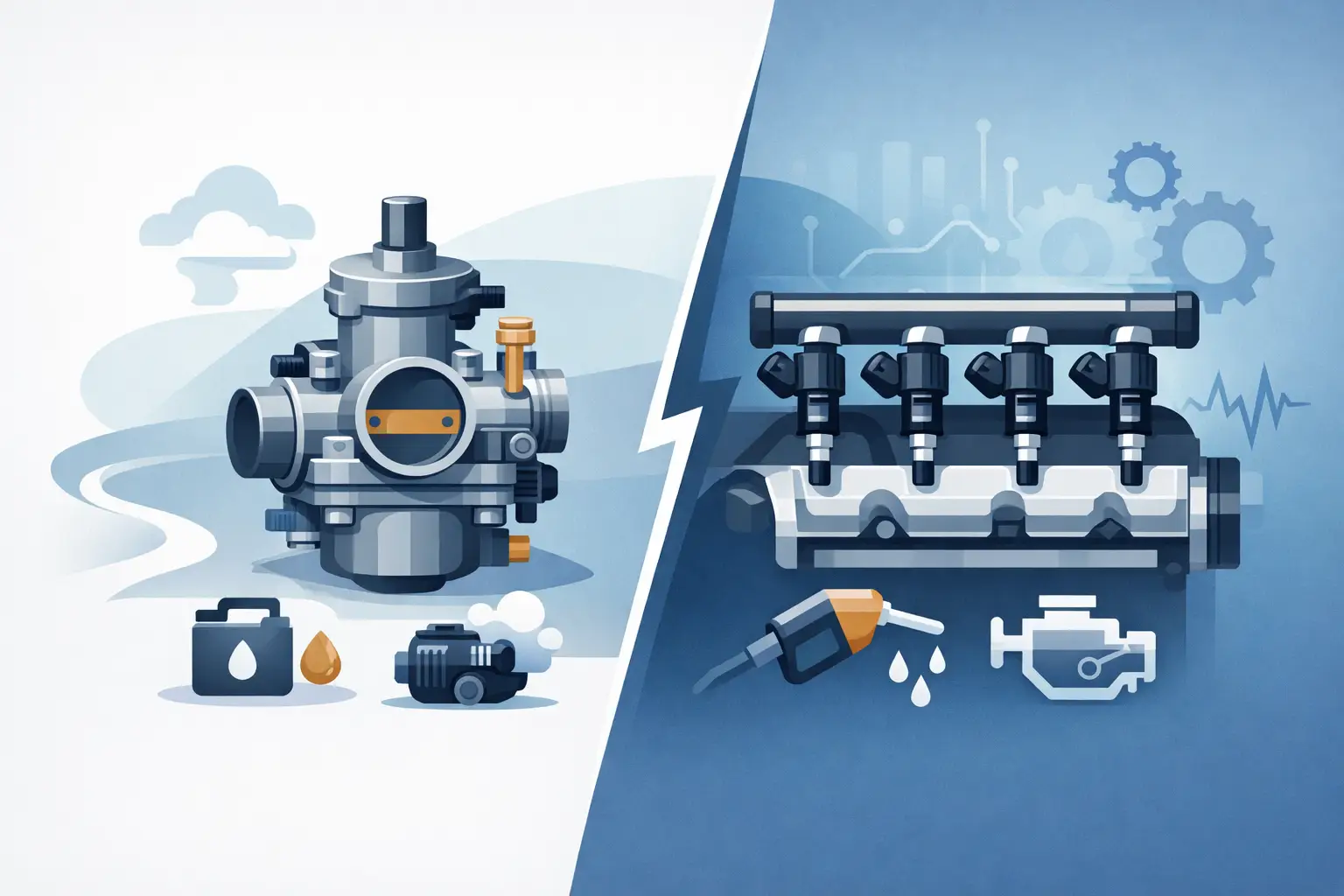
A carburettor meters fuel mechanically, using airflow, vacuum and internal circuits to mix fuel and air before it enters the engine. On a Classic Mini, that usually means an SU setup, which is simple, proven and easy to understand if you do your own maintenance.
Injection does the same job in a more controlled way. Instead of relying purely on mechanical fuel metering, it uses sensors, an ECU, injectors and an electric fuel system to deliver fuel more precisely. On later Minis, single-point injection and multi-point injection brought better emissions control and improved drivability, especially from cold.
That sounds straightforward, but ownership is where the real difference shows. Carburettors are usually easier to diagnose with basic tools. Injection systems are generally better at adjusting to conditions on their own, but they bring more electrical and electronic components into the picture.
Why many Classic Mini owners still prefer a carburettor
There is a reason the carburettor setup remains popular. It suits the character of the car, it is relatively easy to work on, and there is a huge amount of knowledge around tuning and servicing it. If you are restoring an earlier Mini or building a fast-road car with a traditional feel, a carburettor often makes perfect sense.
A well-sorted carb setup gives crisp throttle response, a very mechanical driving feel and straightforward serviceability. If the car is running rich, weak or unevenly, you can usually trace the fault by checking a manageable list of likely causes – needle choice, dashpot oil, vacuum leaks, float problems, worn spindle bushes or ignition issues.
Parts support matters too. Carburettor Minis benefit from the fact that many service items and replacement components are widely understood by owners and workshops alike. For home mechanics, that counts for a lot. You do not need specialist diagnostic equipment to carry out most checks, and many jobs can be done on the drive or in the garage with normal hand tools.
That said, the carburettor route is not automatically easier in every case. Wear creeps in slowly. A tired carb may still run, but not especially well. Poor fuel economy, hesitant pickup and unstable idle can all appear gradually enough that owners get used to them.
Carburettor strengths in real use
For a weekend Mini, a period-style restoration or a mildly tuned engine, carburettors are still hard to dismiss. They are easier to modify around traditional performance parts such as manifolds, cylinder heads and cam changes. If you enjoy setting up your own car and want direct control over the way it runs, a carburettor gives you that involvement.
They also make sense where simplicity is the priority. Fewer sensors and less wiring means fewer electronic faults to hunt down, particularly on older cars where previous repairs may not have been done to a high standard.
Where injection has the advantage
Injection came along for good reason. It delivers fuel more accurately across a wider range of conditions, which usually means better cold starting, steadier idle, cleaner emissions and more consistent running in traffic or changing weather.
If you use your Mini regularly, especially as a road car rather than a hobby project, injection can feel more civilised. Turn the key, let the system do its job, and the car is generally less fussy than a carburettor setup that has drifted out of tune.
This matters most for owners who want reliability without constant adjustment. A properly functioning injection Mini can cope better with stop-start driving, winter starts and day-to-day use where convenience matters as much as character.
There is also originality to think about. If you own a late Rover Mini, keeping the correct injection system can be the right choice for the car. Removing it simply because carburettors feel more old-school is not always the best route, especially if the car is complete, tidy and intended to stay close to factory specification.
Injection strengths in real use
Injection tends to suit owners who value consistency over tinkering. You are less likely to be reaching for a screwdriver to sort mixture or idle, and a healthy system often gives smoother manners in mixed driving. For road-biased Minis that need to behave well every time they leave the garage, that can be a genuine benefit.
The trade-off is complexity. When an injection car develops a fault, the cause may be a sensor, wiring issue, fuel pressure problem, throttle body fault or ECU-related issue rather than one visible mechanical component. Diagnosis can become more methodical and, at times, more frustrating.
Reliability is more about condition than theory
Owners often ask which is more reliable, but that question only makes sense if the systems are in comparable condition. A fresh carburettor setup with the right ignition parts, sound fuel delivery and no air leaks can be extremely dependable. A neglected injection system with corroded connectors and tired sensors can be anything but.
The opposite is true as well. A well-maintained injection Mini can be wonderfully reliable, while a worn carburettor system with poor setup and mismatched parts can make the car feel permanently temperamental.
That is why it pays to look beyond the headline choice. On either setup, supporting parts are critical. Fuel pumps, filters, ignition components, hoses, manifolds, gaskets and electrical connections all affect how the engine behaves. Owners sometimes blame carburettors or injection when the real fault sits elsewhere.
What about performance?
Performance discussions around mini carburettor vs injection can get muddled because people often compare a modified carb car with a standard injection one. In standard trim, the difference is not simply a matter of one being quicker than the other. Engine condition, specification and tune make a far bigger impact.
For modified applications, carburettors have long been the familiar route. They are easy to pair with traditional tuning parts and there is strong aftermarket support for fast-road and competition builds. If you are building an engine with a performance cam, improved head and exhaust upgrades, a carburettor setup may be the simpler route to tune.
Injection can also perform very well, but once modifications become more serious, it often needs a more considered approach. The standard system may not suit every change, and getting the best from it can mean more specialist knowledge and supporting components.
So if the goal is straightforward tuning flexibility, carburettors still have the edge for many enthusiasts. If the goal is a standard or lightly upgraded road car with tidy manners, injection remains a strong option.
Choosing the right setup for your Mini
The best choice usually comes down to the type of ownership you want. If you like originality on an early car, enjoy tuning and want a system you can service yourself with relative ease, a carburettor is hard to beat. If you own a later Mini, use it regularly and prefer predictable running with less manual adjustment, injection may suit you better.
Budget plays a part as well. Conversions are rarely as simple or cheap as they look on paper. Swapping from injection to carburettor, or the other way round, means thinking properly about fuel delivery, manifolds, ignition, wiring, air filtration, throttle linkages and the knock-on effect on the rest of the car. Doing half the job usually leads to poor results.
That is also where using the right parts matters. A Mini responds well when the system is complete and matched properly, not pieced together from whatever happened to be on the shelf. For owners sourcing service items, replacement components or upgrade parts, dealing with a Mini specialist such as Bull Motif Mini Spares helps cut out guesswork.
The smarter question to ask
Instead of asking which system is best in general, ask which one is best for your car, your engine and your use. A show-standard early Mini on twin carbs, a dependable late-model road car with factory injection, and a quick weekend toy built for B-road fun all have different answers.
There is no badge of honour in choosing the more old-fashioned setup if it does not suit the way you drive. Equally, there is no point chasing modernity if what you really want is the traditional Mini experience with all its mechanical feel and tunability.
Get the basics right, use quality parts, and be honest about how involved you want to be. That usually leads you to the right choice far faster than any pub argument ever will.