A 998 Mini used for dry Sunday runs does not need the same brake package as a Cooper S replica that sees fast A-roads, passengers and occasional track use. That is why the mini drum vs disc brakes question is not simply about fitting the biggest components available. It is about choosing a properly matched system that suits your car, wheels, engine output and the way you drive it.
Classic Minis left the factory with several brake arrangements over the years. Early cars commonly used drums front and rear, while performance models introduced front discs. Later Minis generally used 8.4-inch front discs with rear drums. Each layout can work well when it is in good order. The right answer starts with condition and fitment, not fashion.
Mini Drum vs Disc Brakes: The Real Differences
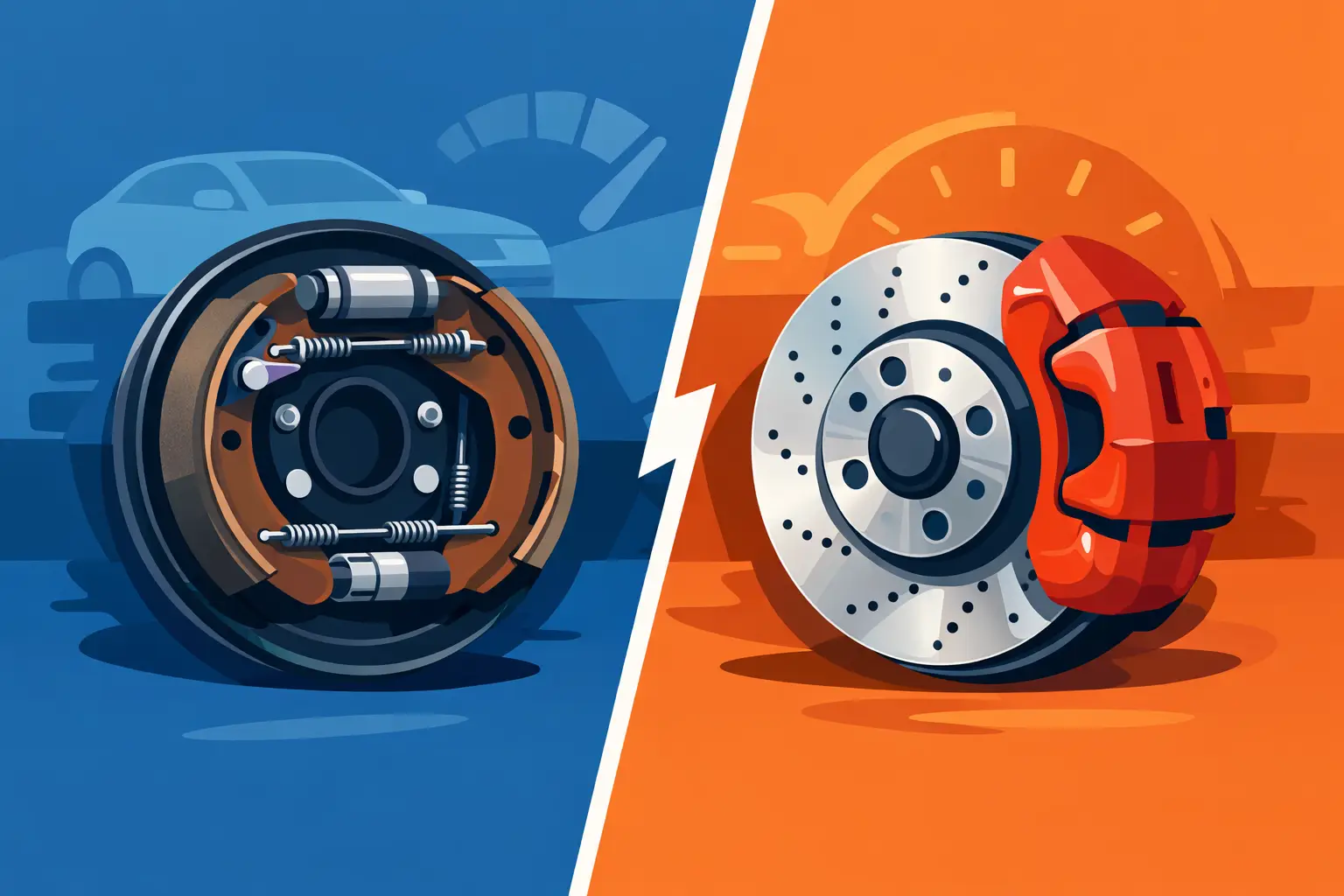
The key difference is how each brake handles heat. A drum brake pushes its shoes outwards against the inside of a rotating drum. It is compact, mechanically simple and well suited to the rear of a lightweight car. A disc brake clamps pads onto a rotor exposed to the airflow, allowing heat and water to clear more readily.
On a Mini, front brakes do most of the work under hard braking because the car’s weight transfers forwards. This is why front discs offer the most worthwhile improvement where the car is driven harder or carries more power. They retain a more consistent pedal feel during repeated stops, while front drums can suffer fade once they become hot.
That does not make front drums inadequate by default. A standard, lightly used Mini with correctly adjusted drums, quality shoes, sound cylinders and fresh fluid can stop safely and predictably. Many poor braking complaints come from seized adjusters, contaminated linings, worn drums, old flexible hoses or an incorrectly set-up system rather than the basic design itself.
Front drum brakes
Front drums have a period-correct appearance and can be the sensible choice for an accurate early restoration. They also allow the use of original-style 10-inch wheels without disc conversion clearance concerns. Parts are straightforward, and routine servicing is familiar to most home mechanics.
Their compromise is heat capacity. Long downhill runs, spirited driving or a tuned engine can expose their limits. Drums also need periodic adjustment as the shoes wear. If the car pulls to one side under braking, the cause may be uneven shoe contact, a sticking wheel cylinder, a damaged hose or oil from a hub seal reaching the linings. Replacing parts without finding the underlying cause rarely fixes it for long.
Front disc brakes
Front discs give more consistent stopping under repeated use and generally cope better with wet conditions. They are the usual choice for Minis with bigger engines, upgraded suspension, motorway use or regular enthusiastic driving. They also make visual inspection of pad wear much easier.
However, disc brakes are not maintenance-free. Calipers can seize after long storage, especially if the car is used infrequently. Discs corrode, pads can glaze, and flexible hoses still deteriorate internally with age. A disc conversion also costs more than a drum rebuild because it involves more than calipers and discs alone.
A correctly specified disc setup should feel progressive, not excessively heavy or sharp. Bigger brakes do not automatically shorten stopping distances if the tyres have limited grip or the rear brakes and hydraulic system have been neglected.
Which Classic Mini Disc Setup Is Right?
The two familiar factory-style front disc routes are 7.5-inch and 8.4-inch systems. Their suitability is largely decided by wheel size.
The 7.5-inch disc arrangement is closely associated with the original Cooper S and is popular on cars running 10-inch wheels. It provides a useful front-brake upgrade while retaining the classic small-wheel look. It is a specialist setup, so check every component in the kit is intended to work together. Hubs, discs, calipers, drive flanges, bearings, CV joints and associated hardware must suit the application.
The 8.4-inch disc setup was fitted to many later Minis and is practical for road cars using 12-inch wheels. It offers good everyday performance, readily available service parts and a factory-style solution for a later Mini restoration or upgrade. It will not fit behind standard 10-inch wheels, so wheel choice is not an afterthought.
There are also aftermarket four-pot and vented disc options. These can be useful for serious performance builds, but they need a clear purpose. On a modest road Mini, a well-maintained standard disc system paired with decent tyres is often more enjoyable and easier to live with than an expensive race-style conversion. Larger calipers may demand different wheels, altered brake bias or further hydraulic changes.
Do You Need to Convert From Drums to Discs?
A conversion makes sense when the existing front drums need major work and the car’s intended use has moved beyond gentle standard motoring. It is particularly worth considering for a 1275-powered Mini, a car that regularly carries a full load, or a project being rebuilt around fast-road use.
For an original early car, retaining front drums can be the better decision. Authenticity matters to many owners, and a standard engine with well-sorted drums is entirely usable. Spending the budget on tyres, suspension bushes, wheel bearings and a complete hydraulic refresh may deliver a more noticeable real-world improvement than changing brake type alone.
Avoid mixing components from different systems unless you know exactly why they are compatible. A brake conversion should be treated as a complete front-end and hydraulic job, not a collection of bargain parts fitted over several weekends. The master cylinder type, pipework, hoses and rear brake condition all affect the final result.
The Parts That Make a Brake Upgrade Work
The braking system is only as good as its weakest component. Whether rebuilding drums or fitting discs, inspect the whole arrangement while it is apart. Pay close attention to:
- brake hoses, which can collapse internally even when they look acceptable from the outside;
- wheel bearings, hubs and CV joints, as excess movement can cause pedal knock-back and uneven pad or shoe wear;
- hard lines and unions, particularly where corrosion is hidden by underseal or dirt;
- the master cylinder and fluid, since old fluid absorbs moisture and lowers the boiling point;
- rear drums, cylinders, shoes and adjusters, because worn rear brakes can leave the car feeling unbalanced.
Use good-quality friction material and replace components in axle pairs. New pads on one front corner and old pads on the other is false economy. The same applies to brake shoes, discs, drums and flexible hoses.
After any major work, bleed the system carefully and check for a firm pedal before the car goes on the road. On a dual-circuit setup, understand which circuit serves which end of the car. If the pedal remains spongy, do not assume it only needs more bleeding. Check for incorrect shoe adjustment, trapped air, hose expansion, fluid leaks and master-cylinder issues.
Wheels, Tyres and Brake Balance Matter Too
Tyres ultimately decide how much braking force reaches the road. A Mini with excellent front discs and old, hard tyres can lock a wheel sooner than a standard car on quality rubber. Matching tyre condition, pressures and alignment to the brake work is money well spent.
Brake balance matters just as much. The Mini’s rear drums are designed to contribute without locking before the fronts under normal braking. Altering front calipers, rear cylinders or master-cylinder specification without considering the whole system can change that balance. A car that feels impressive during a gentle test drive may become unsettled in an emergency stop.
If you are changing from a standard setup, check the current regulations for modified vehicles, have the work inspected if needed, and tell your insurer about the conversion. Keep invoices and a clear record of the parts fitted. It helps future fault-finding as much as it helps the next owner.
A Sensible Choice for Your Mini
For a standard early restoration, rebuilt front drums can be the correct and satisfying answer. For a road Mini with more power or more demanding use, factory-style front discs are usually the sensible step. For a highly modified car, choose an upgraded system only after deciding on wheel size, tyre grip, suspension specification and intended use.
Bull Motif Mini Spares customers often build cars in stages, and brakes are one area where planning saves buying twice. Start with the Mini you want to drive when the project is finished, then fit a complete, quality system that gives you confidence every time you press the pedal.